
Updated for 2026
Highlights
This guide explains how the New York Good Cause Eviction Law changed lease renewals, rent increases, and eviction proceedings for many market rate apartments. It also examines which properties are generally covered, which may qualify for exemptions, how courts evaluate “good cause,” and what landlords, tenants, brokers, investors, and property managers should understand as the law continues to evolve.
The New York Good Cause Eviction Law fundamentally changed how many landlords, tenants, brokers, investors, and property managers navigate residential rental housing. Since taking effect in 2024, the New York Good Cause Eviction Law has introduced new rules governing lease renewals, rent increases, eviction proceedings, notice requirements, and exemptions across much of New York State.
🏘️ WHY THE GOOD CAUSE EVICTION LAW MATTERS
New York’s Good Cause Eviction Law represents one of the most significant changes to landlord tenant law in decades.
For many years, owners of market rate apartments generally retained broad discretion over whether to renew leases after they expired. While rent stabilized tenants already received substantial legal protections, many market rate tenants did not enjoy the same level of security.
That changed when New York enacted the Good Cause Eviction Law in April 2024.
The legislation created new protections for many tenants by limiting when landlords may refuse to renew leases, restricting certain rent increases, and requiring property owners to demonstrate legally recognized reasons before pursuing many eviction proceedings.
Supporters argue the law provides greater housing stability and helps reduce displacement in rapidly changing neighborhoods. Critics contend the legislation places additional responsibilities on property owners, creates new legal complexities, and may influence investment decisions, property management, and housing supply.
Whether viewed as an important tenant protection or a significant expansion of regulation, the law has fundamentally changed how many rental properties are managed throughout New York.
Understanding who is covered, which exemptions apply, and how the law operates has become essential for landlords, tenants, brokers, investors, attorneys, and property managers alike.
📋 WHAT YOU’LL LEARN
Whether you own, rent, manage, invest in, or represent residential property in New York, this guide explains how the Good Cause Eviction Law works in practice. You’ll learn which properties are generally covered, which may qualify for exemptions, how lease renewals and rent increases have changed, what qualifies as good cause for eviction, why notice requirements matter, and how the legislation affects everyone involved in New York’s housing market.
WHAT IS THE NEW YORK GOOD CAUSE EVICTION LAW?
The Good Cause Eviction Law limits when many residential landlords may refuse to renew a tenant’s lease or recover possession of a covered apartment after a lease expires.
Rather than allowing a tenancy to end simply because the lease has reached its expiration date, many landlords must now demonstrate one of several legally recognized reasons before declining a renewal or pursuing an eviction.
These legally recognized reasons are commonly referred to as “good cause.”
Examples may include nonpayment of rent, substantial violations of lease obligations, creating a nuisance, causing significant property damage, using the premises for unlawful purposes, refusing lawful access when required, or other circumstances recognized under New York law.
In many situations, property owners must now obtain a court order establishing good cause before recovering possession of a covered apartment. As a result, the expiration of a lease by itself is no longer sufficient in many cases.
The law does not eliminate a landlord’s ability to pursue an eviction. Instead, it establishes additional legal standards and procedural protections before certain tenants may be removed from covered housing.
HOW THE NEW YORK GOOD CAUSE EVICTION LAW CHANGED LEASE RENEWALS
The Good Cause Eviction Law changed far more than eviction procedures.
It also changed how many landlords evaluate lease renewals, rent increases, tenant communications, documentation, and long term property management.
Owners now face additional legal considerations when deciding whether to renew leases, proposing certain rent increases, or beginning Housing Court proceedings. At the same time, tenants receive greater procedural protections and additional opportunities to challenge certain actions taken by property owners.
The legislation also has broader implications for brokers, attorneys, lenders, investors, and property managers because it can influence underwriting, property operations, investment decisions, transaction risk, and long term asset management
HOW THE GOOD CAUSE EVICTION LAW CHANGED LEASE RENEWALS
One of the most significant changes introduced by the Good Cause Eviction Law involves lease renewals.
Before the law took effect, many owners of market rate apartments generally had the option to decline renewing a lease once it expired, provided they complied with applicable notice requirements and anti-discrimination laws. While there were important exceptions, many market rate tenancies ended simply because an owner chose not to offer another lease.
For many covered apartments, that is no longer the case.
Today, landlords subject to the Good Cause Eviction Law generally must either renew the tenant’s lease or establish a legally recognized reason for declining renewal. In many situations, that reason may ultimately need to be reviewed by a court if the tenant challenges the owner’s decision.
As a result, lease expiration alone is often no longer enough to recover possession of a covered apartment.
This change has fundamentally altered how many owners approach lease renewals, long term planning, and tenant relationships.
NEW YORK GOOD CAUSE EVICTION LAW: UNDERSTANDING RENT INCREASE LIMITATIONS
The Good Cause Eviction Law also limits certain rent increases for covered apartments.
Rather than allowing unrestricted increases at renewal, the law establishes a threshold above which an increase may be presumed unreasonable unless the owner can justify it under the law.
The calculation is based on a formula tied to inflation and other statutory limits that may change over time. Because those figures are updated periodically, landlords should rely on the current legal thresholds in effect when proposing a renewal rather than assuming the same percentage applies every year.
Although many discussions simplify the law by focusing on a percentage cap, the actual legal analysis is more nuanced. Courts may consider additional facts depending on the circumstances of a particular case.
Owners should also remember that simply increasing rent above the statutory threshold does not automatically make an increase unlawful. Instead, it may shift the legal analysis and require the owner to demonstrate why the increase is reasonable under the circumstances.
NEW YORK GOOD CAUSE EVICTION LAW: WHAT COURTS MAY CONSIDER
Every rental property is different, and so is every dispute.
When evaluating whether a proposed rent increase is reasonable, courts may consider numerous factors depending on the facts presented.
Those factors may include increases in property taxes, insurance premiums, utility costs, labor expenses, major capital improvements, financing costs, significant building repairs, and other documented operating expenses that affect the property’s financial operation.
Because each situation is unique, property owners should carefully document the reasons supporting any significant rent increase before presenting a renewal offer.
Likewise, tenants who believe a proposed increase exceeds what the law permits should understand that each case depends on its individual facts rather than a single percentage alone.
NEW YORK GOOD CAUSE EVICTION LAW: NOTICE REQUIREMENTS
The Good Cause Eviction Law also expanded notice obligations for many landlords.
Owners of covered properties must provide required notices informing tenants about the law and whether the apartment is covered or exempt. These disclosures are intended to help tenants understand their legal rights before lease renewals, nonrenewals, or eviction proceedings begin.
Failure to provide required notices can create delays, increase legal expenses, and complicate Housing Court proceedings.
Because notice requirements may vary depending on the property and the circumstances, landlords should ensure their lease documents, renewal offers, notices, and other communications remain consistent with current legal requirements.
For property managers and brokers assisting landlords, accurate documentation has become increasingly important as compliance requirements continue to evolve.
NEW YORK GOOD CAUSE EVICTION LAW: WHAT QUALIFIES AS “GOOD CAUSE?
The phrase “good cause” sits at the center of the legislation, but many people misunderstand what it means.
The law does not prevent landlords from recovering possession of covered apartments. Instead, it requires legally recognized reasons before doing so in many situations.
Examples may include persistent nonpayment of rent, substantial violations of lease obligations, creating a nuisance, causing significant property damage, unlawful use of the premises, refusing lawful access when required, or other circumstances recognized under New York law.
Whether a particular situation satisfies the legal standard ultimately depends on the specific facts, the applicable statutes, and, in many cases, a judge’s determination.
For that reason, owners should avoid assuming that every lease violation automatically qualifies as good cause, while tenants should recognize that the law does not eliminate the possibility of eviction when legitimate legal grounds exist.
WHY DOCUMENTATION MATTERS MORE THAN EVER
Since the Good Cause Eviction Law took effect, documentation has become increasingly important for both landlords and tenants.
Owners should maintain thorough records of lease agreements, rent payments, communications, maintenance requests, repair histories, inspection reports, notices, and any circumstances that could become relevant if a dispute reaches Housing Court.
Tenants likewise benefit from maintaining records of correspondence, rent payments, repair requests, photographs, and other documentation supporting their position if disagreements arise.
Well-organized documentation often becomes one of the most valuable pieces of evidence when questions arise regarding compliance with the law or the facts surrounding a particular tenancy.
NEW YORK GOOD CAUSE EVICTION LAW: WHICH PROPERTIES ARE COVERED AND WHICH MAY BE EXEMPT?
One of the most common questions surrounding the New York Good Cause Eviction Law is whether it applies to a particular property.
The answer depends on several factors, including the type of housing, ownership structure, the number of residential units, the amount of rent being charged, the building’s age, and whether the apartment is already subject to another form of rent regulation.
Although the law applies to many market rate apartments, it does not apply universally. Several categories of housing are specifically exempt under the statute.
In New York City, for example, a landlord who owns 10 or fewer residential units statewide generally qualifies as a small landlord and may be exempt from the law. Likewise, owner occupied buildings containing 10 or fewer residential units are generally exempt. Apartments that are already subject to rent stabilization, rent control, or other federal, state, or local housing programs are also excluded because they are governed by separate legal frameworks.
Additional exemptions may apply to condominiums, cooperative apartments, employer provided housing, apartments in buildings that first received a certificate of occupancy on or after January 1, 2009, certain income restricted housing, seasonal housing, hotel rooms, manufactured homes, student housing, and certain religious or healthcare related residential facilities.
The law also contains a high rent exemption. In New York City, an apartment is generally exempt if the monthly rent exceeds 245 percent of the applicable Fair Market Rent published annually by the U.S. Department of Housing and Urban Development. Because HUD updates Fair Market Rent each year, the dollar amount qualifying as “high rent” changes annually.
Because these thresholds, Fair Market Rent calculations, and statutory requirements may change through legislation, local opt in provisions, or annual HUD updates, landlords and tenants should review the most current guidance before assuming a property is covered or exempt. Determining whether the New York Good Cause Eviction Law applies often requires examining both the statute and the specific facts surrounding the property.
NEW YORK GOOD CAUSE EVICTION LAW: LOCAL GOVERNMENTS MAY EXPAND THE LAW
Although the Good Cause Eviction Law applies throughout New York City, other municipalities across New York State may also adopt the law through an opt in process established by the legislation.
Whether a city, town, or village chooses to participate depends on actions taken by its local government.
As additional municipalities consider adopting the law, landlords, tenants, brokers, and property managers operating outside New York City should continue monitoring developments within their own communities.
The result is that the legal landscape may differ depending on where a property is located, making local knowledge increasingly important.
NEW YORK GOOD CAUSE EVICTION LAW: WHAT THIS MEANS FOR LANDLORDS
For landlords, the Good Cause Eviction Law requires a more deliberate approach to managing residential property.
Lease renewals, rent increases, notices, recordkeeping, and Housing Court proceedings now require greater attention to detail than many owners previously needed for market rate apartments.
Owners should understand whether their properties are covered, review lease documents regularly, maintain thorough records, and remain informed about changes to state and local housing laws.
For many landlords, working closely with experienced attorneys, property managers, accountants, and real estate professionals has become an increasingly important part of managing legal risk while protecting long term investments.
NEW YORK GOOD CAUSE EVICTION LAW: WHAT THIS MEANS FOR TENANTS
For tenants, the law provides additional protections against certain lease nonrenewals and rent increases while expanding procedural rights in many situations.
That does not mean every tenant is protected under every circumstance or that evictions have become impossible.
Tenants remain responsible for complying with their lease obligations, paying rent when due, maintaining the property appropriately, and following applicable laws.
Understanding both the rights and responsibilities created by the legislation helps tenants make informed decisions while reducing misunderstandings that can lead to unnecessary disputes.
NEW YORK GOOD CAUSE EVICTION LAW: WHAT THIS MEANS FOR BROKERS, PROPERTY MANAGERS, AND INVESTORS
The Good Cause Eviction Law also affects professionals working throughout New York’s housing market.
Real estate brokers increasingly receive questions from buyers, sellers, landlords, and investors regarding how the legislation may influence property values, investment performance, rental operations, and future redevelopment opportunities.
Property managers have seen compliance responsibilities expand as documentation, notices, and lease administration have become more complex.
Investors evaluating multifamily acquisitions must also consider how the law may influence projected income, financing assumptions, operating expenses, tenant turnover, and long term asset performance.
As housing policy continues evolving across New York, understanding regulatory risk has become as important as understanding market conditions.
NEW YORK GOOD CAUSE EVICTION LAW: FREQUENTLY ASKED QUESTIONS
Many people assume the Good Cause Eviction Law prevents landlords from removing tenants. That is not the case. The law limits when certain tenants may be removed and establishes additional legal standards that must often be satisfied before an eviction may proceed.
Others believe the law completely freezes rents. It does not. Rather, it establishes legal standards governing certain rent increases for covered apartments while allowing courts to consider specific facts and circumstances when disputes arise.
Another common misunderstanding is that every rental property is covered. In reality, the legislation contains numerous exemptions, making it important to evaluate each property individually.
Perhaps the biggest misconception is that the law affects only landlords and tenants. In practice, it also influences lenders, investors, brokers, attorneys, property managers, developers, and anyone involved in New York’s multifamily housing market.
NEW YORK GOOD CAUSE EVICTION LAW: THE BOTTOM LINE
The Good Cause Eviction Law has fundamentally changed how many residential rental properties operate throughout New York.
Lease renewals, rent increases, notices, documentation, and eviction proceedings now involve additional legal standards that did not exist for many market rate apartments before the law was enacted.
For landlords, compliance has become increasingly important as regulatory requirements continue evolving.
For tenants, the law provides additional protections while preserving important responsibilities under the lease.
For brokers, investors, attorneys, and property managers, understanding how the legislation affects transactions, ownership, financing, and property operations has become an essential part of navigating New York’s housing market.
As additional court decisions, regulatory guidance, and local adoption continue shaping the law, staying informed remains one of the best ways to reduce risk and make well-informed real estate decisions.
📚 SOURCES & FURTHER READING
HOW TO CHOOSE THE RIGHT TENANT WITHOUT VIOLATING FAIR HOUSING LAWS
Understanding the Evolution of New York Criminal Background Checks in Housing
The New York State Legislature
New York State Unified Court System
New York State Homes and Community Renewal
New York City Rent Guidelines Board
U.S. Department of Housing and Urban Development
New York State Bar Association
📩 THINKING ABOUT BUYING, SELLING, RENTING, OR INVESTING IN NEW YORK?
Housing laws continue to reshape New York’s real estate market. Whether you’re buying an investment property, managing a rental building, evaluating a multifamily acquisition, or simply trying to understand how changing regulations could affect your property rights or investment strategy, informed guidance has never been more important.
If you’re considering buying, selling, renting, investing, or managing residential property in New York, feel free to reach out. I’d be happy to discuss your goals, answer your questions, and help you better understand how today’s housing laws may affect your real estate decisions.
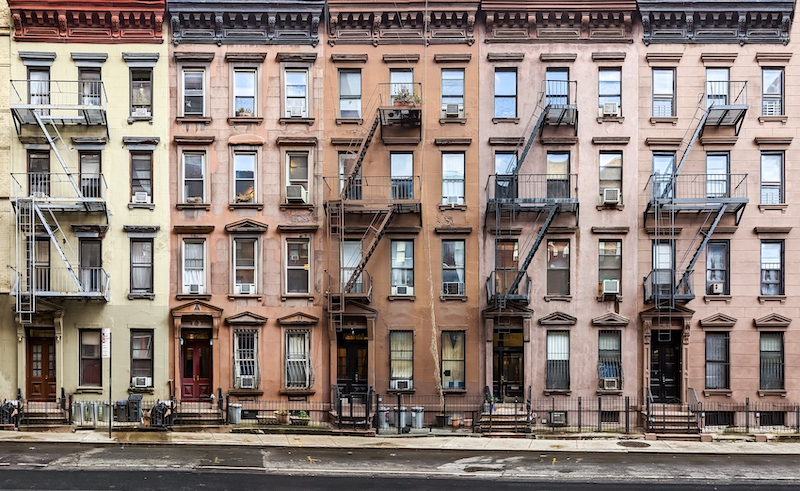
Many market rate apartment buildings in New York may be affected by the Good Cause Eviction Law, depending on whether they meet the law’s coverage requirements or qualify for an exemption.

Brian Phillips | The Mobile Broker | New York City Real Estate Advisor and Housing Market Commentator