
Originally published June 21, 2024 | Updated August 2026
🏙️ Leadership in real estate extends beyond helping people buy, sell or rent property. It also involves participating in the public policy discussions that can reshape our industry and affect the tenants, property owners and communities we serve.
On June 12, 2024, serving as Chair of the New York City Issues Working Group at the New York State Association of REALTORS® (NYSAR) gave me an opportunity to do exactly that. I was among the first real estate professionals to speak at a rally outside City Hall and subsequently testify before the New York City Council regarding Intro 360, better known as the Fairness in Apartment Rental Expenses, or FARE, Act.
After nearly three decades working in New York City real estate, appearing before the Council allowed me to bring firsthand experience into a debate that had significant implications for renters, property owners and licensees across the five boroughs.
A PLATFORM FOR ADVOCACY
Taking on the role of Chair was more than accepting a title. It carried a responsibility to listen to different perspectives, understand proposed legislation and help communicate how changes developed at City Hall could affect people navigating the housing market every day.
The New York City Issues Working Group is a subcommittee of NYSAR’s Legislative Steering Committee and reports directly to it. Serving as Chair also afforded me the opportunity to serve on the Legislative Steering Committee, giving me a direct role in connecting concerns specific to New York City with the association’s statewide legislative discussions. The working group monitors state and city policies involving real estate issues across the five boroughs and helps ensure that the city’s distinctive housing market is represented within NYSAR’s advocacy efforts.
New York City is also unlike many housing markets across the country. Roughly two-thirds of New York City households rent rather than own, making rental housing an especially important part of the city’s residential market. Manhattan also has an unusually large concentration of cooperative apartments, which dominate much of its traditional for-sale apartment inventory and can involve extensive financial disclosures, applications and board approval requirements. The borough’s listing infrastructure also differs from the traditional Multiple Listing Service model prevalent in many other markets. Experienced agents routinely help consumers navigate co-op and condominium applications, financial requirements, fair housing regulations, rental qualifications and an increasingly complex regulatory environment.
Those characteristics are important when evaluating housing legislation because a policy that appears straightforward can have consequences extending beyond its original objective. Understanding how apartments are marketed, how owners select representation and how renters locate available housing is an important part of evaluating what happens when longstanding practices change.
THE JUNE 12 HEARING AT CITY HALL
🏛️ More than 400 people signed up to testify at the June 12 City Council hearing as supporters and opponents debated who should be responsible for paying a broker in a rental transaction. The turnout reflected how strongly New Yorkers on both sides felt about an issue directly connected to the already substantial upfront cost of renting an apartment.
I was privileged to be among the first to speak at both the rally and before the City Council, where I addressed potential consequences for real estate professionals, small property owners and tenants. My testimony focused not simply on broker compensation, but on what could happen throughout the rental marketplace if the financial responsibility for representation changed.
Among the concerns was whether fewer owners would retain agents, whether some of the additional expense could eventually be incorporated into rents and whether fewer apartments would be publicly marketed. There were also questions about how the proposal could affect independent agents and smaller brokerage businesses, as well as consumers who rely upon experienced professionals to locate housing and navigate complicated rental requirements.
ADVOCATING FOR FAIR AND PRACTICAL HOUSING POLICY
⚖️ The affordability concerns behind Intro 360 were understandable. Moving into a New York City apartment can require thousands of dollars upfront, and reducing that financial burden was central to the argument made by supporters of the legislation.
My testimony brought another perspective to the discussion by examining how changing the payment structure could affect the services available to consumers and the livelihoods of agents, including Black and Brown licensees who largely serve underrepresented communities. I also raised concerns about small property owners and whether requiring them to absorb another expense could influence rents, marketing decisions or their willingness to retain professional representation.
These questions were not arguments against addressing affordability. They reflected the need to consider whether shifting broker fees from tenants to landlords would actually reduce renters’ overall housing costs or instead lead to higher rents, fewer publicly advertised listings, reduced access to professional assistance and additional financial pressure on small property owners.
WHAT HAPPENED TO THE FARE ACT?
📜 The June hearing was only one stage of a debate that continued throughout 2024. The City Council ultimately approved an amended version of the FARE Act, which became Local Law 119 of 2024 and took effect on June 11, 2025.
The law changed a longstanding practice in the city’s rental market. A broker representing a landlord, including the listing agent, can no longer charge that broker’s fee to the prospective tenant. Renters may still independently hire and compensate their own representative, and the legislation also established additional disclosure requirements concerning fees associated with an apartment.
The outcome was not the one many industry professionals advocated for, but participating in the legislative process was still important. Public hearings allow people with firsthand experience to question assumptions, explain how proposed rules may operate in practice and place potential consequences on the public record before elected officials make their decisions.
BUILDING TRUST THROUGH PARTICIPATION
🤝🏽 My experience as Chair reinforced the importance of bringing different perspectives into discussions about housing. Tenants, small property owners, housing advocates, elected officials and real estate professionals can look at the same proposal and see very different benefits, risks and unintended effects.
That is precisely why participation is crucial. Advocating for fair housing, educating property owners, helping consumers navigate complicated transactions and communicating with policymakers are connected parts of creating a housing marketplace that is accessible, transparent and workable.
My involvement has also reinforced something I have observed throughout my career: policies developed in government eventually reach the people working directly with buyers, sellers, renters and property owners. Bringing their experiences into the legislative process can help elected officials understand how a proposal may affect housing availability, affordability, transaction costs and day to day operations in ways that may not be apparent from the language of a bill alone.
LOOKING BACK AND MOVING FORWARD
🌆 Looking back on June 12, 2024, I remain grateful that serving as Chair of the New York City Issues Working Group gave me the opportunity to bring the perspective of working real estate professionals directly to City Hall. The FARE Act eventually became law, yet the experience demonstrated why industry participation in government remains essential regardless of the final outcome of any particular legislation.
Decisions made at City Hall, in Albany and in Washington can influence how housing is built, financed, marketed, rented and sold. Real estate professionals who work every day with buyers, sellers, renters and property owners can help policymakers understand how a proposal that appears straightforward on paper may affect actual transactions, housing costs and access to available homes in a market as complex as New York City.
I remain grateful to the New York State Association of REALTORS® for entrusting me with the responsibility of chairing the working group and to the colleagues who contributed their experiences and perspectives throughout the process. The laws governing real estate will continue to evolve, making thoughtful participation and collaboration increasingly important.
Having a seat at the table provides an opportunity to be heard, but using that seat to bring the experiences of others into the discussion is where leadership can make a difference.
Looking Ahead
Although my term as Chair has concluded, I remain an active member of the NYSAR New York City Issues Working Group. My focus continues to be advancing housing policies that promote fairness, accessibility and a sustainable real estate market, while ensuring that the experiences of real estate professionals, consumers and property owners are represented in policy discussions.
Serving as Chair strengthened my commitment to advocacy and gave me a greater understanding of how professional participation can influence decisions made at City Hall and across New York State. I remain grateful to the New York State Association of REALTORS® for entrusting me with that leadership responsibility and for the opportunity to continue working alongside colleagues dedicated to our profession and the communities we serve.
Leadership does not end when a title changes. It continues through the willingness to remain involved, share practical experience and help shape policies that affect housing throughout New York City and beyond.
📚 SOURCES AND FURTHER READING
-
THE CITY: Rental Broker Fee Bill Nears Veto-Proof Support as Council Hears Raucous Public Reactions — June 12, 2024. Coverage of the City Council hearing, including my testimony: “The FARE Act, while well-intentioned, could lead to higher rents and reduced listing visibility, ultimately harming tenants.
- RISMedia: New York City Council Broker Fee Legislation Attracts Crowds, Supporters, Protestors — June 13, 2024. Coverage of the hearing and the opening public-comment panel, including my testimony.
- New York City Council: FARE Act Becomes Law — December 14, 2024. Official City Council information on the Fairness in Apartment Rental Expenses Act becoming law.
- NYC Department of Consumer and Worker Protection: FARE Act Information — Information explaining the FARE Act, broker fee requirements and protections for New York City renters.
- NYSAR Leadership Academy and Class of 2023 Alumni
📞 THINKING ABOUT BUYING, SELLING OR RENTING IN NEW YORK CITY?
Housing policies, brokerage practices, consumer protections and legislation such as the FARE Act continue to reshape New York City real estate. For buyers, sellers, renters and property owners, understanding how these changes interact with an already complex housing market can be increasingly important.
If you are considering buying, selling or renting a home in New York City, feel free to reach out 📩. I am happy to discuss current market conditions, pricing, available inventory and how changes affecting the real estate industry may influence your next move.
My involvement in real estate advocacy, including serving as 2024 Chair of the NYSAR New York City Issues Working Group, has given me the opportunity to bring the experiences of consumers and real estate professionals into policy discussions while remaining closely connected to what is happening in the market every day.
For individualized legal, tax or other professional guidance concerning the FARE Act, broker compensation, fair housing requirements or other laws and regulations affecting a real estate transaction, consult the appropriate qualified professional.
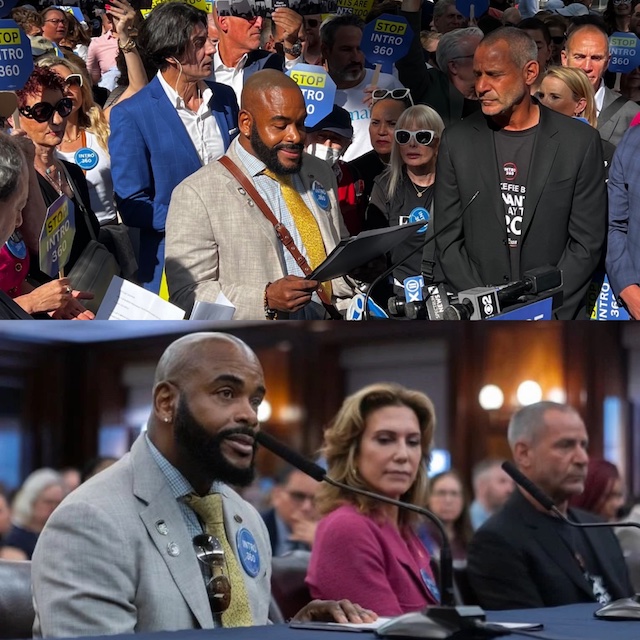
Serving as 2024 Chair of the NYSAR New York City Issues Working Group, I spoke at the June 12 FARE Act rally outside City Hall and testified before the New York City Council.

Brian Phillips | The Mobile Broker | New York City Real Estate Advisor and Housing Market Commentator