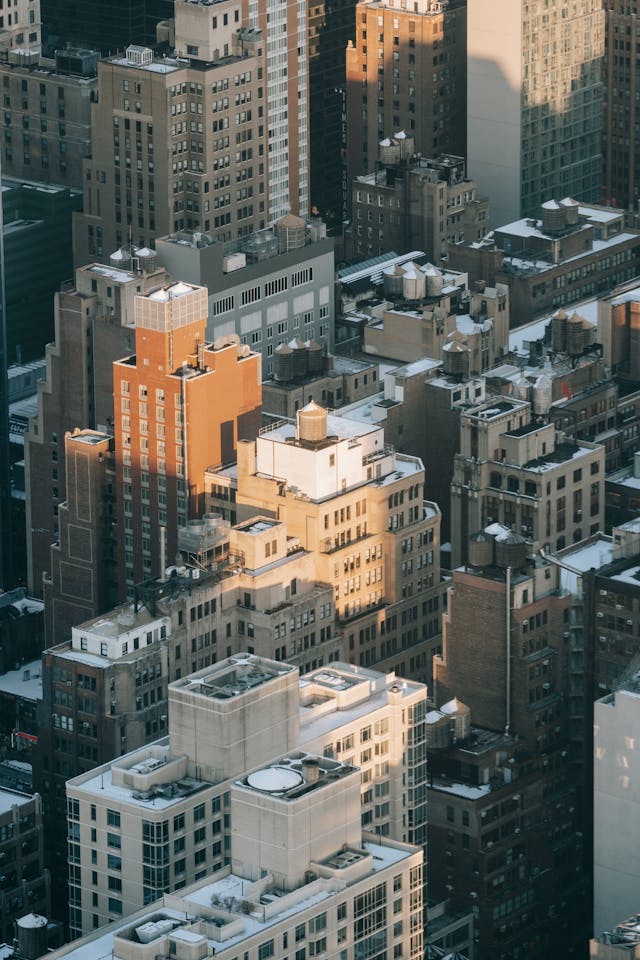
🌿 Local Law 97 (LL97) is New York City’s ambitious building emissions law. Most buildings over 25,000 square feet now face carbon caps, and starting with the first compliance period, owners that exceed their limits will be fined $268 per metric ton of CO₂-equivalent emissions above the cap, plus extra penalties for late or false reporting.
For co-op and condo boards, multifamily owners, and commercial landlords, this is no longer a future issue. It is a budget line item.
What Is Local Law 97?
Local Law 97 is part of NYC’s Climate Mobilization Act, which targets greenhouse gas emissions from buildings, responsible for roughly 70% of the city’s carbon footprint. Local Law 97 is New York City’s local response to global climate change. As extreme heat, flooding, and energy demand increase, the city is using building emissions limits to reduce pollution, protect infrastructure, and lower long-term climate risk. In other words, LL97 is not just about energy efficiency. It is about adapting the city to a warming climate and preventing worse environmental and financial damage in the future.
Key points:
-
Applies to most buildings over 25,000 square feet and certain groups of smaller buildings.
-
Sets emissions limits per square foot, based on building type.
-
Phases in tighter caps over time, with the goal of carbon neutrality by 2050.
When Do Penalties Start?
-
First compliance period: 2024–2029
-
First emissions report: Due May 1, 2025, via the LL97 reporting portal.
-
Penalties: Assessed based on 2024 emissions and subsequent years.
If a building is over its emissions limit, owners can expect fines beginning in 2025 and continuing annually if they do not comply.
Do Newer and Smaller Buildings Have to Worry Yet?
Most buildings under 25,000 square feet are not covered by Local Law 97 unless they are part of a group of connected properties that together exceed 50,000 square feet. This means many small walk-up buildings and brownstones are currently exempt.
Newer buildings constructed after 2019 are generally more energy-efficient and often meet the early emissions caps. However, they are not permanently exempt. As limits tighten in 2030 and again in 2035, even newer buildings may need additional upgrades to remain compliant.
How LL97 Penalties Are Calculated
According to DOB guidance and industry summaries:
-
Exceeding emissions limits
-
Fine: $268 per metric ton of CO₂-equivalent above the assigned limit each year.
-
-
Failure to file a required report
-
Fine: $0.50 per square foot per month until the report is submitted, with grace through June 30 in some cases.
-
-
False or misleading statements in reports
-
Fine: Up to $500,000 for knowingly false filings.
-
For a 100,000 square foot building that is significantly over its limit, the annual penalty can easily reach six or seven figures if no action is taken.
Who Is Most at Risk?
-
Older, fuel-oil or gas-heated buildings with limited efficiency upgrades
-
Large co-ops and condos that have delayed boiler, envelope, or electrification projects
-
Commercial properties with intensive energy use (data centers, some offices, hotels)
Some buildings have been able to obtain extensions or alternate compliance paths, but those are limited and often require a documented plan.
What Boards and Owners Should Be Doing Now
1. Confirm Your Emissions Profile
-
Pull your benchmarking data (Local Law 84) and energy bills.
-
Work with an engineer or energy consultant to estimate:
-
Your current emissions
-
Your building’s LL97 limit
-
Your penalty exposure if you do nothing
-
2. Prioritize “No-Regret” Upgrades
Many buildings start with measures that are cost-effective and non-disruptive, such as:
-
LED lighting, controls, and sensors
-
Boiler tuning, better controls, or burner upgrades
-
Weatherization, air sealing, and basic envelope fixes
-
Heat-pump domestic hot water in some configurations
These often deliver quick energy savings and reduce emissions while you plan larger projects.
3. Plan for Bigger Moves
To meet the 2030 and 2040 caps, owners may need to consider:
-
Electrification of heating and hot water
-
Deep envelope retrofits and window replacement
-
On-site renewables where feasible
These projects are capital-intensive, so boards and owners should:
-
Update reserve studies
-
Explore green financing or PACE loans
-
Coordinate LL97 work with required façade, roof, or elevator projects
How LL97 Interacts With Co-ops, Condos, and Small Landlords
-
In co-ops and condos, penalties ultimately fall on shareholders or unit owners, typically via maintenance or common charges.
-
Building decisions run through the board, which must balance affordability with compliance.
-
Smaller landlords in mid-sized buildings may face tough choices if retrofits and rising insurance and tax costs collide with limited rent flexibility, especially under Good Cause Eviction. Rising insurance costs are closely tied to climate risk and building condition. As insurers factor in flood exposure, heat stress, aging systems, and energy inefficiency, many owners are seeing sharp premium increases or coverage restrictions. Buildings that delay LL97 compliance may face higher insurance costs on top of fines, while properties that upgrade mechanical systems and improve energy performance are increasingly seen as lower risk by insurers.
Framing LL97 as a multi-year capital planning issue, rather than a one-off fine, is essential.
Penalties vs. Investment: The Real Tradeoff
Owners essentially face a choice:
-
Pay penalties year after year and risk higher fines as caps tighten
-
Invest in upgrades that reduce emissions, improve comfort, and protect long-term asset value
Given rising energy prices and policy momentum, most experts see LL97 as a signal that inefficient buildings will become more expensive to operate and less competitive over time.
Has Federal Policy Tried to Slow This Down?
Because Local Law 97 is a city law, no US president can directly repeal or suspend it. However, during President Trump’s prior administration, federal climate regulations were rolled back and enforcement standards at the Environmental Protection Agency were weakened. While these actions did not stop LL97, they reduced federal momentum around building emissions and created uncertainty around funding for green upgrades. New York City has continued to move forward independently, and LL97 remains fully in effect regardless of changes in Washington.
Sources:
LL97 Greenhouse Gas Emissions Reduction
2025 NYC Local Law Compliance: Updated Deadlines You Should Know [Updated October 2025]
Rising costs from climate change is driving insurers out of New York
Soaring Insurance Costs Hit Owners of NYC Rent-Stabilized
Units
EMBRACING SUSTAINABILITY: THE RISE OF GREEN BUILDINGS IN NYC REAL ESTATESUSTAINABLE BUILDING TRENDS IN NYC: BEYOND STRAW TO PASSIVE HOUSE AND GREEN ROOFS