
A Property Resilience Assessment is becoming increasingly important as climate conditions and natural hazards reshape how buyers, property owners, developers, lenders, and investors evaluate real estate. Flooding, extreme heat, severe storms, wildfire, and other events can affect insurance, financing, operating expenses, property values, and long term ownership costs.
Originally Published September 20, 2025
Updated for 2026
HIGHLIGHTS
ASTM International’s E3429-24 Standard Guide for Property Resilience Assessments establishes a voluntary framework for examining natural hazard exposure, building vulnerabilities, potential consequences, and measures that could improve a property’s ability to withstand and recover from disruptive events.
For buyers, homeowners, developers, lenders, investors, insurers, and property managers, these considerations extend well beyond whether a building sits in a designated flood zone. Extreme heat, heavy rainfall, storm surge, coastal flooding, wildfire, severe wind, snow, hail, drought, seismic activity, erosion, and other natural events can influence physical damage, operating expenses, insurance, financing, recovery time, capital planning, and long term performance.
As climate conditions, insurance markets, and underwriting standards continue to evolve, understanding how a building may respond to future events is becoming another important layer of real estate due diligence.
📋 WHAT YOU’LL LEARN
This guide explains what a Property Resilience Assessment is, how ASTM E3429-24 works, which natural hazards may be considered, and why identifying exposure is different from evaluating the vulnerability of an individual building.
It also examines what these issues mean for New York City, where coastal flooding, heavy rainfall, storm surge, extreme heat, aging infrastructure, and an extraordinarily diverse building stock can create very different conditions from one neighborhood, block, or structure to another. Buyers, sellers, homeowners, developers, lenders, investors, and property managers increasingly need to understand not only what a building is worth today, but also how environmental conditions could affect its costs, insurability, financing, marketability, and long term value.
🌎 WHY PROPERTY RESILIENCE ASSESSMENT IS BECOMING A REAL ESTATE ISSUE
Real estate has always been about location, but understanding location today increasingly requires looking beyond schools, transportation, neighborhood amenities, taxes, and comparable sales. Environmental exposure and a building’s ability to withstand disruptive events can also influence the true cost and long term viability of ownership.
Two buildings located only blocks apart may face very different circumstances because of elevation, construction type, drainage, basement conditions, surrounding infrastructure, previous improvements, and the location of electrical, heating, cooling, and other critical systems. A structure can therefore be exposed to flooding, extreme heat, severe storms, or another natural event without necessarily having the same vulnerability as a neighboring building.
That distinction is important because broad maps and regional projections can identify potential exposure, but they do not necessarily explain how an individual structure is likely to perform. A Property Resilience Assessment adds another layer of analysis by considering characteristics specific to the site and identifying measures that may reduce damage, disruption, or recovery time.
WHAT IS A PROPERTY RESILIENCE ASSESSMENT?
A Property Resilience Assessment, commonly referred to as a PRA, is a structured process for examining natural hazards that may affect real estate and evaluating the ability of a particular asset to prepare for, adapt to, withstand, and recover from those events.
ASTM International formalized this approach through ASTM E3429-24, Standard Guide for Property Resilience Assessments. The voluntary standard can be used by purchasers, tenants, owners, investors, lenders, developers, designers, building professionals, insurers, managers, and others seeking a more comprehensive understanding of natural hazard exposure.
Importantly, a Property Resilience Assessment is not limited to climate change. ASTM’s framework encompasses a broader range of natural events, including some whose frequency or severity may be influenced by changing climate conditions and others, such as earthquakes, that are not primarily climate driven.
This broader approach makes the process potentially useful for acquisition due diligence, development planning, financing, underwriting, portfolio management, capital improvements, operations, maintenance, and long term investment strategy.
THE THREE STAGES OF A PROPERTY RESILIENCE ASSESSMENT
ASTM’s framework is organized into three stages, allowing the level of analysis to become progressively more detailed depending on the needs of the person or organization commissioning the work.
Stage 1 identifies relevant natural hazards that could reasonably affect the site. This initial screening helps determine which conditions warrant additional attention and whether more detailed analysis may be appropriate.
Stage 2 evaluates vulnerability, consequences, and resilience by examining how the identified conditions could affect the particular building or site. Rather than stopping at the existence of a potential threat, this stage considers characteristics that may increase or reduce the likelihood of damage and disruption.
Stage 3 identifies conceptual measures that could improve performance. Depending on the circumstances, these recommendations may address building systems, physical improvements, operational planning, or other strategies intended to reduce potential losses and improve recovery.
Not every transaction or building requires the same depth of review. The appropriate scope can depend on location, asset type, anticipated exposure, intended use of the report, available information, resources, and the client’s tolerance for uncertainty. For an investor with a large portfolio, for example, an initial screening may help identify which assets deserve more detailed investigation before additional resources are committed.
WHICH NATURAL HAZARDS MAY BE CONSIDERED?
The range of conditions addressed by ASTM E3429-24 is considerably broader than flooding alone. Depending on geography and the scope of the review, the process may consider extreme heat and cold, heavy snow, hail, earthquakes, landslides, land subsidence, coastal erosion, heavy rainfall, drought, wind driven rain, freezing rain, freeze thaw conditions, storm surge, coastal and river flooding, surface flooding, wildfire, hurricanes, winter storms, severe thunderstorms, tornadoes, and other wind events.
Geography determines which concerns deserve the greatest attention. Wildfire and seismic activity may be particularly significant in parts of California, while hurricane winds, storm surge, and coastal flooding are major considerations throughout portions of Florida and the Gulf Coast.
New York City presents its own combination of challenges. Coastal exposure, intense rainfall, storm surge, extreme heat, aging infrastructure, density, basement and cellar spaces, and the enormous variety of building types can create dramatically different vulnerabilities even within the same neighborhood.
🗽 WHY THIS MATTERS IN NEW YORK CITY
New York City’s relationship with climate and natural hazard exposure is especially complex because tremendous real estate values coexist with dense development, extensive coastline, underground infrastructure, aging buildings, and neighborhoods situated at very different elevations.
With approximately 520 miles of shoreline, coastal flooding and storm surge remain significant concerns in parts of the five boroughs. Heavy rainfall presents another challenge because intense storms can overwhelm drainage infrastructure and cause flooding well beyond areas traditionally associated with coastal flood zones. Extreme heat adds yet another dimension, particularly in neighborhoods where building design, limited tree canopy, pavement, and other environmental conditions contribute to higher temperatures.
Lower Manhattan illustrates the scale of the longer term challenge. New York City’s climate planning has identified substantial portions of the area that could face increasing storm surge exposure in coming decades, prompting major public investments in coastal protection and adaptation.
Those public improvements are important, but they do not eliminate the need to understand conditions at the individual building level. A citywide flood protection project, upgraded sewer system, or new coastal barrier may reduce exposure, while the configuration and condition of a specific building can still determine how effectively it withstands an event and how quickly it returns to normal operations afterward.
For buyers and owners, this means climate due diligence should increasingly move from the neighborhood level to the building itself.
HAZARD EXPOSURE AND PROPERTY VULNERABILITY ARE NOT THE SAME
One of the most important concepts for consumers to understand is the difference between exposure and vulnerability. A flood map, for example, may indicate that a building is located in an area susceptible to flooding, but that information alone does not explain how severely the structure could be affected.
Consider two buildings facing similar flood exposure. One may have electrical panels, boilers, mechanical equipment, and other critical systems located in a vulnerable basement, along with a history of water infiltration and few protective improvements. Another may have elevated equipment, improved drainage, backflow protection, flood resistant materials, deployable barriers, and a documented emergency plan.
Both properties may face the same general threat, yet the potential damage, interruption, repair expense, and recovery time could be very different. A Property Resilience Assessment can help reveal those distinctions by moving the analysis beyond a map or generalized rating and examining characteristics specific to the asset.
A PROPERTY RESILIENCE ASSESSMENT IS NOT A PHASE I ENVIRONMENTAL SITE ASSESSMENT
A Property Resilience Assessment and a Phase I Environmental Site Assessment serve different purposes and should not be treated as interchangeable forms of due diligence.
A Phase I Environmental Site Assessment primarily investigates potential environmental contamination and recognized environmental conditions associated with a site. A PRA instead examines natural hazards, building vulnerability, possible consequences, existing protections, and measures that could improve future performance.
ASTM describes its PRA framework as complementary to established real estate due diligence practices rather than a replacement for them. Depending on the transaction, environmental reviews, property condition assessments, engineering inspections, flood information, insurance analysis, building records, and a Property Resilience Assessment may each contribute different information to a broader understanding of an asset.
For buyers, lenders, developers, and investors, that distinction is increasingly important. The question is no longer simply whether a building has environmental problems or sits within a particular flood zone. A more complete analysis considers what could happen, how the building might respond, what the financial consequences could be, and what can reasonably be done to reduce those risks.
🏡 WHAT A PROPERTY RESILIENCE ASSESSMENT MEANS FOR BUYERS
For buyers, understanding environmental exposure is becoming another important part of due diligence. Purchase price, property taxes, common charges, maintenance, building financials, inspections, and anticipated repairs remain essential, but they may not reveal how natural hazards could affect the future cost or usability of a home or investment.
A Property Resilience Assessment can provide additional context by identifying relevant natural hazards and examining characteristics that could make a particular asset more or less vulnerable. For a buyer considering a waterfront condominium, townhouse with a finished cellar, multifamily building, or commercial property, that information may reveal potential expenses that are not immediately apparent during a traditional showing or inspection.
The objective is not necessarily to discourage someone from purchasing in an area with environmental exposure. New York City contains highly desirable neighborhoods near the waterfront and in other locations where flooding, heat, or severe weather may warrant additional consideration. The more important question is whether the buyer understands those conditions, how the structure has been prepared for them, and what improvements or expenses may reasonably be anticipated.
That knowledge can influence negotiations, budgeting, insurance discussions, renovation plans, and ultimately whether the opportunity aligns with the buyer’s financial goals and tolerance for uncertainty.
🏙️ WHY HOMEOWNERS SHOULD PAY ATTENTION
Existing owners also have reason to understand how their properties may perform as environmental conditions evolve. Someone who purchased a home years ago may discover that flood maps, insurance requirements, neighborhood infrastructure, rainfall patterns, or recommended building practices have changed considerably since closing.
For homeowners, resilience planning may involve relatively straightforward measures such as improving drainage, installing backflow prevention, protecting basement areas, relocating mechanical equipment, upgrading cooling systems, maintaining roofs and gutters, or reviewing emergency procedures. Other buildings may require larger capital projects depending on their location, construction, and exposure.
Understanding these issues before a major event occurs can help owners prioritize improvements instead of reacting after damage has already happened. It can also provide useful context when planning renovations because resilience measures may sometimes be incorporated into work that is already being undertaken rather than treated as an entirely separate project.
For condominium and cooperative owners, the analysis extends beyond the individual apartment. Roofs, façades, boilers, electrical systems, elevators, mechanical equipment, drainage, garages, basements, common areas, and building wide insurance can all influence the long term costs shared by residents.
🏷️ WHAT SELLERS SHOULD UNDERSTAND
Climate related concerns are also becoming more relevant when properties are marketed for sale. Buyers may ask about previous flooding, water infiltration, insurance claims, drainage improvements, flood zones, mechanical systems, emergency generators, building upgrades, and other conditions that could affect future ownership.
A seller whose property has undergone meaningful resilience improvements may have an opportunity to explain those investments as part of the home’s overall story. Elevated mechanical equipment, flood mitigation measures, improved drainage, upgraded roofing, storm resistant components, energy efficient cooling, or other documented work can provide useful information to prospective purchasers.
However, sellers and their agents should avoid presenting improvements as guarantees against future damage. A building can be better prepared without being immune from severe weather or other natural events. Accurate documentation and careful language are therefore more valuable than broad claims about safety or future performance.
Where disclosure obligations apply, owners should also work with their attorneys and other qualified professionals to ensure that known conditions are addressed appropriately. A Property Resilience Assessment does not replace statutory disclosures, engineering advice, inspections, or legal guidance.
🏗️ WHY DEVELOPERS SHOULD CONSIDER RESILIENCE EARLY
For developers, resilience can influence a project long before construction begins. Site selection, elevation, drainage, building orientation, materials, mechanical systems, landscaping, energy performance, emergency power, cooling capacity, and the placement of critical infrastructure can all affect how a completed development responds to future conditions.
Addressing these considerations during design may be more practical than attempting to retrofit a completed building later. A development team that identifies significant exposure early can evaluate potential solutions while architects, engineers, consultants, contractors, lenders, and investors are still making fundamental decisions about the project.
In New York City, these considerations can be particularly important for waterfront development, below grade spaces, mixed use projects, large multifamily buildings, and sites in areas affected by coastal or stormwater flooding. Development teams must also consider applicable zoning, building code requirements, environmental review, infrastructure, and other regulatory standards alongside any voluntary resilience analysis.
A Property Resilience Assessment can therefore become one component of a larger planning process rather than an isolated report completed shortly before financing or closing.
💰 LENDERS ARE LOOKING BEYOND TODAY’S PROPERTY VALUE
Lenders are primarily concerned with whether collateral will retain sufficient value and whether borrowers can continue meeting their financial obligations. Natural hazards can affect both considerations when damage results in major repairs, business interruption, displacement, increased operating expenses, insurance complications, or declining marketability.
For commercial and multifamily lending, these questions can become particularly important because an event may affect rental income and building operations in addition to the physical structure. A severely damaged property could face repair expenses while simultaneously experiencing vacancies or interrupted revenue.
A Property Resilience Assessment may help lenders better understand exposure at the individual asset level, particularly when financing properties in locations where flooding, severe weather, extreme heat, wildfire, or other events warrant closer examination.
This does not mean every lender will require a PRA or that the assessment determines whether financing will be approved. Underwriting standards vary by institution, asset class, transaction, geography, and loan structure. The broader trend, however, is toward incorporating more information about physical climate and natural hazard exposure into long term risk management.
📊 WHY INVESTORS SHOULD LOOK BEYOND THE CAP RATE
For investors, resilience can affect many of the assumptions underlying an acquisition. A property may appear attractive based on current income, expenses, occupancy, financing, and projected appreciation, yet future capital requirements can materially alter expected returns.
Insurance premiums, deductibles, energy expenses, drainage improvements, cooling systems, façade or roof work, flood mitigation, emergency power, mechanical relocation, and other capital projects can affect operating performance over time. In some circumstances, recurring disruptions may also influence tenant demand, vacancy, rent growth, or eventual resale.
This is particularly relevant when comparing assets that initially appear financially similar. Two multifamily properties may generate comparable income today while carrying very different long term exposure because of location, construction, infrastructure, and existing protective measures.
Incorporating resilience into investment analysis does not mean attempting to predict every future event. It means recognizing that physical conditions can affect financial performance and should be considered alongside traditional measures such as net operating income, debt service, capital expenditures, and anticipated returns.
🏢 PORTFOLIO OWNERS FACE A DIFFERENT CHALLENGE
Owners of multiple properties must consider not only the vulnerability of individual buildings but also whether similar exposures are concentrated across an entire portfolio. An investor with several assets in the same coastal area, for example, could experience losses at multiple locations following a single major storm.
Portfolio analysis can help identify concentrations that may not be obvious when properties are evaluated individually. Geographic diversification, building type, construction age, infrastructure, insurance arrangements, and existing mitigation measures can all influence the overall picture.
The staged structure of ASTM’s framework can be useful in this context. An owner may begin with broader screening across multiple assets and then commission more detailed analysis for locations where the initial review identifies significant concerns.
This approach can help prioritize capital rather than treating every building as if it faces the same circumstances.
🛡️ INSURANCE IS BECOMING PART OF THE RESILIENCE CONVERSATION
Insurance is one of the most important financial considerations associated with natural hazards, but the relationship between resilience and insurance requires careful explanation.
A Property Resilience Assessment does not guarantee lower insurance premiums, nor does ASTM provide a universal PRA score that automatically determines what an insurer will charge. Premiums and coverage depend on numerous factors, including location, construction, claims history, replacement cost, coverage limits, deductibles, insurer underwriting criteria, catastrophe models, regulatory requirements, and broader market conditions.
Nevertheless, the physical characteristics of a building and documented mitigation measures may be relevant to an insurer’s evaluation. Owners considering major resilience improvements should therefore speak directly with qualified insurance professionals about whether particular measures could affect coverage, deductibles, underwriting, or available programs.
For buyers, obtaining insurance information early in the transaction is increasingly important. Discovering late in the process that coverage is significantly more expensive, carries a substantial deductible, excludes certain losses, or requires additional flood insurance can materially change the economics of a purchase.
🌊 FLOOD ZONES ARE IMPORTANT, BUT THEY ARE NOT THE WHOLE STORY
One of the easiest mistakes for a buyer or owner to make is assuming that being outside a high risk FEMA flood zone means flooding is not a concern.
FEMA flood maps are important tools, particularly for federal flood insurance and lending requirements, but they do not capture every possible source of water damage. Intense rainfall can overwhelm drainage systems and create street or inland flooding in locations far from the shoreline. Sewer backups, groundwater, drainage conditions, topography, and the configuration of a particular building can also contribute to losses.
New York City has experienced increasingly visible examples of extreme rainfall affecting streets, basements, subway infrastructure, and buildings outside areas people traditionally associate with coastal flooding.
For that reason, due diligence should consider the source of potential flooding rather than treating all water related exposure as one issue. Coastal surge, tidal flooding, heavy rainfall, sewer backups, groundwater, and riverine conditions involve different mechanisms and may require different responses.
🌡️ EXTREME HEAT CAN ALSO AFFECT REAL ESTATE
Flooding often dominates discussions about climate related property risk in New York City, but extreme heat deserves greater attention. Buildings with inadequate cooling, poor insulation, limited ventilation, aging mechanical systems, dark roofs, or significant solar exposure may become increasingly expensive or uncomfortable to operate during prolonged periods of high temperatures.
Heat can also affect common areas, elevators, electrical systems, landscaping, roofs, façades, and other building components. At the neighborhood level, tree canopy, parks, building density, pavement, and access to cooling resources can contribute to substantial temperature differences across the city.
For buyers and investors, these conditions may influence utility expenses, future capital improvements, tenant comfort, marketability, and operating performance. Developers and existing owners may therefore consider cooling capacity, insulation, shading, energy efficiency, roofing, landscaping, and other measures as part of broader resilience planning.
💵 HOW CLIMATE EXPOSURE CAN INFLUENCE PROPERTY VALUE
There is no universal formula showing that a property exposed to a particular natural hazard will lose a specific percentage of its value. Real estate values reflect numerous factors, including location, supply, demand, interest rates, property condition, neighborhood amenities, taxes, insurance costs, financing availability, and buyer perceptions.
Climate related conditions can become part of that equation when they materially affect the cost, usability, insurability, or desirability of an asset. A history of repeated flooding, substantial insurance expenses, large future mitigation projects, or difficulty obtaining financing may influence what buyers are willing or able to pay.
The opposite can also be true. A well located property that has undergone thoughtful improvements may remain highly desirable even when the surrounding area faces known environmental challenges.
For that reason, resilience should not be viewed as a simple label separating “good” properties from “bad” ones. The more useful analysis asks how exposure interacts with the physical building, financial obligations, available protections, market demand, and anticipated ownership period.
🗽 NEW YORK CITY REAL ESTATE REQUIRES PROPERTY SPECIFIC DUE DILIGENCE
New York City’s building stock makes generalized conclusions particularly difficult. A prewar cooperative on the Upper West Side, a brownstone in Harlem, a waterfront condominium in Brooklyn, a multifamily building in Queens, and a single family home on Staten Island may face completely different environmental and structural considerations.
Even properties within the same neighborhood can differ substantially because of elevation, lot configuration, construction, basement or cellar conditions, mechanical systems, previous renovations, drainage, roof design, and proximity to infrastructure.
That is why buyers should avoid making decisions based solely on a ZIP code, neighborhood reputation, flood zone designation, or online climate rating. Those resources can provide useful screening information, but they should be considered alongside inspections, engineering reports, insurance information, building records, financial documents, and other due diligence appropriate to the transaction.
A Property Resilience Assessment can add another layer when the property’s characteristics, location, transaction size, or intended use justify a deeper examination.
QUESTIONS BUYERS AND INVESTORS SHOULD BEGIN ASKING
Climate related due diligence does not require every consumer to become an engineer or environmental specialist. It does, however, require asking better questions about the building and looking beyond what is immediately visible during a showing.
Buyers and investors should consider whether the property has experienced previous flooding or significant weather related damage, where boilers and electrical equipment are located, whether drainage or backflow protection has been improved, what insurance coverage currently costs, whether substantial deductibles apply, and whether the building has undertaken resilience projects.
For condominiums and cooperatives, board minutes, financial statements, engineering reports, capital plans, insurance information, reserve levels, and assessments may provide additional insight into how the building is preparing for future needs. For townhouses and smaller properties, inspections, seller disclosures, municipal records, insurance discussions, and specialist evaluations may become more important.
The objective is not to eliminate uncertainty, because no assessment can predict precisely what will happen to a property decades into the future. The goal is to understand enough about the asset to make an informed decision about price, financing, insurance, improvements, ownership costs, and long term risk.
⚠️ WHAT A PROPERTY RESILIENCE ASSESSMENT CANNOT TELL YOU
A Property Resilience Assessment can provide valuable information, but it should not be interpreted as a prediction of exactly what will happen to a building or investment in the future. Natural events are inherently uncertain, climate projections evolve, building conditions change, and improvements made after an evaluation can alter how an asset may perform.
A PRA also does not guarantee that a property will avoid damage, remain insurable, qualify for financing, maintain its value, or recover quickly following a major event. The analysis is only one component of a broader due diligence process and should be considered alongside engineering inspections, environmental reviews, insurance information, building records, financial statements, municipal data, and advice from appropriate professionals.
The quality of the analysis also depends on the scope of work, information available to the assessor, condition of the building, methodology used, and level of investigation commissioned. A preliminary screening and a detailed evaluation do not provide the same depth of information, which is why buyers, owners, lenders, and investors should understand exactly what was reviewed before relying on the findings.
WHY CLIMATE MODELS AND PROPERTY CONDITIONS CAN CHANGE
Climate science provides increasingly sophisticated information about future conditions, but projections are not guarantees. Models rely on assumptions about emissions, temperature, precipitation, sea level rise, development, infrastructure, and other variables that can change over time.
The physical condition of real estate also evolves. A building evaluated today may undergo a roof replacement, mechanical upgrade, drainage improvement, flood mitigation project, façade restoration, or major renovation several years from now. Public infrastructure can change as well through sewer improvements, coastal protection projects, expanded green space, drainage upgrades, and other government investments.
For those reasons, resilience should not be treated as something evaluated once and forgotten. Owners of assets with meaningful exposure may benefit from revisiting conditions periodically, particularly before major renovations, refinancing, acquisitions, or significant capital investments.
🏙️ A REALISTIC NEW YORK CITY EXAMPLE
Consider two condominium buildings located near the Brooklyn waterfront. Both offer similar apartment sizes, amenities, transportation access, and asking prices, and both may initially appear comparable to a buyer reviewing listings online.
The first building has important mechanical and electrical equipment below grade, a history of water intrusion, limited flood mitigation, and substantial insurance deductibles. Its board is considering a significant capital project to address drainage and relocate vulnerable equipment.
The second building faces similar geographic exposure but has already elevated critical systems, installed flood protection measures, improved drainage, strengthened emergency procedures, and incorporated resilience planning into its long term capital program.
A flood map might place both buildings within a similar area of concern, yet the potential financial consequences of ownership could be very different.
A buyer evaluating only asking price, monthly charges, amenities, and comparable sales could overlook those distinctions. Reviewing building records, insurance, capital plans, engineering information, and, where appropriate, a Property Resilience Assessment can provide a more complete picture before a contract is signed.
This is why environmental exposure should be considered in context rather than used as a reason to automatically reject an otherwise desirable property.
🛠️ RESILIENCE DOES NOT ALWAYS REQUIRE A MAJOR CONSTRUCTION PROJECT
Discussions about climate adaptation often bring to mind enormous seawalls, elevated buildings, or multimillion dollar infrastructure projects. While major interventions are sometimes necessary, improvements can vary considerably in complexity and cost.
Depending on the building, measures may include improved drainage, backflow prevention, flood barriers, relocated mechanical equipment, upgraded roofing, better insulation, more effective cooling, emergency power, water resistant materials, enhanced landscaping, protected electrical systems, or revised emergency procedures.
The appropriate strategy depends on the specific asset and the conditions it faces. A townhouse with a below grade level will have different priorities from a high rise condominium, multifamily rental building, warehouse, office property, or waterfront development.
Owners should therefore avoid adopting improvements simply because they worked somewhere else. Engineers, architects, environmental consultants, insurance professionals, and other specialists can help determine which measures are appropriate and whether they provide a reasonable benefit relative to cost.
RESILIENCE SHOULD BE PART OF CAPITAL PLANNING
One of the most practical ways owners can address future environmental conditions is by incorporating resilience into projects that are already planned.
If a building needs a new roof, owners can evaluate materials, insulation, drainage, and heat reduction at the same time. When mechanical equipment reaches the end of its useful life, the replacement project may provide an opportunity to reconsider where critical systems are located. A major façade, basement, landscape, or infrastructure project may similarly create opportunities to improve performance without undertaking a completely separate renovation.
For cooperatives and condominiums, these decisions can become part of reserve planning and long term capital budgeting. Boards that understand potential vulnerabilities can evaluate improvements alongside other priorities rather than waiting until an emergency forces immediate action.
For investors and developers, incorporating these considerations into capital expenditure projections can provide a more realistic picture of future ownership costs.
🔎 DUE DILIGENCE SHOULD GO BEYOND A SINGLE REPORT
No individual document can provide a complete picture of a property’s future exposure. A more thoughtful approach combines several sources of information and considers how they relate to one another.
Depending on the transaction, that review may include FEMA flood information, New York City flood and climate maps, engineering inspections, environmental reports, insurance policies, claims history where available, property condition assessments, building financials, board minutes, capital plans, municipal records, previous repairs, and information about planned public infrastructure.
A Property Resilience Assessment can complement these resources by organizing natural hazard considerations within a structured framework and examining how the characteristics of the particular asset may influence potential consequences.
For buyers, the objective is not to collect reports simply for the sake of having more paperwork. The value comes from understanding what the information means collectively and whether it changes the economics or suitability of the purchase.
QUESTIONS TO ASK BEFORE BUYING, DEVELOPING, OR INVESTING
Rather than asking only whether a property is located in a flood zone, consumers and real estate professionals should consider a broader set of questions. Has the building experienced flooding, water infiltration, storm damage, or other significant events? Where are critical mechanical and electrical systems located? What improvements have already been completed, and what projects are being considered?
Insurance deserves similar attention. Buyers should understand available coverage, premiums, deductibles, exclusions, and whether separate flood insurance may be required or advisable. Condominium and cooperative purchasers should also examine how the building’s master policy interacts with coverage for individual apartments.
Investors and developers may need to go further by considering business interruption, tenant displacement, future capital expenditures, infrastructure, financing requirements, and whether multiple assets share similar geographic exposure.
The answers will not eliminate uncertainty, but they can reveal issues that deserve further investigation before substantial financial commitments are made.
🤔 SHOULD EVERY PROPERTY HAVE A PROPERTY RESILIENCE ASSESSMENT?
Not necessarily.
The appropriate level of due diligence should reflect the property, location, transaction, intended use, and potential exposure. A buyer purchasing an apartment on an upper floor of a well managed building may have different concerns from an investor acquiring an entire waterfront multifamily property with critical systems below grade.
Likewise, a developer planning a large project may require considerably more sophisticated analysis than someone purchasing a small residential property.
The value of a Property Resilience Assessment is therefore not that every transaction must have one. Its value lies in providing a standardized framework when natural hazards and building performance are significant enough to warrant closer examination.
❓ FREQUENTLY ASKED QUESTIONS
Is a Property Resilience Assessment required by law?
A Property Resilience Assessment under ASTM E3429-24 is a voluntary due diligence framework rather than a universal legal requirement for real estate transactions. Particular lenders, investors, insurers, government programs, or transactions may have their own requirements, so parties should confirm what applies to the specific property and financing.
Is a PRA only about climate change?
No. The framework addresses a broader range of natural hazards. Some, including extreme heat, heavy rainfall, coastal flooding, drought, and wildfire, may be affected by changing climate conditions, while others, such as earthquakes, have different causes.
Is a Property Resilience Assessment the same as a flood report?
No. Flood information may be one component of the analysis, but the framework can address multiple natural hazards and considers how the characteristics of an individual building may affect vulnerability and recovery.
Does being outside a FEMA high risk flood zone mean a property cannot flood?
No. Flooding can result from intense rainfall, inadequate drainage, sewer backups, groundwater, coastal conditions, and other circumstances. FEMA maps are important resources, but they should not be interpreted as guarantees that properties outside designated high risk areas will never experience flooding.
Does a PRA replace a home inspection?
No. A traditional home or engineering inspection evaluates the physical condition of the building and its systems. A PRA serves a different purpose by examining natural hazard exposure and resilience. Depending on the transaction, both may provide useful but distinct information.
Will completing a PRA reduce insurance premiums?
Not automatically. Insurance pricing depends on many factors, and a Property Resilience Assessment does not guarantee a lower premium. Owners considering mitigation projects should discuss potential insurance implications directly with qualified insurance professionals before assuming that an improvement will result in savings.
Can a Property Resilience Assessment predict future property values?
No. Real estate values are influenced by supply, demand, location, interest rates, taxes, operating expenses, property condition, insurance, financing, neighborhood changes, and many other variables. Resilience information can add context to an investment decision, but it cannot predict a future sale price.
Does this apply only to commercial real estate?
No. Although standardized due diligence frameworks may be particularly relevant to commercial, multifamily, institutional, and development transactions, many of the underlying principles can also help residential buyers and homeowners think more carefully about environmental exposure and building performance.
🌎 THE BIGGER REAL ESTATE QUESTION
The growing focus on resilience reflects a broader change in how real estate is evaluated. For decades, buyers and investors concentrated primarily on location, comparable sales, income, expenses, financing, taxes, building condition, and anticipated appreciation.
Those considerations remain fundamental, but environmental exposure is becoming another part of the equation. A property’s long term performance may increasingly depend on how effectively it withstands disruptive events, how expensive it is to insure and maintain, and whether future improvements require substantial capital.
This does not mean climate considerations should overshadow every other factor. It means they deserve an appropriate place alongside the financial, physical, legal, and market information already considered during responsible due diligence.
THE BOTTOM LINE
A Property Resilience Assessment adds another dimension to understanding real estate by examining not simply where an asset is located, but how its particular characteristics may affect its ability to withstand and recover from natural hazards.
For buyers, that information can reveal potential ownership costs and vulnerabilities that may not be obvious from a listing or conventional inspection. Owners can use it to help prioritize improvements and capital planning, while developers may incorporate resilience earlier in design and construction. Lenders and investors can gain additional context when evaluating long term asset performance and portfolio exposure.
In New York City, these considerations are particularly relevant because coastal exposure, extreme rainfall, heat, aging infrastructure, density, and an extraordinarily diverse building stock can produce very different conditions from one block or structure to another.
The goal is not to predict the future with certainty. It is to ask better questions today so that buyers, owners, developers, and investors can make more informed decisions about tomorrow.
📚 SOURCES & FURTHER READING
-
ASTM International – Property Resilience Assessment (PRA) Standard
-
Urban Land Institute – Climate risk and resilience in real estate
-
Insurance Institute for Business & Home Safety – Resilience research
-
NYC Building Regulations for Property Owners: Gas, Fire Safety and Water
📩 THINKING ABOUT BUYING, SELLING, DEVELOPING, OR INVESTING IN REAL ESTATE?
Environmental exposure is becoming another consideration in real estate decision making, but it should never be viewed in isolation. Location, property condition, financing, insurance, building operations, market conditions, ownership costs, and long term goals all contribute to whether an opportunity makes sense.
For buyers, understanding potential vulnerabilities before purchasing can help uncover expenses that may otherwise emerge after closing. Owners and sellers can benefit from knowing how previous improvements, building conditions, and future capital needs may affect marketability. Developers and investors increasingly need to consider how environmental conditions interact with design, financing, operations, insurance, and long term asset performance.
If you are considering buying, selling, developing, or investing in New York City real estate and would like to discuss how these considerations may fit into your broader real estate strategy, feel free to reach out. The right questions during due diligence can help you make a more informed decision before committing significant capital.
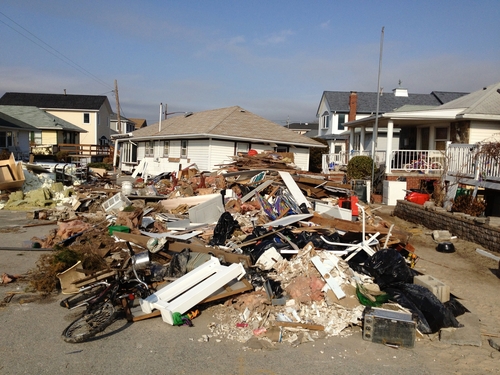
Severe weather can cause extensive property damage, highlighting why climate resilience and natural hazard exposure are becoming important considerations in real estate due diligence.

Brian Phillips | The Mobile Broker | New York City Real Estate Advisor and Housing Market Commentator