
UNDERSTANDING NYC BUILDING REGULATIONS: GAS, FIRE SAFETY AND WATER REQUIREMENTS
New York City property owners are responsible for much more than keeping a building in good physical condition. NYC building regulations for property owners also include requirements for many of the critical systems operating behind the walls.
Gas piping, sprinkler systems, and water infrastructure are good examples. Each is governed by different rules involving inspections, testing, maintenance, documentation, or upgrades. Not every requirement applies to every property, which is one reason building compliance can become confusing.
A townhouse may have obligations that differ from those of a large apartment building. A property without gas piping will face different requirements from one that uses natural gas. Older buildings may also encounter water infrastructure issues that newer construction does not.
Gas piping, fire protection, and water infrastructure are three fundamental areas where owners may have ongoing responsibilities. Understanding how these requirements differ by building size, age, use, and systems can make it easier to determine what applies to a particular property.
WHY NYC BUILDING REGULATIONS FOR PROPERTY OWNERS CAN BE COMPLICATED
New York City has long maintained extensive rules governing the safety and operation of its buildings. What can make compliance difficult is that there is no single checklist that applies equally to every property.
Requirements can depend on a building’s size, age, occupancy classification, construction type, location, and installed systems. The type of work being performed can also trigger additional obligations.
Different agencies oversee different areas. The New York City Department of Buildings (DOB) regulates many construction and building safety requirements. The Fire Department of the City of New York (FDNY) oversees numerous fire protection requirements. The New York City Department of Environmental Protection (DEP) manages the city’s water system and water metering, among other responsibilities.
A single property can therefore interact with several agencies, each with its own procedures and requirements. Owners of multiple properties may also find that two seemingly similar buildings have different compliance obligations.
Many of these regulations are preventative. A gas piping inspection is intended to identify potentially unsafe conditions before they become emergencies. Sprinkler testing helps ensure that fire protection equipment works when needed. Water metering provides more accurate information about consumption and billing.
For owners, compliance is about more than avoiding violations. These NYC building regulations can influence maintenance schedules, operating expenses, renovation planning, insurance considerations, property transactions, and long-term capital planning.
GAS PIPING INSPECTIONS UNDER LOCAL LAW 152
What is Local Law 152?
Local Law 152 established periodic gas piping inspections for certain New York City buildings. The requirement followed concerns about gas-related incidents and aging infrastructure throughout the city.
The purpose is to identify potentially unsafe conditions before they result in a gas leak, fire, explosion, or other emergency. Rather than waiting for an obvious problem to develop, the inspection provides an opportunity to identify certain conditions earlier.
Who does Local Law 152 apply to?
This is an area where owners should pay close attention to their property’s occupancy classification and gas system. Covered buildings containing gas piping must undergo periodic inspections, but the requirement does not apply identically to every property with gas service.
Certain buildings, including some one- and two-family homes classified in specific occupancy groups, are exempt from the periodic inspection requirement. Buildings without gas piping are handled differently and may have certification requirements confirming that no gas piping is present.
Owners should therefore avoid assuming that Local Law 152 applies simply because a property has gas service. The building’s official occupancy classification matters. For covered multifamily and mixed-use properties, gas piping requirements can apply whether the gas serves apartments, commercial areas, mechanical equipment, or other portions of the property.
What does a Local Law 152 inspection involve?
The inspection examines exposed gas piping and looks for conditions that could present a safety concern. That can include evidence of leaks, deterioration, corrosion, improper connections, or other potentially hazardous conditions.
The inspection must be performed according to Department of Buildings requirements and under the supervision of a New York City Licensed Master Plumber. Required documentation must then be submitted and retained according to applicable procedures.
Owners should understand that the inspection is not simply a paperwork exercise. If an unsafe condition is discovered, additional action may be necessary. Certain hazardous conditions can require immediate attention, and repairs may need to be completed to address the problem.
How often are gas piping inspections required?
Local Law 152 generally operates on a four-year inspection cycle, with the schedule organized by community district. Buildings throughout New York City therefore do not all share the same filing deadline.
An owner should determine the property’s community district and confirm the applicable inspection and filing period with the Department of Buildings. This is particularly important for anyone who owns properties in multiple neighborhoods or boroughs because two buildings owned by the same person can have different compliance years.
What should owners know?
Owners should not wait until a filing deadline approaches to determine whether a property is covered. Confirm the building’s occupancy classification, determine whether gas piping is present, identify the correct inspection cycle, and retain the required records after the work is completed.
Gas piping compliance can also be worth reviewing when purchasing a property. An overdue inspection or unresolved gas condition may become an unexpected expense after closing, particularly if corrective work is required.
NATURAL GAS DETECTORS UNDER LOCAL LAW 157
Gas piping inspections are not the only gas-safety requirement property owners should have on their radar. New York City is also preparing to require natural gas detection devices in many residential properties.
Who this applies to:
Local Law 157 applies to private dwellings and Class A and Class B multiple dwellings where the applicable conditions are present. In everyday terms, this can include one- and two-family homes, apartment buildings, and hotels.
What is required:
Owners of covered properties must install approved natural gas alarms in required locations. Where a dwelling unit contains a natural-gas-burning appliance, such as a gas stove, the alarm generally must be installed at least 3 feet and no more than 10 feet horizontally from the appliance. The requirements can differ for Class B multiple dwellings, such as hotels, where certain centralized detection systems may be permitted.
When does the requirement take effect?
The current compliance deadline is January 1, 2027. However, the Department of Buildings is required to evaluate the availability of compliant battery-powered natural gas alarms. If there are not enough qualifying manufacturers, the city must extend the deadline to January 1, 2029.
Why this rule exists:
Natural gas leaks can lead to fires and explosions. The detectors are intended to provide an additional warning when gas is present, much as smoke and carbon monoxide alarms alert occupants to other potentially dangerous conditions.
What owners should know:
This requirement is separate from Local Law 152. Local Law 152 focuses on periodic inspection of a building’s gas piping, while Local Law 157 addresses devices designed to alert occupants to a potential natural gas leak. A property can therefore be subject to both requirements.
FIRE SAFETY AND SPRINKLER SYSTEM REQUIREMENTS
Fire sprinkler requirements can seem complicated because two separate issues are involved. The first is whether a property must have a sprinkler system. The second is how an existing system must be inspected, tested, and maintained.
Understanding the difference between those two responsibilities makes the requirements considerably easier to follow.
Sprinklers in new one- to four-family homes
Who may be affected?
Newly constructed one to four family homes can be subject to sprinkler requirements under the New York City Building Code. Sprinklers can also become relevant during certain major alterations, conversions, or construction projects involving existing properties.
The scope of the work is important. Renovating a kitchen or bathroom is different from substantially reconstructing a property, changing its occupancy, or undertaking work that triggers additional Building Code requirements.
Owners planning major construction should determine whether sprinklers will be required while the project is still being designed. Discovering the requirement after architectural and engineering plans are substantially complete can result in redesigns, additional expenses, and construction delays.
What is required?
When a sprinkler system is required, it must be incorporated into the building plans and installed according to applicable code requirements. The work can involve considerably more than adding sprinkler heads to ceilings.
A complete system may require piping, valves, connections, water supply considerations, alarms, and other equipment. The design can also affect walls, ceilings, mechanical spaces, and other portions of the property.
For developers and owners undertaking significant construction, fire protection should therefore be part of the early design conversation rather than an issue addressed near the end of the project.
Why are sprinklers important?
Automatic sprinklers are designed to respond during the early stages of a fire. They can help control flames before a fire spreads, provide occupants with additional time to leave the building, and assist firefighters responding to an emergency.
From an ownership perspective, sprinklers are both a life-safety feature and an ongoing building responsibility. Once a system has been installed, keeping it operational becomes part of maintaining the property.
Sprinkler inspections and testing in existing buildings
Who does this apply to?
Buildings that already contain sprinkler systems generally have ongoing responsibilities for keeping those systems properly inspected, tested, maintained, and operational.
This can affect apartment buildings, mixed-use properties, commercial buildings, and other structures containing fire sprinkler systems. The exact requirements depend on the type of system and the components installed.
How often do sprinkler systems need to be inspected?
There is no single inspection interval for every part of a sprinkler system. Depending on the equipment, inspections, testing, and maintenance can occur monthly, quarterly, annually, or at longer multi-year intervals.
Valves, gauges, alarms, water-flow devices, piping, and other components can each have different requirements. This is why simply saying that a sprinkler system needs a “periodic inspection” does not tell owners everything they need to know.
Property owners should understand what type of system is installed and work with qualified fire protection professionals to establish the appropriate inspection and testing schedule.
Why does record keeping matter?
A sprinkler system can appear normal while still having an inspection, testing, or maintenance deficiency. Records provide a history of what was checked, when testing occurred, whether problems were identified, and what corrective work was completed.
That documentation can become important during an FDNY inspection, insurance review, property transaction, or other due diligence. Missing records can raise questions even when the physical equipment appears to be functioning properly.
For owners, maintaining the sprinkler system and maintaining its compliance records should be treated as parts of the same responsibility.
WATER METER INSTALLATION AND UPGRADES
Water metering is different from gas and fire safety because it is closely connected to infrastructure, consumption, and billing. The New York City Department of Environmental Protection manages the city’s water supply and water billing system.
Understanding how a property’s water is measured can help owners make sense of both the infrastructure serving the building and how water charges are calculated.
Which properties may be affected?
Water meter requirements do not fit neatly into a single building-size category. They can arise in properties with shared water service, outdated meters, older plumbing infrastructure, or billing arrangements that need to be converted or modernized.
This can include multifamily residential properties where several apartments receive water through a shared building service. Mixed-use buildings may also be affected when residential and commercial portions of a property rely on the same water connection.
Some older one- to four-family homes can encounter metering requirements as well, particularly when equipment needs to be replaced or the existing plumbing configuration must be updated.
Unit count alone does not determine whether a water meter needs to be installed or upgraded. The building’s existing water service, metering equipment, and applicable DEP requirements are more important.
What does a water meter do?
A water meter measures the amount of water entering a property. This allows DEP to calculate charges based on measured consumption rather than older flat-rate billing methods where applicable.
Modern metering can also give owners better information about how much water a property is using. That information can be valuable for reasons beyond determining the monthly or quarterly bill.
An unexplained increase in consumption may indicate a leaking toilet, damaged pipe, malfunctioning fixture, or another condition that is wasting water. Identifying the problem early can help prevent larger bills and, in some circumstances, property damage.
What happens when a water meter needs to be upgraded?
DEP has programs for replacing and upgrading water metering equipment. In qualifying circumstances, the department may install or replace a required meter without charging the owner directly for the meter installation itself.
However, a no-charge meter installation does not necessarily mean the entire project will cost the property owner nothing. Older plumbing may need to be modified before new equipment can be installed, or the meter location may need to be made accessible.
Pipes, valves, or other building-side components may also require repair or replacement. Those improvements can remain the owner’s responsibility.
Owners of older properties should determine what preparatory work may be necessary before assuming that a meter replacement will involve no additional expense.
Why should owners pay attention to water metering?
Water is an operating expense, which makes metering more than a plumbing issue. Accurate consumption information can help owners identify unusual water use and better understand changes in their bills.
Water service can also become relevant during renovations. Opening walls or replacing plumbing can expose aging infrastructure that was previously out of sight.
For owners planning significant work, understanding the existing water service before construction begins can help identify potential costs earlier and reduce surprises after a project is underway.
THREE BUILDING SYSTEMS WITH DIFFERENT RESPONSIBILITIES
NYC building regulations for property owners become easier to understand when obligations are organized around the systems inside a property.
Gas piping, sprinkler systems, and water meters may all exist in the same building, but they are regulated for different reasons. Gas piping inspections primarily focus on potentially dangerous conditions, while sprinkler requirements address fire protection and system readiness. Water metering is connected to infrastructure, consumption, conservation, and accurate billing.
Despite those differences, the three areas share a common theme: planning. Knowing what systems are installed, which requirements apply, and when inspections or upgrades may be due can make building management more predictable.
WHY NYC BUILDING REGULATIONS MATTER WHEN BUYING OR SELLING
NYC building regulations for property owners are not relevant only after someone already owns a building. They can also become important during a real estate transaction.
A prospective buyer evaluating a townhouse, multifamily property, or mixed-use building should understand the major systems serving the property. Questions about open violations, gas piping inspections, sprinkler testing, and water service can reveal potential expenses that may not be obvious during a showing.
Sellers can benefit from reviewing the same information before putting a property on the market. Resolving an outstanding compliance issue before it surfaces during buyer due diligence may make the transaction easier to navigate.
These considerations are especially important for investors because a building’s purchase price represents only one component of the cost of ownership. Deferred maintenance, required inspections, system upgrades, and unresolved violations can affect operating expenses and future capital needs.
Understanding a property’s compliance history can therefore provide additional context when evaluating its overall condition and potential ownership costs.
A PRACTICAL APPROACH TO NYC BUILDING REGULATIONS FOR PROPERTY OWNERS
Keeping track of NYC building regulations becomes easier when owners organize requirements by property type and building system.
Owners can begin by creating an inventory of the major systems in the property. For gas service, determine whether gas piping is present, whether Local Law 152 applies, and which community district inspection cycle covers the building.
If the property contains sprinklers, identify the type of system, who maintains it, and where inspection and testing records are stored. For water service, determine what type of meter is installed and whether DEP has identified the equipment for replacement or upgrading.
Keeping compliance documents organized and accessible is equally important. Inspection reports, repair records, permits, certifications, and other documents can become valuable when dealing with an agency, insurer, lender, prospective buyer, or attorney.
This preparation is especially useful before purchasing a property, beginning a major renovation, refinancing, or preparing a building for sale. A relatively manageable issue can become more complicated when discovered in the middle of a transaction or construction project.
Planning ahead gives owners more time to understand the problem, obtain appropriate professional guidance, and budget for necessary work.
UNDERSTANDING NYC BUILDING RULES: LEAD, COOLING AND EVERYDAY OPERATING REQUIREMENTS
NYC building regulations for property owners increasingly extend beyond the physical structure of a building. They now influence how residential properties are operated every day, from protecting children against lead exposure to handling food waste and preparing apartments for increasingly hot summers.
These requirements can affect buildings very differently. Some apply to older rental properties because of when they were constructed. Others apply to virtually every residential property in the city. Building size, occupancy, tenant characteristics, and ownership structure can all determine what an owner must do.
After examining gas piping, fire safety, and water infrastructure, the guide now turns to rules that have a more direct effect on tenants and everyday building operations.
HOW NYC BUILDING REGULATIONS ARE CHANGING EVERYDAY OPERATIONS
New York City housing regulation has traditionally addressed essential conditions such as heat, hot water, structural safety, and basic maintenance. More recent rules have expanded the focus to include environmental health, extreme heat, waste reduction, and the way buildings function on a daily basis.
That shift is important because these requirements do not always involve a one-time inspection or repair. Lead paint rules can require annual notices and investigations. Composting depends on residents and building staff separating waste every day. Cooling requirements will add another seasonal responsibility for many landlords.
Different agencies also administer these rules. The New York City Department of Housing Preservation and Development (HPD) oversees many housing maintenance requirements, while the Department of Sanitation (DSNY) regulates residential waste and composting. Understanding which agency is responsible can make it easier to find current guidance and respond when requirements change.
For owners, the practical question is no longer simply whether the building is physically sound. It is also whether its ongoing operation satisfies rules designed to protect health, safety, and the environment.
LEAD-BASED PAINT TESTING AND COMPLIANCE
Lead-based paint shows how a building’s age can directly affect an owner’s compliance responsibilities. It was commonly used in residential properties before restrictions were introduced, and deteriorating painted surfaces can release lead into household dust or create hazardous paint chips.
Exposure is particularly dangerous for young children because it can affect neurological development and learning. To reduce those risks, New York City requires owners of many older residential properties to follow specific testing, inspection, record-keeping, and remediation requirements.
Which properties are covered?
The New York City Childhood Lead Poisoning Prevention Act, commonly known as Local Law 1 of 2004, generally applies to multiple dwellings with three or more residential units that were built before 1960. It also covers qualifying buildings constructed between 1960 and 1978 when the owner knows lead-based paint is present. Lead-Based Paint
Tenant-occupied units in one- and two-family homes built before 1960 can also be covered. In condominiums and cooperative buildings, rented units that are not occupied by the unit owner or the owner’s family may be subject to lead requirements as well.
That makes an important distinction for casual readers. Lead requirements are not simply rules for large apartment buildings. An owner renting one unit in an older two-family home may also have responsibilities.
What did Local Law 31 change?
Local Law 31 of 2020 expanded testing requirements for covered properties. Owners were required to arrange for X-ray fluorescence testing, commonly called XRF testing, in covered rental units and common areas by August 9, 2025. Paint Testing Requirement and Exemptions
XRF testing uses specialized equipment to determine whether lead is present in painted surfaces without requiring walls or other surfaces to be damaged. The testing must be performed by an independent inspector or risk assessor certified by the U.S. Environmental Protection Agency (EPA).
Because the August 9, 2025 citywide testing deadline has already passed, owners of covered properties who did not complete the required testing should not treat it as an expired requirement. They should determine what corrective steps are necessary and maintain the required documentation.
Does the rule apply if no young children live in the building?
Yes. The XRF testing requirement for covered properties is not dependent on whether a child under age six currently lives there. The New York City Department of Housing Preservation and Development (HPD) states that the testing requirement applies to covered buildings regardless of whether a young child is currently present. Children do, however, trigger additional responsibilities.
Under New York City law, a child under age six is considered to “reside” in an apartment when the child routinely spends at least 10 hours per week there. The child does not have to sleep in the apartment every night or be listed as a full-time resident.
That definition can include a grandchild, relative, or another young child who regularly spends enough time in the apartment.
What are the annual requirements?
Owners of covered properties must use an annual notice process to determine whether a child under age six resides in a dwelling unit.
For covered multiple dwellings, owners generally deliver the lead-based paint annual notice between January 1 and January 16. Tenants are asked to return it by February 15. If an owner learns that a child under six resides in the apartment, an annual visual investigation for potential lead hazards is required.
This is separate from the XRF testing requirement. XRF testing determines whether lead-based paint is present, while the annual investigation looks for deteriorated paint and other conditions that could create a hazard.
Owners must document these activities and retain required lead records for at least 10 years.
What happens if lead hazards are found?
Lead compliance does not end with identifying the paint.
If deteriorated lead-based paint or other covered hazards are found, owners may have to stabilize or abate the affected surfaces using the appropriate lead-safe procedures and certified professionals.
Remediation can include repairing deteriorated surfaces, addressing underlying leaks or defects, removing lead paint from certain friction surfaces, or using approved encapsulation methods where permitted. Requirements can become more extensive when an apartment turns over or when a child under six resides there.
Owners should also be aware of newer deadlines affecting certain units where children under six reside. Specific abatement requirements and deadlines can apply depending on when the child began residing in the unit, so owners should confirm the current requirements with HPD.
Why record keeping deserves as much attention as the physical work
Lead compliance is one area where documentation is particularly important. An owner may have completed testing, annual investigations, or remediation, but the ability to demonstrate that work matters during an HPD audit or enforcement action. Records can also become relevant during a sale, refinancing, or property due diligence. For owners of older rental properties, lead records should therefore be treated as part of the permanent compliance file for the building rather than paperwork that can be discarded after the work is finished.
COOLING REQUIREMENTS AND THE CITY’S RESPONSE TO EXTREME HEAT
New York City has long required residential landlords to provide heat during colder months. A newer set of requirements will eventually establish protections against excessive indoor heat during the summer as well. The change reflects growing concern about extreme heat as a public health issue. Hot apartments can become particularly dangerous for older adults, young children, people with certain health conditions, and residents of buildings that retain significant heat during prolonged summer weather. For property owners, the new requirements represent another expansion of building responsibility. Indoor temperature standards are beginning to address both winter heating and summer cooling.
Who will the cooling requirements apply to?
The requirements generally apply to residential rental housing in New York City, including smaller multifamily properties and larger apartment buildings. New York City Housing Authority properties are treated differently. The law establishes separate requirements for public housing rather than applying the same obligations imposed on private landlords. Owners should also recognize that implementation is being phased in. The cooling requirements do not mean every landlord must immediately install air conditioning throughout every apartment.
What will landlords be required to provide?
Under the new framework, tenants will eventually be able to request cooling equipment from their landlords. Beginning March 1, 2028, eligible tenants are expected to be able to opt in by requesting air conditioning. The city is responsible for developing additional rules that explain how the process will work.
The indoor cooling standard is scheduled to take effect in 2030. During the summer cooling season, from June 15 through September 15, covered sleeping areas will generally need to remain at or below 78 degrees Fahrenheit when the outdoor temperature exceeds 82 degrees. This establishes a specific indoor temperature standard rather than simply requiring landlords to provide cooling equipment.
Who pays for the electricity?
How those costs are divided is particularly important for both landlords and tenants. Owners are responsible for providing and maintaining required cooling equipment when the law applies and a qualifying tenant requests it. Tenants, however, are generally responsible for the electricity used to operate that equipment.
That means the requirement creates different financial considerations for each side. Owners may face equipment, installation, maintenance, and possible electrical-upgrade costs, while residents may experience higher summer electricity bills when air conditioning is used.
Why electrical capacity could become an issue
Installing an air conditioner may sound straightforward, but older New York City buildings were not necessarily designed for the electrical demands created by widespread cooling. A building with older wiring, limited electrical service, or outdated panels may require additional work before multiple apartments can safely operate air-conditioning equipment. For some owners, compliance could therefore involve more than purchasing individual units. An electrician or other qualified professional may need to determine whether the property’s electrical infrastructure can support the additional demand. This is especially relevant for older walk-ups and multifamily buildings where electrical systems have been modified gradually over many decades. Owners should therefore consider the cooling requirement as part of longer-term capital planning rather than waiting until the final implementation deadline approaches.
How does this relate to existing heat requirements?
New York City already has detailed rules requiring landlords to provide adequate heat and hot water. Those requirements are designed to protect tenants during colder weather. The new cooling standards extend the same basic public-health principle into the summer months. As periods of extreme heat become more frequent and dangerous, indoor temperature is increasingly being treated as a housing safety issue.
For owners, this means that heating and cooling may increasingly need to be considered together when evaluating a building’s mechanical systems and future capital needs.
Why this matters when buying or selling a property
Future cooling requirements can also become relevant during real estate due diligence.
A buyer considering an older rental building may want to know the condition of the electrical service, panels, wiring, and existing cooling systems. If substantial upgrades are likely to be necessary, those costs could influence renovation plans and the overall economics of the investment.
Sellers of buildings that already have updated electrical infrastructure or modern cooling systems may also be better positioned to explain how the property is prepared for future requirements.
As with many NYC building regulations for property owners, the important question is not simply whether a rule exists. Owners and buyers should understand when it takes effect, which properties are covered, and whether the building’s existing infrastructure can support compliance.
CARBON EMISSIONS LIMITS FOR LARGE BUILDINGS
The regulations discussed so far can affect properties ranging from small rental buildings to larger apartment houses. New York City’s carbon emissions requirements operate differently because they primarily target larger properties.
Local Law 97 is one of the most significant examples. It establishes limits on greenhouse gas emissions from many buildings larger than 25,000 square feet and is an important part of NYC building regulations for property owners.
Who does Local Law 97 apply to?
Local Law 97 generally covers individual buildings larger than 25,000 gross square feet. It can also apply to two or more buildings on the same tax lot that together exceed 50,000 gross square feet, as well as certain condominium properties governed by the law’s specific rules.
This means the law primarily affects larger apartment buildings, office properties, commercial buildings, condominiums, and mixed-use developments. A smaller townhouse or typical one- to four-family home generally will not fall under Local Law 97 based on size alone.
There are exemptions and special rules for certain properties, so owners should confirm whether their individual building is covered rather than relying solely on its general property type.
What does the law require?
Local Law 97 establishes limits on the amount of greenhouse gas pollution a covered building can produce. Those limits vary according to the building’s size and how the property is used.
The first compliance period began in 2024 and continues through 2029. More stringent emissions limits are scheduled to begin in 2030, making long-term planning increasingly important for buildings that are currently close to their allowable limits.
Owners of covered properties generally must report their building’s emissions annually. Buildings that exceed applicable limits can face financial penalties unless an adjustment, exemption, or other provision applies.
Does Local Law 97 require a building to go all electric?
Not necessarily. Local Law 97 establishes emissions limits rather than requiring every covered property to install a particular type of heating, cooling, or hot-water equipment. An owner may be able to comply through energy-efficiency improvements, equipment upgrades, better building controls, reduced energy consumption, electrification, or a combination of strategies.
For some properties, replacing fossil-fuel equipment with electric alternatives may eventually become part of the solution. For others, improving insulation, sealing air leaks, upgrading windows, optimizing heating systems, or installing more efficient controls may significantly reduce energy use. That distinction is important because Local Law 97 is primarily a performance standard. The city is concerned with how much greenhouse gas pollution a covered property produces, rather than prescribing one identical solution for every building.
Why owners should be thinking beyond 2029
A property that complies with the current limits may not necessarily meet the more demanding standards scheduled for 2030.
Major building systems can be expensive and may remain in service for decades. A boiler, heating system, electrical upgrade, or façade improvement completed today could influence a property’s energy performance well into the next compliance period.
Owners planning substantial capital improvements should therefore consider not only what satisfies current requirements, but also whether those investments support the building’s longer-term energy strategy.
For buyers and investors, this creates another layer of due diligence. Understanding a building’s present emissions, mechanical systems, planned capital projects, and future compliance exposure can provide a clearer picture of potential ownership costs.
ENERGY BENCHMARKING ADDS ANOTHER LAYER OF REPORTING
Local Law 97 is not the only energy-related requirement affecting larger New York City properties. Many owners must also comply with annual energy and water benchmarking requirements.
Benchmarking measures how much energy and water a building consumes over time. The information allows owners and the city to compare performance, identify trends, and determine where efficiency improvements may be needed.
Which buildings are covered?
New York City benchmarking requirements generally apply to buildings larger than 25,000 gross square feet that appear on the city’s Covered Buildings List.
Owners of covered properties must report energy and water consumption through the U.S. Environmental Protection Agency’s ENERGY STAR Portfolio Manager. The information is submitted annually.
For a casual reader, the easiest way to understand benchmarking is to think of it as an annual performance report for a building. It does not automatically require an owner to replace equipment, but it provides data that can reveal whether energy or water consumption is unusually high.
That information has become increasingly valuable as NYC building regulations for property owners place greater emphasis on measurable building performance.
PERIODIC ENERGY AUDITS AND RETRO-COMMISSIONING
Certain large properties also have obligations under Local Law 87, another component of New York City’s building efficiency framework.
Local Law 87 generally applies to covered buildings larger than 50,000 gross square feet. It requires periodic energy audits and retro-commissioning, generally once every 10 years according to a schedule tied to the building’s tax block number.
What is an energy audit?
An energy audit is a detailed examination of how a property consumes energy. Professionals evaluate building systems and identify opportunities to improve efficiency.
The review can include heating and cooling equipment, hot-water systems, lighting, insulation, controls, and other components that influence consumption.
The audit does not necessarily mean every recommended improvement must immediately be completed. Its purpose is to give owners a clearer understanding of how the property performs and where energy may be wasted.
What is retro-commissioning?
Retro-commissioning focuses on whether existing building systems are operating as they were designed to operate.
A building may have relatively modern equipment and still waste energy because controls are incorrectly programmed, sensors are malfunctioning, equipment is operating unnecessarily, or systems are not working together efficiently.
Correcting those problems can sometimes improve performance without requiring complete replacement of expensive mechanical equipment.
When Local Laws 87 and 97 are considered together, the broader direction becomes clearer. New York City increasingly expects owners of larger properties to understand how their buildings use energy, identify inefficiencies, and plan for better performance.
PERIODIC INSPECTION OF PARKING STRUCTURES
Not every recent requirement is related to energy or environmental policy. Structural safety remains another major area of NYC building regulations for property owners.
New York City now requires periodic inspections of many parking structures under its Periodic Inspection of Parking Structures program, commonly known as PIPS.
Who does this apply to?
The requirement generally applies to parking structures or portions of buildings used for parking. This can include stand-alone garages as well as parking areas incorporated into larger residential, commercial, or mixed-use properties.
Certain structures are excluded, including some private garages serving limited residential uses. Because parking configurations vary considerably, owners should verify whether their property is subject to the program.
What is required?
Covered parking structures must be examined periodically by a qualified professional. The inspection evaluates structural conditions and looks for deterioration that could affect safety.
Concrete cracking, corrosion, water infiltration, damaged structural components, and other conditions can become more serious when they are not identified early.
The program operates on recurring inspection cycles rather than waiting until a visible structural failure occurs. That preventative approach reflects a broader shift in the city’s building regulations toward identifying potential problems before they become emergencies.
FAÇADE INSPECTIONS REMAIN A MAJOR RESPONSIBILITY
Owners of buildings that are seven stories or more may also be subject to New York City’s Façade Inspection and Safety Program, commonly called FISP and historically associated with Local Law 11.  Every New Yorker has walked beneath sidewalk scaffolding. Few know the tragedy that led to it or why some of those “temporary” structures remain standing for more than 15 years. 🏙️
Which buildings are covered?
FISP generally applies to buildings greater than six stories in height, meaning seven stories or more. This can include residential apartment buildings, condominiums, cooperatives, office buildings, and mixed-use properties that meet the height requirement.
Every five years, covered properties must have their exterior walls and appurtenances examined by a Qualified Exterior Wall Inspector. The purpose is to identify conditions that could create a danger to pedestrians, residents, workers, or neighboring properties.
ELEVATOR INSPECTIONS AND TESTING
Buildings with elevators have another set of recurring safety responsibilities.
Elevator requirements can apply to residential, commercial, and mixed-use properties regardless of whether the building would otherwise be considered large. If a property contains regulated elevator equipment, owners need to understand the inspection, testing, filing, and correction requirements associated with that equipment.
New York City requires periodic elevator inspections and tests at different intervals. Some are performed annually, while other safety tests occur on multi-year schedules.
The exact requirements depend on the type of elevator and equipment installed. Defects identified during inspections must be corrected within applicable deadlines, and documentation may need to be filed with the Department of Buildings.
For owners, elevators are a good example of why compliance should be viewed as an ongoing operating responsibility rather than a series of isolated deadlines.
HOW NYC BUILDING REGULATIONS AFFECT REAL ESTATE DUE DILIGENCE
Building regulations do not matter only after someone becomes an owner. They can also influence the decision to purchase a property and the price a buyer is willing to pay.
A building may appear well maintained while still carrying future compliance costs that are not immediately visible during a showing.
For example, a buyer considering an older apartment building may need to understand whether required lead testing was completed, when the gas piping inspection is due, whether façade work is approaching, and whether the property has outstanding elevator requirements.
For a larger building, that review may also include Local Law 97 emissions performance, energy benchmarking, planned efficiency improvements, and future capital expenditures.
This is where NYC building regulations for property owners become part of the financial analysis of real estate.
Compliance expenses can affect operating costs, reserves, financing, insurance, renovation budgets, and ultimately property value. A requirement that appears technical on paper can have a very practical impact on the economics of ownership.
WHY BUILDING SIZE MATTERS UNDER NYC BUILDING REGULATIONS
One of the most confusing aspects of New York City regulation is that there is no single definition of a building that is subject to enhanced requirements. Different laws use different thresholds.
A small rental property may be affected by lead rules, waste requirements, gas inspections, or cooling standards. A taller building may have façade obligations. A property with an elevator or parking structure has additional responsibilities because of those systems. Once a building crosses certain square-footage thresholds, energy benchmarking, carbon emissions limits, and other performance requirements can also come into play.
The result is that two buildings on the same block may have very different compliance responsibilities even if they appear similar from the street.That is why owners and prospective buyers should begin with the characteristics of the individual property rather than a generic checklist.
HOW MULTIPLE AGENCIES ENFORCE NYC BUILDING REGULATIONS
Another source of complexity is the number of agencies involved in building oversight. The New York City Department of Buildings handles many construction, structural, gas, façade, elevator, and energy-related requirements. The Department of Housing Preservation and Development oversees many housing standards, including lead-based paint responsibilities.
The Department of Environmental Protection manages the city’s water system and metering. The Department of Sanitation oversees waste collection, composting, and containerization, while the Fire Department of the City of New York has jurisdiction over numerous fire protection systems and safety requirements. A single apartment building may therefore interact with several agencies during the same year.This does not necessarily mean the property has a problem. It reflects the way New York City divides responsibility for safety, housing, environmental performance, infrastructure, and sanitation among different departments.
CREATE A COMPLIANCE PROFILE FOR NYC BUILDING REGULATIONS
Instead of trying to memorize every local law, owners can begin by creating a basic compliance profile for each building.
Start with the fundamental characteristics of the property: year built, number of dwelling units, total square footage, number of stories, occupancy type, and whether commercial space is present.
Next, identify the major systems and features. Determine whether the building has natural gas, sprinklers, elevators, a parking structure, central heating or cooling, and a shared water service.
The property’s age can indicate whether lead-based paint requirements may apply. Its height can trigger façade inspections, while its square footage may bring energy benchmarking or Local Law 97 into consideration.
Owners can then create a calendar showing recurring inspections, annual filings, testing cycles, and future deadlines. Records of completed work should be maintained alongside that calendar.
This approach turns a complicated collection of NYC building regulations for property owners into a more manageable property-specific plan.
WHAT BUYERS SHOULD ASK BEFORE PURCHASING A BUILDING
Prospective purchasers should consider regulatory history as part of due diligence, particularly when buying older or larger properties. Keeping track of NYC building regulations becomes easier when owners organize requirements by property type and building system.
Depending on the building, useful records may include Department of Buildings violations, lead testing documentation, gas inspection filings, sprinkler records, elevator reports, façade filings, energy benchmarking information, Local Law 97 data, water meter status, and waste-management procedures.
Not every document will apply to every property. The objective is to determine which requirements are relevant and whether the building appears to be current. Buyers should also look beyond existing violations. A property can have a relatively clean record while approaching an expensive inspection, equipment replacement, façade project, or energy upgrade. Understanding what may be coming next can be just as important as reviewing what has already happened.
WHAT SELLERS SHOULD CONSIDER BEFORE GOING TO MARKET
For sellers, understanding applicable NYC building regulations can help identify issues before a transaction moves into due diligence. Reviewing compliance records before listing can also prevent missing information from becoming a concern later in the process.
Organized documentation can make it easier to answer questions about inspections, testing, building systems, repairs, and open violations. It can also help distinguish between an unresolved compliance problem and a routine future obligation.
For investment and multifamily properties, buyers increasingly evaluate operating expenses and anticipated capital costs alongside income. A clear record of building maintenance and regulatory compliance can therefore become part of how the property is presented and evaluated.
THE BIGGER PICTURE OF NYC BUILDING REGULATIONS
The individual requirements covered throughout this guide may appear unrelated at first.
Gas inspections focus on safety. Sprinkler and façade requirements address life safety and structural conditions. Lead laws protect public health, while water metering and waste separation address resource use. Cooling standards respond to extreme heat, and Local Law 97 focuses on greenhouse gas emissions from larger properties.
Together, however, they reveal a broader change in how New York City approaches building regulation.
The city increasingly expects owners to monitor conditions before failures occur, maintain documentation, measure building performance, and plan for future requirements. Compliance is becoming more preventative, data-driven, and integrated into everyday property management.
For owners, buyers, investors, and real estate professionals, understanding these requirements is increasingly part of understanding the property itself.
FINAL THOUGHT
New York City buildings vary enormously in age, size, construction, use, and mechanical systems. Their regulatory obligations vary just as widely.
A one-family townhouse, six-unit walk-up, 50-unit apartment house, mixed-use property, and large condominium may sit within a few blocks of one another while being subject to very different requirements.
The most practical approach is not to assume that every rule applies to every property. Start with the building’s size, age, use, systems, and configuration. From there, identify the agencies and requirements that govern that particular property.
As NYC building regulations continue to evolve, maintaining accurate records becomes increasingly important. Knowing what applies, when action is required, and what documentation should be maintained can help owners budget more effectively, reduce surprises, and make better-informed decisions about their real estate. For buyers and investors, the same knowledge can make due diligence more meaningful by revealing costs and responsibilities that may not be obvious from the physical condition of a building alone.
If you own, are considering buying, or are preparing to sell a property in New York City, understanding the building’s regulatory profile should be part of the conversation. Building rules can affect operating expenses, capital planning, financing, marketability, and long-term ownership costs, making compliance an increasingly important part of the real estate equation.
This article is intended for general informational purposes and is not legal, engineering, environmental, or regulatory advice. Requirements can vary by property and may change. Property owners should confirm current obligations with the appropriate New York City agency and qualified professionals.
📚 MORE SOURCES & FURTHER READING
- NYC DEP launches program to upgrade water meters citywide
-
NYC Mayor’s Office of Climate & Environmental Justice – Building Emissions
- NEW YORK’S ALL-ELECTRIC BUILDINGS ACT STARTS IN 2026
- LOCAL LAW 97 PENALTIES ARE HERE: WHAT NYC BUILDING OWNERS NEED TO KNOW NOW
-
NYC Housing Preservation and Development — Smoke, Carbon Monoxide, and Natural Gas Detectors
-
NYC Department of Buildings — Natural Gas Detection Devices FAQs
- PROPERTY RESILIENCE ASSESSMENT: CLIMATE RISK & REAL ESTATE GUIDE
📩 THINKING ABOUT BUYING, SELLING, INVESTING IN OR OWNING PROPERTY IN NEW YORK CITY?
Understanding New York City’s building regulations is becoming an increasingly important part of understanding the property itself. Requirements involving gas piping, fire safety, water meters, lead-based paint, cooling, waste management, façades, elevators, energy use and carbon emissions can affect buildings very differently depending on their age, size, use and systems.
For owners, these requirements can influence operating expenses, maintenance schedules, capital improvements and long-term planning. A compliance issue that is relatively manageable when identified early can become considerably more complicated if it surfaces during an inspection, refinancing, renovation or sale.
For buyers and investors, regulatory due diligence can be just as important. A property may appear to be in good physical condition while still facing upcoming inspections, required testing, equipment upgrades or other capital expenses. Understanding what has already been completed, what remains outstanding and what may be required in the years ahead can provide a more complete picture of the true cost of ownership.
Sellers can benefit from the same preparation. Reviewing violations, inspection histories, required filings and building records before going to market can help identify potential issues before they emerge during a buyer’s due diligence.
The challenge is that there is no single compliance checklist for every New York City property. A townhouse, small walk-up, mixed-use building and large apartment house can sit on the same block while facing very different requirements. Building age, square footage, number of stories, occupancy, mechanical systems and other characteristics can all determine which rules apply.
That is why NYC building regulations for property owners should increasingly be considered alongside taxes, insurance, financing, maintenance and other factors when evaluating real estate.
If you would like to discuss how building regulations, upcoming compliance requirements, operating expenses or potential capital improvements could affect a property you own, a purchase or sale you are considering, or a New York City investment opportunity, feel free to reach out.
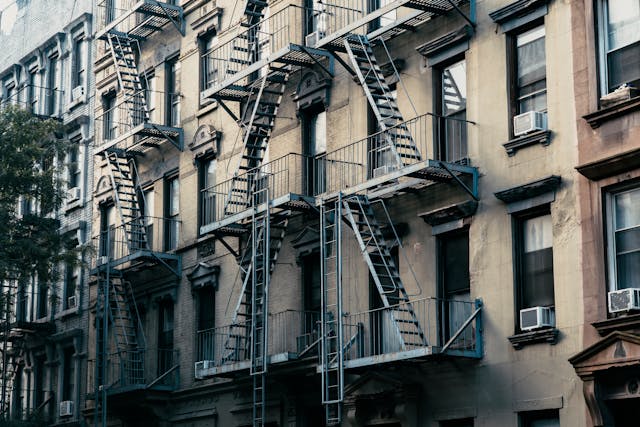
New York City property owners face building requirements that vary by a property’s age, size, use and building systems.

Brian Phillips | The Mobile Broker | New York City Real Estate Advisor and Housing Market Commentator