🗽 From Fiorella La Guardia to Zohran Mamdani: How NYC’s New Socialist Mayor Could Redefine Housing and Real Estate
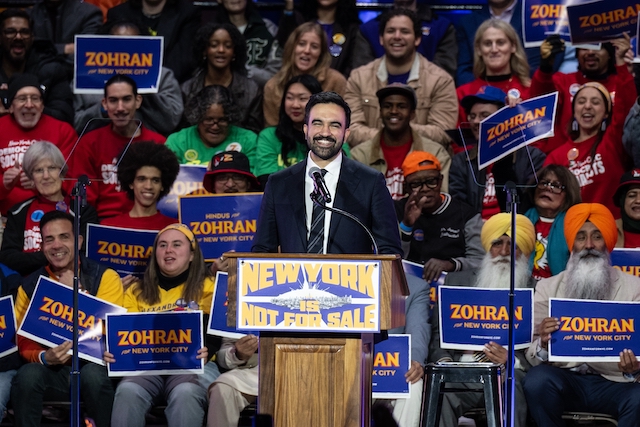
New York City has always reflected the political and economic shifts of its time, from Fiorello La Guardia’s reformism to Michael Bloomberg’s technocracy to Eric Adams’s pragmatic leadership. Now, with Zohran Mamdani’s historic victory, the nation’s largest city has elected its first openly socialist mayor in nearly a century.
Mamdani captured 50.4 percent of the vote citywide, carrying four of the five boroughs and losing only in Staten Island. More than two million ballots were cast, marking the highest turnout in a mayoral election since 1969. His win represents not only a generational shift but also a broad coalition that united younger voters, working-class households, and communities of color around the issues of affordability and equity.
To understand the scope of Mamdani’s victory, one must look back to the 1930s and 1940s, when Fiorello La Guardia, a progressive Republican and Socialist fusion mayor, guided New York City through the Great Depression. La Guardia expanded public housing, modernized sanitation, and championed major infrastructure projects, including the creation of LaGuardia Airport (1939) and the groundwork for Idlewild Airport (now John F. Kennedy International Airport, opened in 1948). Working closely with President Franklin D. Roosevelt’s New Deal programs, he transformed New York into a model of modern urban governance and economic recovery.
Born in Greenwich Village and raised in East Harlem, La Guardia lived for years at 229 East 109th Street in a modest brick rowhouse that reflected his ties to the immigrant and working-class communities he served. Fluent in several languages, he bridged ethnic divides and created a model of city governance rooted in reform and inclusion.
That grounded approach combined empathy with ambition. In many ways, Zohran Mamdani’s Queens-based, community-driven campaign channels that same spirit of outer-borough populism: local in focus, diverse in reach, and anchored in the belief that city government can advance social equity.
⚖️ Why the 2025 Election Was Different
The 2025 mayoral race broke from every recent precedent. Former governor Andrew Cuomo, running as an independent after losing the Democratic primary, and Republican Curtis Sliwa split the moderate vote, clearing the path for Zohran Mamdani’s turnout-driven campaign. The result was not just a political shake-up but a reflection of how deeply affordability and equity now shape New York’s priorities. With more than two million ballots cast, the highest in five decades, younger and renter-heavy precincts across Brooklyn, Queens, and the Bronx helped deliver a decisive mandate for change. Mamdani achieved what few progressives have in New York City: turning enthusiasm into turnout and translating movement energy into policy momentum.
🏛️ The Last Socialist-Backed Mayor
Although Fiorello La Guardia was not a socialist himself, his 1933 campaign united Republicans, Fusion reformers, and Socialists, earning support from labor unions and civic leaders who sought honest and progressive government. His administration balanced social reform with fiscal discipline and ushered in an era of infrastructure and public works that continue to define New York City today.
Mamdani’s victory revives that spirit of government as a vehicle for progress but in a context shaped by 21st-century challenges: the housing crisis, climate adaptation, automation, and post-pandemic inequality.
📊 Who Voted for Mamdani
|
Borough |
Vote Share |
Highlights |
|---|---|---|
|
Manhattan |
~52% |
Strong among younger, transit-accessible districts |
|
Brooklyn |
~56.8% |
Swept diverse and working-class neighborhoods |
|
Queens |
~53% |
Won immigrant-heavy and middle-income areas |
|
Bronx |
~58% |
Dominant in Black and Hispanic precincts |
|
Staten Island |
Lost |
Cuomo’s stronghold among older suburban voters |
👥 Gender Trends
Preliminary analyses suggest that women made up a larger share of Mamdani’s coalition, particularly among voters aged 18 to 44.
-
Women: Supported Mamdani by an estimated 56 to 59 percent margin, with strong turnout among educators, healthcare workers, and service professionals.
-
Men: Split more evenly, with younger men leaning progressive and older men, especially homeowners and retirees, favoring Cuomo or Sliwa.
This mirrors national patterns in urban politics, where progressive candidates often find their base among younger, female, and multiracial voters concerned with housing, childcare, and equal opportunity in the workplace.
🏗️ What a Mamdani Administration Could Mean
Mamdani’s platform combines social-democratic ideals with practical governance focused on inclusion and fairness. His early priorities include:
-
Housing Affordability: With 421-a expired, Mamdani is expected to champion new affordability tools, expand social and cooperative housing, and invest in community land trusts to boost long-term access and equity in homeownership.
-
Transit Equity: Implementing free or low-cost bus service, improving subway reliability, and pushing for greater local control of the MTA.
-
Climate Resilience: Enforcing Local Law 97, strengthening flood-proofing in coastal neighborhoods, and promoting energy-efficient retrofits.
-
Labor Empowerment: Expanding protections for gig economy workers such as rideshare drivers, delivery couriers, and freelancers while broadening access to collective bargaining rights.
-
Public Care Initiatives: Launching city-funded childcare centers and expanding mental health services in underserved communities.
This agenda aims to link social reform with fiscal responsibility, positioning Mamdani’s administration to redefine how New York builds a fairer and more resilient city for the next generation while testing whether progressive leadership can translate ideals into lasting, equitable policy.
🏙️ Building on Eric Adams’s Foundation
Before Mamdani takes office, he inherits a development framework set in motion by Mayor Eric Adams. Within a single year, the Adams administration advanced or approved five transformative rezonings that reshaped New York’s development landscape and established the foundation for Mamdani’s affordability vision.
From Brooklyn’s Atlantic Avenue Mixed Use Plan to the Midtown South rezoning in Manhattan, and from the Jamaica Neighborhood Plan in Queens to the Metro-North Station Area Plan in the Bronx, these initiatives share a common goal: creating more housing, improving affordability, and promoting smarter growth near transit.
Together, they represent a citywide shift toward proactive, mixed-income development that balances density with livability. Mamdani’s platform builds directly on that legacy, emphasizing equitable growth through both public and private collaboration.
For the real estate community, this continuity offers clarity. The next phase of New York’s housing policy will expand the focus from market-rate density to affordability-driven inclusion.
🏘️ Real Estate Implications
For developers, investors, and property owners, Mamdani’s election signals a new chapter of housing and zoning priorities shaped by equity and sustainability.
-
Development Trends: With the expiration of the 421a tax incentive, developers are exploring new pathways to make projects financially viable. Mixed-income and cooperative housing models may gain momentum, while moderately sized residential and mixed-use developments, typically six to twelve stories high or 50 to 200 units, are likely to emerge as the new standard for sustainable, neighborhood-scale growth. These mid-scale projects, already encouraged under Mayor Adams’s City of Yes initiative, strike a balance between small infill buildings and large high-rise towers, expanding housing supply near transit while preserving neighborhood character. Mamdani’s administration could build on this framework by pairing smart growth with deeper affordability requirements, community land trusts, and publicly backed financing models that keep new housing within reach for working and middle-income New Yorkers.
-
Land Use and Zoning: Adaptive reuse and office-to-residential conversions are likely to expand, especially in underperforming commercial corridors.
-
Rental Market Dynamics: Stronger tenant protections and a possible expansion of Good Cause Eviction could temper rent growth while promoting long-term housing stability across much of the city. However, for rent-stabilized and small market-rate landlords, rising costs for insurance, property taxes, maintenance, and energy compliance continue to strain operating margins. Without the ability to adjust rents to keep pace with these expenses, many owners may struggle to reinvest in their buildings, potentially leading to deferred maintenance and a decline in housing quality over time. The challenge for policymakers will be to balance tenant security with the financial viability of rent-stabilized and small property owners who play a vital role in maintaining New York’s diverse housing stock.
-
Investment Opportunities: Transit-rich neighborhoods such as Jamaica, the South Bronx, and East New York could see renewed policy-driven growth as affordability initiatives and mixed-income incentives expand development beyond Manhattan’s core. At the same time, the luxury market, homes priced at $4 million and above, may face new fiscal headwinds if measures like the proposed pied-à-terre tax gain traction. While high-net-worth and international buyers will likely remain active in prime areas such as Billionaires Row, Tribeca, and the Upper East Side, an increased focus on affordability and sustainability could gradually shift capital toward the outer boroughs and emerging neighborhoods across New York City.
For investors, Mamdani’s housing agenda may favor projects that align with social and environmental goals such as affordable housing, energy-efficient retrofits, and community land trusts. Developers and landlords who adapt to these priorities could benefit from faster approvals, long-term stability, and strong demand for attainable housing near transit. However, owners of luxury or market-rate rental properties may encounter greater regulation and fewer tax incentives as the city seeks to balance profitability with affordability.
End users, particularly first-time buyers and residents seeking stable ownership opportunities, may find new pathways through cooperative housing and community-based development models encouraged by the administration. This evolving policy landscape suggests that investment in New York will increasingly reward long-term, mission-aligned participation rather than short-term speculation.
-
Sustainability Focus: Local Law 97 compliance will spur demand for energy retrofits, benefiting firms that specialize in green construction and property management.
In the Mamdani era, real estate success will hinge on mastering the intersection of policy, investment strategy, and the city’s evolving housing priorities.
🌆 Opportunity Amid Change
Every transformative mayor has inherited a city in transition.
La Guardia rebuilt New York through the Great Depression.
Koch and Dinkins stabilized neighborhoods after fiscal collapse.
Bloomberg reshaped zoning and technology infrastructure.
Adams accelerated development and recovery after the pandemic.
Now Mamdani steps into that lineage. His challenge is to balance affordability with innovation and to create a city where inclusive growth becomes reality rather than rhetoric. This could mark New York’s opportunity to launch what many are calling a “New Deal for the 21st Century.”
Through blackouts, recessions, and public health crises, New York has consistently reinvented itself. Its resilience lies in its people, diverse, outspoken, and determined to adapt.
What makes this moment unique is that New York faces overlapping transitions at once: a changing climate, rising construction costs, shifting office markets, and a generational demand for housing equity and sustainability. Mamdani’s administration inherits not just a city to govern but an ecosystem to rebalance, one where housing policy, energy compliance, and land use are deeply interconnected.
For everyday New Yorkers, this could mean expanded access to affordable ownership, more transit-oriented neighborhoods, and renewed investment in social infrastructure such as childcare, mental health services, and community spaces.
For the real estate industry, it signals both disruption and renewal. Developers and small landlords alike will need to adapt to new regulatory frameworks and cost pressures but will also find opportunities in rehabilitation, adaptive reuse, and mixed-income growth zones.
If history is any guide, New York will meet this challenge. Each era of reform has redefined what was possible in urban governance, and Mamdani’s may be remembered as the one that sought to unite social purpose with balanced growth.
📬 Stay ahead of New York’s political and real estate trends. Subscribe to my newsletter for deep dives into policy, market developments, and the people reshaping the future of New York.
📚 References and Data Sources
-
The Guardian – Zohran Mamdani Wins NYC Mayoral Race After Historic Turnout (November 2025)
-
Center for Urban Research, CUNY Graduate Center – NYC Election Atlas 2025
-
Museum of the City of New York – Fiorello La Guardia Collection
-
NYC Department of City Planning – Zoning and Housing Policy Archives