💡 Why Condos (Not Co-ops) Are Better for Investment
Before deciding between pre-war and post-war, it’s worth understanding why most investors choose condos over co-ops in New York City.
In a condo, you own real property — your unit and a percentage of the common areas — giving you greater freedom to rent, renovate, or resell. Condos generally:
-
Allow subletting with minimal restrictions, ideal for generating rental income.
-
Attract more flexible financing, since lenders view condo ownership as fee simple rather than shares in a corporation.
-
Appeal to international buyers, who are often ineligible for co-ops due to residency or financial documentation requirements.
-
Close faster, since condo boards rarely interview buyers or scrutinize personal finances to the extent co-ops do.
By contrast, co-ops — which dominate NYC’s ownership landscape — often impose strict board approvals, subletting bans, and higher liquidity requirements. For investors seeking appreciation and flexibility, condos offer a clear advantage.
🧱 What “Pre-War” and “Post-War” Really Mean
In NYC real estate, the term “pre-war” typically refers to buildings constructed before World War II (before 1945), while “post-war” refers to those built after 1945 through the late 1970s.
Pre-War Condos
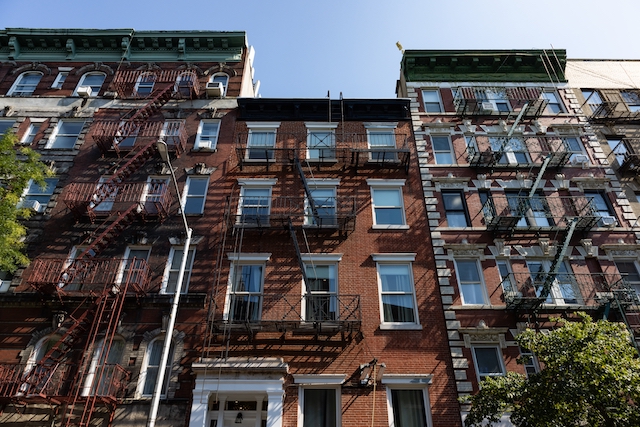
Characterized by thick masonry walls, high ceilings, and architectural detailing, pre-war buildings were constructed with durability and craftsmanship in mind. They often feature hardwood floors, ornate moldings, fireplaces, and plaster walls.
Post-War Condos
Post-war development focused on efficiency, function, and scale. Buildings feature simpler layouts, lighter construction materials, uniform facades, and amenities such as elevators, laundry rooms, and doormen — catering to the modern, urban lifestyle that emerged after WWII.
In short: pre-war equals character and permanence; post-war equals practicality and convenience.
📏 Square Footage & Layout Differences
One of the most noticeable distinctions between pre-war and post-war condos is how space is designed.
Pre-war apartments were built in an era when space equaled status. Developers weren’t maximizing units per lot — they were building for comfort. Expect:
-
Ceilings 9–12 feet high
-
Spacious rooms, often with formal dining and living areas
-
Thicker walls and better sound insulation
-
Multiple exposures for cross-ventilation and light
Post-war condos, built during a housing boom, emphasize efficiency over excess. Developers used lower ceilings (8–8.5 feet) and compact layouts to accommodate more units. While rooms are smaller, the flow feels modern and functional, often with open-plan kitchens and integrated living spaces.
The result: pre-war units feel grander, while post-war units live larger.
🏛️ Pre-War Condos: Craftsmanship, Character & Staying Power
✅
Pros
-
Architectural Heritage: Ornate detailing, hardwood floors, and solid walls attract discerning buyers.
-
Prime Locations: Found in established neighborhoods like the Upper West Side, Gramercy Park, and Greenwich Village.
-
Soundproof & Sturdy: Excellent insulation and solid construction contribute to privacy and comfort.
-
Timeless Demand: Their rarity sustains resale value across market cycles.
⚠️
Cons
-
Aging Infrastructure: Plumbing, wiring, and elevators often require costly upgrades.
-
Energy Inefficiency: Outdated systems increase utility and maintenance costs.
-
Landmark Constraints: Renovations may require LPC approval, raising costs.
-
Traditional Layouts: Separate kitchens and smaller bathrooms may deter buyers who prefer open space.
Investment Insight:
Pre-war condos are often long-term holds — they appreciate steadily and rent well but demand higher reserves for ongoing maintenance.
🏢 Post-War Condos: Modern Comfort with Construction Caveats
Post-war condos reflect the optimism of postwar urban renewal — more amenities, more units, and faster construction. But not all were built equal.
✅
Pros
-
Modern Amenities: Garages, elevators, roof decks, and laundry facilities attract tenants and buyers.
-
Practical Layouts: Larger kitchens, more closets, and open living areas offer flexibility.
-
Easier Renovations: Concrete construction simplifies interior updates.
-
Lower Maintenance (Initially): Newer systems and infrastructure reduce early repair costs.
⚠️
Cons
-
Variable Construction Quality: Builders in the mid-century era often used cost-cutting materials. Over time, issues like spalling concrete, leaky facades, and aging HVAC systems have emerged.
-
Local Law 11 Exposure: Post-war facades frequently require significant repair under NYC’s façade safety rules, raising capital costs.
-
Deferred Maintenance: Many 1970s–80s rental-to-condo conversions lack sufficient reserves for large projects.
-
Design Fatigue: Some mid-century buildings look dated, making resale slower without renovation.
Investment Insight:
Post-war condos generally deliver better rental yield and lower entry costs, but investors must account for long-term capital expenses tied to aging infrastructure.
⚖️ Side-by-Side Comparison
| Feature | Pre-War Condo | Post-War Condo |
|---|---|---|
| Construction | Masonry & plaster | Concrete & steel |
| Ceilings | 9–12 ft | 8–8.5 ft |
| Aesthetic | Decorative & historic | Streamlined & functional |
| Maintenance | Ongoing modernization | Mid-century systems aging |
| Amenities | Minimal | Parking, gym, laundry |
| Market Appeal | Heritage buyers | Renters, first-time investors |
| Resale Value | Steady appreciation | Tied to upkeep |
| Investment Style | Long-term, prestige | Mid-term, income-driven |
🏗️ Construction Age & Risk
A common misconception is that newer automatically means safer. Many post-war condos built between the 1950s–1980s are now facing their first major capital replacement cycles — boiler systems, elevators, facades, and roofs.
Pre-war buildings, while older, have typically undergone multiple upgrade phases already. If well-managed, they can be structurally sounder than mid-century towers that deferred maintenance. Always review:
-
Building reserve funds and engineer reports
-
Local Law 11 compliance
-
Energy efficiency upgrades under Local Law 97
📍 2025 Market Context
In today’s market:
-
Pre-war condos dominate in legacy Manhattan neighborhoods and remain blue-chip assets.
-
Post-war condos in Midtown East, Downtown Brooklyn, and Riverdale deliver stronger rental returns and larger floor plans at lower cost.
-
Investors increasingly weigh building condition over age — a well-run 1960s building can outperform a neglected pre-war one.
📣 Whether your goal is cash flow or capital growth, understanding how building era shapes cost, maintenance, and marketability is key.
📞 Let’s schedule a personalized condo investment strategy call to evaluate the right balance between charm, construction quality, and cash flow potential in NYC’s ever-evolving market.
Sources: