
🏰 The historic Kingsbridge Armory in the Bronx is moving toward a $500 million redevelopment featuring affordable housing, cultural space, recreation, and community investment. Here’s what the project means for NYC.
For decades, the Kingsbridge Armory stood as one of New York City’s largest symbols of unrealized potential.
The enormous fortress-like structure in the Bronx has dominated Jerome Avenue for more than a century, yet for years it remained mostly vacant, caught in a cycle of failed redevelopment plans, political debates, financing issues, and shifting economic priorities. Now, after decades of uncertainty, the historic site is finally moving closer to becoming one of the most ambitious adaptive reuse projects in New York City.
The NYC Landmarks Preservation Commission recently approved the design for the redevelopment of the Kingsbridge Armory, clearing a major hurdle for a sweeping $500 million proposal that aims to transform the landmark into a major community and economic hub for the Bronx.
The project, known as El Centro Kingsbridge, would combine affordable housing, recreation, cultural programming, entertainment space, workforce development, public plazas, and commercial activity into a single large-scale redevelopment effort. Supporters believe the proposal could become one of the most transformative projects the Bronx has seen in decades.
A Historic Bronx Landmark With A Long Complicated History
The Kingsbridge Armory, officially known as the Eighth Regiment Armory, was completed in 1917 and designed by architect Lewis Pilcher. The Romanesque-style structure spans more than 570,000 square feet and is widely considered one of the largest armories in the world.
Located in Kingsbridge Heights near the Kingsbridge Road subway station, the building originally served military purposes for the New York National Guard before later being used for exhibitions, sporting events, and emergency operations over the years. It became a New York City landmark in 1974 and was added to the National Register of Historic Places in 1982.
Yet despite its architectural importance and enormous scale, the armory struggled to find a long-term future after military operations largely ended in the 1990s.
Several redevelopment proposals collapsed over the years. One proposal during the Bloomberg administration sought to transform the site into a shopping mall, but fierce debate erupted over labor standards and community benefits. Later, another proposal aimed to create the world’s largest indoor ice skating center known as the Kingsbridge National Ice Center. That plan also ultimately failed after years of delays and financing problems.
Over time, the armory increasingly became viewed as both a symbol of lost opportunity and a reminder of how difficult large-scale redevelopment can be in New York City.
The New Redevelopment Plan Is Far More Than Housing
Unlike many redevelopment proposals that focus primarily on residential construction, the Kingsbridge Armory project is designed as a mixed-use community destination intended to serve multiple purposes simultaneously.
The redevelopment is being led by 8th Regiment Partners LLC, a joint venture between Maddd Equities and Joy Construction, working alongside
New York City Economic Development Corporation (NYCEDC) and local community organizations.
The proposal would transform the armory into a large public concourse featuring event space, recreation facilities, cultural programming, entertainment uses, community gathering areas, food vendors, workforce development space, light manufacturing incubators, and commercial activity.
At the center of the redevelopment would be a dramatic reimagining of the former drill hall into an active public interior space designed to bring year-round activity to a building that has largely sat dormant for decades.
The project also includes a new 16 story residential building next to the armory with about 500 permanently affordable apartments. The housing would be offered to households earning between 30 percent and 80% of Area Median Income (AMI), helping make the apartments accessible to a range of lower and middle income New Yorkers.
Supporters argue that combining housing with recreation, jobs, entertainment, and community programming creates a more holistic development model than simply building apartments alone.
Historic Preservation Is Central To The Vision
One reason the project has attracted significant attention is because it attempts to preserve the armory’s historic identity while adapting the structure for modern urban use.
The redevelopment plan restores many of the building’s defining architectural features, including its turrets, copper cupola, masonry facade, gates, and iconic glass archways. At the same time, the proposal introduces new energy-efficient systems, upgraded windows, skylights, storefronts, landscaping, and public entrances designed to activate the surrounding streetscape.
Along Jerome Avenue, portions of the inactive facade would be replaced with glass storefronts and pedestrian-oriented design intended to create a more vibrant street presence.
The project also proposes new outdoor public spaces including Kingsbridge Plaza and Kingsbridge Allee, which would add seating, greenery, shade, market space, and stormwater infrastructure to an area that currently lacks significant public open space.
Landmarks Preservation Commissioners acknowledged the complexity of redeveloping a structure of this scale while still preserving its historic character. The building is reportedly six times larger than the Park Avenue Armory, making the adaptive reuse effort unusually challenging.
THE POLITICAL LEADERS WHO HELPED MOVE THE KINGSBRIDGE ARMORY REDEVELOPMENT FORWARD
New York City Mayor Eric Adams, New York Governor Kathy Hochul, Bronx Borough President Vanessa L. Gibson, New York City Council Member Pierina Sanchez, and New York State Senator Gustavo Rivera all played important roles in helping advance the Kingsbridge Armory redevelopment effort.
The current redevelopment push accelerated significantly under the Adams and Hochul administrations, which in 2024 launched a new Request for Proposals process aimed at finally reviving the long-vacant site after years of failed redevelopment attempts.
The Adams and Hochul administrations also committed more than $200 million in combined public funding toward the project, helping move the proposal forward financially and politically. At the borough level, Bronx Borough President Vanessa Gibson strongly supported the redevelopment effort and advocated for community investment, affordable housing, jobs, and long-term economic development tied to the project.
New York City Council Member Pierina Sanchez also emerged as a key local voice throughout the approval process, emphasizing affordability, community benefits, workforce opportunities, and neighborhood investment surrounding the redevelopment. Meanwhile, New York State Senator Gustavo Rivera helped support state-level funding efforts tied to the project and has long advocated for economic development and investment in the Bronx.
The redevelopment also aligns closely with many of the broader themes shaping Mayor Adams’ housing and economic development agenda, including adaptive reuse, mixed-use development, affordable housing creation, activation of underused sites, and community-centered investment.
One Of The Most Unique Parts Of The Project Is Community Ownership
One aspect of the redevelopment that has drawn particular attention is the role of community ownership.
The Northwest Bronx Community & Clergy Coalition secured a 20 percent ownership stake in portions of the project, giving a local community organization direct long-term participation in the redevelopment.
That arrangement is unusual in New York City development projects and reflects years of organizing by Bronx activists and community leaders who pushed for redevelopment models that would allow local residents to share in the economic benefits generated by large projects.
Community leaders have framed the redevelopment as an opportunity not only to revitalize a vacant structure but also to create shared wealth and long-term economic opportunity in the Bronx.
The Economic Impact Could Reshape The Area
Officials estimate the redevelopment could generate roughly $2.6 billion to $2.9 billion in economic impact over the coming decades while creating thousands of construction jobs and hundreds of permanent jobs.
Supporters also argue that the project could stimulate broader economic activity in Kingsbridge Heights and surrounding Bronx neighborhoods by increasing foot traffic, attracting visitors, supporting small businesses, and improving public infrastructure around the site.
For many Bronx residents, the redevelopment represents something larger than a single building project. It reflects growing recognition that the Bronx is increasingly becoming a central part of New York City’s long-term economic and housing future.
What Happens Next
The redevelopment proposal must still complete the remainder of the city’s land use approval process, including review by the City Planning Commission and the New York City Council.
If fully approved, construction is expected to begin in 2027 with completion projected around 2032.
After decades of stalled ideas, failed financing plans, and political battles, the Kingsbridge Armory may finally be entering a new era.
And if the project succeeds, it could become one of New York City’s clearest examples of how historic preservation, affordable housing, economic development, and community investment can work together to reshape an entire neighborhood.
If you’re considering investing, buying, selling, or developing property in the Bronx or elsewhere in New York City, feel free to reach out 📩. I’m happy to help you think through how major redevelopment projects, zoning changes, infrastructure investment, and neighborhood transformation could impact property values, market timing, and long term opportunities.
📚 SOURCES & FURTHER READING
- One Of New York’s Biggest Barriers To Building Housing May Finally Be Changing
- 6sqft article on Kingsbridge Armory redevelopment
- NYC Economic Development Corporation press release
- Governor Kathy Hochul announcement
- Kingsbridge Armory Wikipedia overview
- Bronx Borough President recommendation document
- Norwood News coverage of ownership structure and redevelopment
- NYC Council land use filing
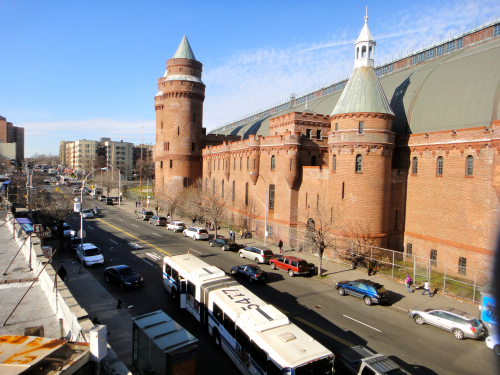
The historic Kingsbridge Armory in the Bronx, one of the largest armories in the world, is moving closer to a major redevelopment after decades of vacancy.

Brian Phillips | The Mobile Broker | New York City Real Estate Advisor and Housing Market Commentator