
🏙️🚢 NYC Historic Landmarks Are Finding New Life Through New Experiences 🍸✨
🍎 NYC historic landmarks tell the story of a city that constantly reinvents itself. Buildings change uses. Neighborhoods evolve. Old institutions find new audiences. Spaces that once served one purpose often return years later with an entirely different role in the life of the city.
That is exactly what is happening across New York today.
Some of NYC historic landmarks are being reimagined as restaurants, cocktail lounges, event venues, waterfront destinations, and nightlife experiences. Aircraft carriers are becoming dance floors. Historic train stations are becoming luxury dining destinations. Fish markets are hosting themed dinners. Former banks are becoming gathering spaces for dining, retail, and entertainment. Even retired vessels along the Hudson River are being transformed into places where people gather, dine, and take in the skyline.
This is more than a lifestyle trend. It reflects a larger shift in how New York is using its history.
For decades, the city was often criticized for tearing down historic buildings in the name of progress. Today, the more interesting story is how many historic spaces are being restored, activated, and adapted for modern use. Preservation is no longer only about protecting buildings from demolition. It is increasingly about giving them new economic, social, and community purpose while helping drive tourism, foot traffic, and neighborhood activity across the city.
HOW NYC HISTORIC LANDMARKS ARE FINDING NEW LIFE
One of the clearest examples is the USS Intrepid on Manhattan’s west side.
The legendary aircraft carrier once served in World War II, Vietnam, and NASA recovery missions before becoming the Intrepid Sea, Air & Space Museum. Now, it is also being used as an event venue, including themed programming such as the “Battle of the Big Bands,” where swing music, vintage fashion, and dancing bring the 1940s atmosphere back to life against the backdrop of the Manhattan skyline.
That is the power of adaptive reuse when it is done well. The original identity of the place is not erased. It becomes part of the experience.
NYC HISTORIC LANDMARKS: GRAND CENTRAL BECOMES MORE THAN A TRANSIT HUB
Grand Central Terminal has always been more than a train station. It is one of New York’s great civic rooms.
Today, it is also becoming a more serious dining destination. Palladino’s Steak & Seafood now occupies balcony space inside the terminal, with hours listed daily from 11 a.m. to 10 p.m. on Grand Central’s official site. Grand Brasserie has also brought new life to Vanderbilt Hall, further reinforcing the idea that major transportation spaces can become lifestyle destinations, not just places people rush through.
That matters because transit hubs shape how people experience the city. When these spaces offer dining, gathering, and hospitality, they become part of the cultural identity of a neighborhood. Grand Central shows how NYC historic landmarks can embrace new uses while preserving the architectural grandeur that has defined them for generations.
Central Park’s Boathouse Shows the Value of Nostalgia
Central Park’s Loeb Boathouse is another example of how deeply New Yorkers connect with historic places.
After closing in 2022, the Boathouse reopened following renovation, restoring one of the few places in Manhattan where people can dine near the water, rent a rowboat, and feel momentarily removed from traffic, sirens, and the intensity of the city.
Its return shows that nostalgia has real value in New York. People do not simply want new places. They want places with memory, atmosphere, and emotional connection.
NYC HISTORIC LANDMARKS ALONG THE WATERFRONT
New York’s waterfront has gone through one of the most dramatic transformations in the city’s modern history.
Once dominated by shipping, industry, and infrastructure, many waterfront areas are now central to dining, recreation, housing, parks, and tourism. The trend continues with restored vessels being used for public tours, seafood dinners, and hospitality concepts.
In Hudson River Park, the restored 1936 research vessel Robert Gray is expected to offer public tours and seafood dinners. In Brooklyn Bridge Park, Fireboat is planned aboard a restored 1961 FDNY vessel with Manhattan views.
Brooklyn’s waterfront tells a similar story. The historic Domino Sugar Refinery has been transformed from one of the city’s most recognizable industrial landmarks into the centerpiece of a vibrant mixed-use neighborhood that blends restored historic architecture with new residences, offices, restaurants, retail, public open space, and Domino Park. Rather than erasing the site’s industrial past, the redevelopment celebrates it, demonstrating how preservation and modern development can work together to create an entirely new destination along the East River.
Upper Manhattan has its own powerful example.
In West Harlem, The Baylander Steel Beach, docked at the West Harlem Piers near West 125th Street, has transformed a retired naval training vessel into one of New York City’s more unique floating restaurants and bars along the Hudson River. Harlem One Stop notes that Baylander IX-514 served in the Vietnam War and is now docked at West Harlem Piers on 125th Street on the Hudson River.
That is a perfect Upper Manhattan example of the same trend: history, waterfront access, hospitality, and neighborhood identity coming together in one place.
HISTORIC LANDMARKS IN NYC EXTEND FAR BEYOND MIDTOWN
The story of New York’s reinvented landmarks should not stop at Midtown, Downtown, or the traditional tourist corridors.
Upper Manhattan has some of the city’s most compelling examples of historic spaces being activated for modern audiences.
In Washington Heights, the United Palace has evolved far beyond its origins as a 1930 movie palace. Today, it operates at the intersection of spirituality, the arts, culture, and entertainment, and its official site notes that the venue is available for film shoots, concerts, and other events. Its ornate interior, scale, and cultural programming make it one of the most visually stunning examples of how a historic theater can remain relevant across generations.
Nearby, Morris-Jumel Mansion continues expanding beyond the traditional museum model. The museum describes its programming as immersive arts and cultural events for a range of audiences, and its calendar includes events such as Tavern Night. As Manhattan’s oldest surviving residence, the mansion is not just preserved. It is being activated through tours, cultural programming, performances, and community engagement.
Across Harlem, the historic Hotel Theresa corridor also reflects how historically significant buildings and neighborhoods can support restaurants, cocktail lounges, creative spaces, and entertainment driven destinations.
Harlem also offers one of the city’s clearest examples of large-scale reinvention through the redevelopment of the historic Victoria Theater site along 125th Street. Designed by renowned theater architect Thomas W. Lamb and opened in 1917 as a vaudeville and motion picture theater, the landmark had fallen into disrepair before being transformed through a public-private partnership. The redevelopment preserved and restored the theater’s historic façade, lobby, and iconic marquee while introducing the Renaissance New York Harlem Hotel, affordable housing, retail, the Apollo Stages cultural arts facility, office space anchored in part by the National Urban League, and other community-oriented uses. It reflects how historic preservation and modern mixed-use development can work together to strengthen Harlem’s cultural legacy while creating new opportunities for residents, visitors, and local businesses.
Harlem’s identity has always been tied to culture, music, politics, migration, architecture, and entrepreneurship. As more historic spaces are adapted for new uses, the neighborhood’s past continues to inform its future.
Wall Street Is Evolving Beyond Finance
Even the Financial District is being softened and reimagined.
Wall Street has long been associated with money, markets, and office towers. But historic financial buildings are increasingly being adapted into hotels, restaurants, cafes, lounges, retail spaces, and cultural destinations.
The Wall Street Hotel occupies a historically significant location tied to the Tontine Coffee House, once a major social hub of early Wall Street. Conwell Coffee Hall brings dining and programming into a landmarked former bank lobby. Printemps at One Wall Street has introduced luxury retail and hospitality into one of the city’s great Art Deco buildings, including the Red Room Bar.
These projects reflect how NYC historic landmarks continue evolving beyond their original roles as the Financial District transforms from a nine-to-five business district into a more complete mixed-use neighborhood.
NYC HISTORIC LANDMARKS IN THE BRONX
In Hunts Point, the Fulton Fish Market offers a very different kind of transformation. Once associated primarily with wholesale seafood distribution, the market now hosts concerts, themed dinners, storytelling programs such as Fish Market Monologues, and Other Community Events inside its massive refrigerated warehouse spaces. Once associated primarily with wholesale seafood distribution, the market is now being used for concerts, dinners, storytelling events, and themed experiences inside its massive refrigerated warehouse spaces.
Rather than hiding its industrial character, the market embraces it. That authenticity has become part of the attraction, with concerts and special events drawing visitors into a setting unlike anywhere else in New York City Upcoming concerts .
In a city where authenticity is increasingly valuable, places like the Fulton Fish Market remind us that not every destination needs to be polished to be compelling.
The Bronx is also seeing large scale reinvention through developments like the historic Kingsbridge Armory redevelopment. One of the largest landmarked structures in New York City, the massive armory is being repositioned into a future mixed use destination centered around sports, entertainment, dining, and community programming.
Elsewhere in the borough, sites like the landmarked Bronx General Post Office redevelopment and the continued activation of Bronx waterfront spaces reflect how historic and industrial infrastructure is being repurposed for creative, recreational, and economic uses.
Together, these efforts highlight how the Bronx continues evolving beyond long-outdated stereotypes. Historic buildings, industrial corridors, and former civic infrastructure are becoming part of the borough’s next chapter through investment, tourism, entertainment, and neighborhood revitalization. They also remind us that NYC historic landmarks are found in every borough, not just Manhattan.
The Hotel Chelsea and Russian Tea Room Show the Power of Mythology
Some New York landmarks are powerful because of the stories attached to them.
The Hotel Chelsea has long been associated with artists, writers, musicians, and cultural figures. Its former nightclub space has now been revived as Teruko, a Japanese restaurant that blends historic architecture with contemporary design.
The Russian Tea Room carries a different kind of mythology. Founded in 1926 by Russian émigrés, it is preparing for its 100th anniversary in 2026 with plans to revive live entertainment and centennial programming.
Both examples show how legacy hospitality depends on more than food or design. It depends on story, memory, reputation, and emotional connection.
WHY NYC HISTORIC LANDMARKS MATTER FOR REAL ESTATE
For real estate, this trend is worth paying attention to.
The continued evolution of NYC historic landmarks demonstrates how thoughtful reinvestment can preserve architectural character while creating new economic activity. Well-executed redevelopment attracts visitors, supports local businesses, strengthens neighborhood identity, and helps older buildings remain financially viable in a changing market.
It also reflects what many residents and visitors increasingly seek from cities. People are drawn to places with authenticity, history, and personality. A restaurant inside a landmarked train station, a cocktail lounge in a former bank, or a floating bar aboard a retired naval vessel offers an experience that a generic new building often cannot.
That does not mean every historic property should become a restaurant, hotel, or entertainment venue. Preservation still requires thoughtful planning, respect for architectural integrity, and a balance between protecting the past and meeting modern needs. When approached carefully, reinvestment allows neighborhoods to evolve while preserving the character that makes New York City distinctive.
New York’s Greatest Asset May Be Its Ability to Reinvent Itself
New York’s skyline will always be part of its identity. So will its density, ambition, energy, and constant motion.
But one of the city’s greatest strengths may be its ability to help NYC historic landmarks keep finding new life inside old spaces.
Grand Central can still move commuters while becoming a dining destination. The Intrepid can remain a museum while hosting music and dancing. A former sugar refinery in Brooklyn can anchor an entirely new waterfront neighborhood. A former naval vessel in West Harlem can become a floating restaurant. A historic mansion in Washington Heights can become a place for immersive programming. A fish market in the Bronx can become a destination for themed events and community gatherings.
That is New York at its best.
The city does not simply preserve the past. It puts it back to work.
The future of NYC historic landmarks will likely depend on striking the right balance between preservation, reinvestment, and new uses.
And in a place that is always changing, that may be one of the most powerful forms of preservation there is.
If you’re considering buying, selling, investing, or developing property in New York City, feel free to reach out 📩. The continued reinvention of historic buildings, waterfronts, and cultural landmarks is increasingly shaping neighborhood identity, tourism, hospitality, and long term real estate demand across the city. From adaptive reuse projects to evolving mixed use corridors, the ways New York reimagines its historic spaces continue to influence investment, development patterns, and the future of its neighborhoods.
📚 MORE SOURCES, INSPIRATION & FURTHER READING
This blog draws on reporting and analysis from:
- New Ways to Soak Up Some of New York City’s Most Iconic Locations
- USS Intrepid Events
- Shop and Dine at Grand Central Station
- The Baylander Steel Beach
- Victoria Theater Redevelopment Project (Empire State Development)
- Victoria Theater Restoration Project (Building Conservation Associates)
- United Palace
- Morris-Jumel Mansion
- Fulton Fish Market Events
- The Frying Pan NYC on the Hudson RIver
- CITY OF YES NYC HOUSING PLAN EXPLAINED: MIDTOWN SOUTH, OFFICE CONVERSIONS & AFFORDABILITY
- HISTORIC DISTRICTS AND PROPERTY VALUES: BENEFITS, CHALLENGES, AND LONG TERM IMPACT
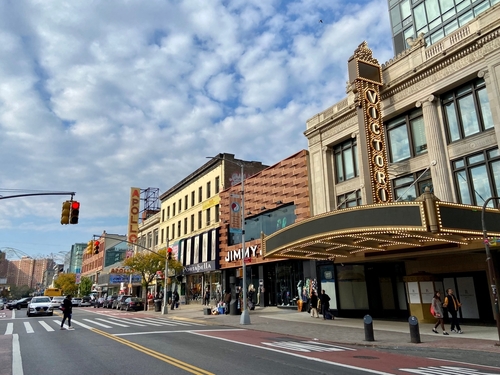
The landmarked Victoria Theater on Harlem’s 125th Street has been transformed into a mixed-use destination, illustrating how NYC historic landmarks continue finding new life through preservation, redevelopment, and neighborhood investment.
Brian Phillips | The Mobile Broker | New York City Real Estate Advisor and Housing Market Commentator