
🏗️ NYC Housing Plan: What Mayor Mamdani’s 400,000 Affordable Home Proposal Means for New Yorkers
New York City’s affordability crisis has reached a breaking point, and the new NYC Housing Plan unveiled by Mayor Zohran Mamdani is one of the most ambitious attempts in decades to address it. The proposal aims to build 200,000 affordable homes, preserve another 200,000, and reshape housing policy across all five boroughs.
New York City’s housing crisis has become impossible to ignore. The debate is no longer about whether New York needs more housing. The real questions are how to create it, who should pay for it, where it should be built, and whether government can deliver solutions at the scale the crisis demands.
Over nearly three decades in New York City real estate, I have watched housing conversations evolve from neighborhood-specific concerns to citywide debates about affordability, displacement, homeownership, public housing, and housing supply. Few proposals I have seen attempt to address as many parts of the housing system at once as Mayor Zohran Mamdani’s new blueprint, Block by Block: The Housing Plan for a New Era.
Supporters view the plan as a bold response to a housing shortage that has driven rents higher, pushed homeownership further out of reach, and contributed to record levels of homelessness. Critics question whether the proposal can be financed, implemented, and delivered at the scale promised. Regardless of where one stands politically, the plan has quickly become one of the most consequential housing proposals New York City has seen in years.
What Is the NYC Housing Plan?
The NYC Housing Plan arrives at a moment when affordability is affecting nearly every aspect of life across the five boroughs.
Rental vacancy rates remain near historic lows, with New York City’s rental vacancy rate recently measured at approximately 1.4%, one of the lowest levels in decades. Homeownership feels increasingly out of reach for many households. Public housing faces decades of deferred maintenance. Homelessness remains a persistent challenge. Meanwhile, tenants and property owners alike continue grappling with rising costs.
More than 100,000 people spend an average night in New York City’s shelter system, illustrating the magnitude of the housing challenge and the growing pressure on policymakers to find solutions.
The administration’s proposal seeks to address these challenges through a broad strategy focused on housing production, housing preservation, tenant protections, public housing investment, homeownership opportunities, and development reforms.
Its headline goal is ambitious: create 200,000 new affordable homes and preserve another 200,000 affordable homes over the next decade.
To support those goals, the administration is proposing a historic $22 billion housing investment over five years, combined with zoning reforms, faster development approvals, new financing tools, expanded use of city-owned land, stronger code enforcement, and significant investment in NYCHA.
Whether one supports the proposal or not, it represents a clear acknowledgment that incremental solutions are unlikely to solve a crisis that has been building for decades.
HOW THE NYC HOUSING PLAN WOULD CREATE 400,000 AFFORDABLE HOMES
The centerpiece of the proposal is its commitment to both housing production and preservation.
The administration argues that affordability cannot improve without substantially increasing the supply of housing while simultaneously protecting the affordable units that already exist.
To accomplish that, the plan relies on several strategies.
Transit-oriented development would encourage more housing near public transportation. New zoning and land-use tools would help unlock development opportunities in areas that have historically produced fewer affordable units. Environmental review reforms and streamlined approvals are intended to shorten development timelines and reduce barriers to construction.
The city also plans to make greater use of publicly owned land for housing development and introduce new financing tools designed to help affordable housing projects move forward more efficiently.
Preservation is equally important.
Many affordable and rent-stabilized buildings face mounting financial pressures from rising insurance costs, maintenance expenses, labor costs, financing challenges, and aging infrastructure. The plan includes billions of dollars aimed at preserving existing affordable housing and helping stabilize vulnerable properties before they fall further into distress.
The proposal also places significant emphasis on homeownership.
The administration plans to expand the Open Door program, which supports affordable co-op and condominium development, while launching a new initiative known as “Our Home” to create permanently affordable cooperative housing opportunities for working-class New Yorkers.
Another significant component would provide pathways for tenants in certain distressed properties to collectively purchase and convert buildings into resident-controlled cooperatives.
Together, these initiatives demonstrate an effort to address affordability from multiple angles, including both renting and homeownership.
HOW THE NYC HOUSING PLAN ADDRESSES NYCHA REPAIRS
Public housing is also a major component of the proposal. The administration has proposed approximately $5.6 billion in capital funding for NYCHA over five years while continuing to utilize programs such as PACT (Permanent Affordability Commitment Together) and the Public Housing Preservation Trust to help finance long-overdue repairs.
These tools are designed to leverage additional federal, private, and public investment for renovations while keeping apartments permanently affordable. The administration has also discussed creating new revenue opportunities through carefully planned development on underutilized NYCHA land, with proceeds helping fund repairs and improvements.
Supporters argue these strategies could accelerate much-needed upgrades to roofs, elevators, boilers, heating systems, and other critical infrastructure. Critics counter that NYCHA’s estimated capital needs exceed $80 billion, raising questions about whether the proposed funding and financing mechanisms will be sufficient to address decades of deferred maintenance.
Supporters of the NYC Housing Plan
Supporters argue that the scale of New York City’s housing challenges requires a response of similar scale.
Housing advocates, tenant organizations, labor groups, affordable housing providers, several elected officials, and pro-housing organizations have praised the proposal’s comprehensive approach.
Many point to the combination of new housing production, preservation funding, public housing investment, tenant protections, and expanded homeownership opportunities as evidence that the administration is attempting to address both immediate housing needs and long-term affordability concerns.
Supporters also argue that New York’s severe housing shortage cannot be solved without building significantly more housing.
For years, debates around housing often framed tenant protections and housing development as competing priorities. The Block by Block plan attempts to pursue both goals simultaneously.
Advocates of the plan view that approach as a recognition that protecting current residents and creating future housing opportunities are not mutually exclusive.
Criticisms of the NYC Housing Plan
While the proposal has generated significant support, it has also generated substantial questions.
Some real estate industry organizations argue that certain labor requirements and potential project labor agreements could increase development costs at a time when construction costs are already among the highest in the nation.
Others question whether the city can realistically achieve its production targets given high interest rates, inflation, financing constraints, community opposition, and the complexity of New York City’s development approval process.
Developers also point to high construction costs, financing challenges, and uncertainty surrounding future regulations as potential obstacles to achieving the plan’s production goals.
Landlord groups have raised concerns that the proposal does not adequately address the financial pressures facing many owners of rent-stabilized housing, particularly as operating expenses continue to increase.
Questions have also been raised about NYCHA.
While the proposed $5.6 billion investment would represent one of the largest city commitments in recent history, NYCHA’s long-term capital needs are estimated in the tens of billions of dollars. Critics argue that while the investment is a major step forward, it may only address a fraction of the system’s overall needs.
Even many supporters acknowledge that success will require unprecedented coordination among government agencies, developers, lenders, labor organizations, nonprofit housing groups, community stakeholders, and residents.
The largest challenge may not be the vision itself.
It may be execution.
What the NYC Housing Plan Could Mean for New York’s Future
Regardless of political affiliation, housing affects virtually every New Yorker.
Renters need affordable options.
Prospective buyers need realistic paths to ownership.
Property owners need financially sustainable buildings.
Employers need workers who can afford to live near their jobs.
Neighborhoods need investment while maintaining long-term stability.
For that reason, the significance of this proposal extends far beyond politics.
The success or failure of housing policy ultimately influences who can afford to remain in New York City, where future growth occurs, and how neighborhoods evolve over time.
Over nearly three decades in real estate, I have seen ambitious housing initiatives introduced by multiple administrations. Some achieved meaningful results. Others struggled against economic realities, political opposition, financing constraints, and bureaucratic delays.
The housing crisis did not emerge overnight, and it will not be solved overnight.
What is clear is that New York City’s housing conversation is entering a new phase. The debate is increasingly shifting from whether more housing is needed to how much housing can realistically be delivered and how quickly it can happen.
Whether Block by Block ultimately succeeds or struggles, it is likely to become one of the defining housing policy experiments New York City has faced in decades.
For renters, homeowners, buyers, landlords, developers, and neighborhood residents alike, the outcome will help shape New York City’s future for years to come.
Whether this plan ultimately succeeds, fails, or evolves through negotiations and future legislation, it is likely to influence housing policy, development decisions, and affordability discussions throughout New York City for years to come.
Final Thoughts
For many New Yorkers, this debate is no longer abstract. Housing affordability increasingly shapes whether families can remain in their neighborhoods, whether young professionals can build a future in the city, whether seniors can age in place, and whether working-class residents can continue calling New York home at all.
Block by Block may ultimately become one of the defining policy tests of New York City’s next decade.
📚 MORE SOURCES & FURTHER READING
- Office of the Mayor of New York City — Block by Block: The Housing Plan for a New Era (May 26, 2026)
- FOX 5 New York — “What to Know About Mayor Mamdani’s NYC Housing Plan” by Adeja Shivonne (May 26, 2026)
- CBS New York — “NYC Mayor Zohran Mamdani Announces Plan for 400,000 Affordable Housing Units” by Jesse Zanger and Lisa Rozner (May 26, 2026)
- Gothamist — David Brand’s reporting on the “Our Home” affordable co-op initiative and tenant ownership proposals (May 2026)
- Politico New York — Janaki Chadha’s analysis of the Block by Block housing plan (May 26, 2026)
- City & State New York — Sahalie Donaldson’s reporting on the rollout and policy implications of Block by Block (May 2026)
- New York YIMBY — Max Gillespie’s reporting on housing production, zoning, and development reforms (May 31, 2026)
- WABC-TV — Coverage of Mayor Mamdani’s housing announcement and stakeholder reactions (May 26, 2026)
- Columbia Daily Spectator — Reporting on the Bronx Rental Rip-Off Hearing and tenant feedback connected to the housing plan (June 2026)
- THE COMMUNITY OPPORTUNITY TO PURCHASE ACT (COPA): WHAT NYC OWNERS, BUYERS, AND RENTERS NEED TO KNOW
- A NEW NYC TAX COULD BOOST HOMES UNDER $5M
📩 Thinking about buying, selling, investing, developing, or owning property in New York City?
Housing policy is no longer just a government issue. It increasingly influences affordability, neighborhood growth, investment opportunities, property values, and the future of communities across the five boroughs.
Whether Mayor Mamdani’s Block by Block plan ultimately succeeds or falls short, the decisions being made today could shape New York City’s housing market for years to come. Understanding those trends can help buyers, sellers, homeowners, investors, and developers make more informed decisions.
If you’d like to discuss how these changes may affect your real estate goals or a neighborhood you’re following, feel free to reach out.
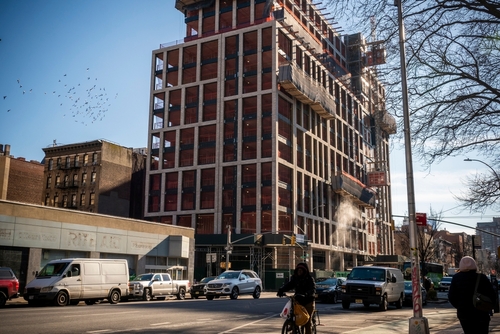
New residential construction in New York City. Mayor Mamdani’s Block by Block housing plan aims to build 200,000 new affordable homes while preserving another 200,000 affordable units over the next decade.

Brian Phillips | The Mobile Broker | New York City Real Estate Advisor and Housing Market Commentator