
⚖️🏙️ NYC Rent Freeze Lawsuit: Was the Outcome Decided Before the Vote?
New York City has frozen rents on nearly one million rent stabilized apartments. Now a lawsuit is asking a very different question: Was the outcome effectively decided before the Rent Guidelines Board ever cast its final vote?
That question takes New York’s long running debate over rent regulation beyond the familiar arguments about tenants, landlords and affordability. The NYC rent freeze lawsuit puts the process itself under scrutiny, including how an independent public board weighs competing financial information, how much influence an elected mayor should have over appointees and whether the same rent adjustment can fairly apply across thousands of very different buildings.
The Rent Guidelines Board voted 7 to 1 on June 25 to establish a 0% increase for both one and two year rent stabilized lease renewals beginning October 1, 2026 and continuing through September 30, 2027. The city confirms that nearly one million apartments are subject to rent stabilization. This is also the first time New York has frozen increases for two year leases.
For tenants facing one of the most expensive housing markets in the country, the immediate benefit is easy to understand. A renewal will not bring another increase in the legal rent during the applicable period. For owners, however, property taxes, insurance, fuel, utilities, labor, repairs and financing expenses do not stop increasing simply because rents do. That tension existed before the vote. The lawsuit has now added another dimension.
🏛️ What the NYC Rent Freeze Lawsuit Is Actually Challenging
Seven landlord entities have sued the Rent Guidelines Board, seeking to stop the freeze and force the board to reconsider its determination. Their argument goes beyond claiming that 0% is financially unsustainable. They allege that the process was compromised because Mayor Zohran Mamdani campaigned prominently on freezing rents, subsequently appointed six members of the nine member RGB, and the board ultimately delivered the result he had advocated. City Hall rejects that characterization and says the RGB independently considered the evidence presented to it. That difference is critical to understanding the case. Mayors appoint members of the Rent Guidelines Board. Elections also have policy consequences. A mayor selecting people who generally share an administration’s approach to housing does not, by itself, establish that those members surrendered their independent judgment. The harder question is whether political influence, if any, crossed the line from shaping the composition of a public body to shaping an outcome that body was legally expected to reach on its own.
The plaintiffs also point to City Hall initiatives encouraging New Yorkers to participate in the RGB process and to presentations involving mayoral offices. Public records confirm that the RGB heard presentations from numerous organizations and government entities during its deliberations, including HPD, New York State Homes and Community Renewal, Columbia University researchers, the Fiscal Policy Institute, LISC and the Mayor’s Office of Equity and Racial Justice.
Whether those activities amount to improper influence is now an issue for the litigation. Participation by government officials or advocacy organizations does not establish that the board was controlled by them.
📊 What the NYC Rent Freeze Lawsuit Says About the Numbers
The NYC rent freeze lawsuit is particularly interesting because both sides can point to real data.
According to the RGB’s 2026 Price Index of Operating Costs, expenses for buildings containing rent stabilized apartments increased 5.3% from April 2025 through March 2026. Fuel increased 11%, insurance rose 10.5%, maintenance increased 6%, utilities climbed 5.6%, labor costs increased 3%, and taxes rose 2.6%.
Those figures support owners who argue that a 0% rent adjustment does not mean their expenses are frozen. But there is another side to the financial picture.
The RGB also studies property income and expenses, and the debate surrounding the freeze has focused heavily on net operating income. NOI essentially measures what a property generates after operating expenses, before mortgage payments and certain other costs. The board’s research has been cited as showing a 6.2% increase among properties containing at least one stabilized apartment, although results differ considerably depending on building composition. Fully stabilized properties showed a much smaller increase.
That is where a seemingly straightforward argument becomes much more complicated. A building containing rent stabilized apartments may also have market rate units or other sources of income. Its overall financial performance may therefore look quite different from a property where every residential apartment is regulated. Geography, building age, debt, condition and operating efficiency can produce additional variations. The real question is not simply which number is correct. Several numbers can be accurate simultaneously. The challenge is deciding which measurements should carry the greatest weight when setting rents across an enormous and highly varied housing stock.
🏠 One Percentage, Nearly One Million Apartments
That leads to an issue that deserves considerably more attention regardless of how the NYC rent freeze lawsuit is resolved. Should one percentage apply to nearly one million apartments? The current system requires the RGB to establish annual guidelines covering an enormous number of rent stabilized homes. Yet the financial circumstances of those properties can be dramatically different.
Consider two hypothetical buildings. One has relatively little debt, has been well maintained for decades and generates sufficient income to comfortably cover its expenses. Another needs substantial capital improvements, faces rapidly increasing insurance premiums and has financing coming due at a much higher interest rate. Both can receive the same allowable rent adjustment.
RGB member Arpit Gupta, who cast the lone vote against the freeze, has questioned whether such a uniform approach adequately accounts for differences among properties. That does not necessarily mean a building specific system would be easy to administer. A more targeted approach would create its own questions about fairness, verification, complexity and enforcement.
But the issue is worth examining because New York’s regulated housing stock is not financially uniform simply because the apartments fall under the same regulatory system.
🔍 A Resignation Complicates the Story
The circumstances immediately preceding the June 25 vote have also become part of the legal fight.
Christina Smyth, one of the RGB’s owner representatives, resigned hours before the final meeting. She argued that the process had ceased to operate as genuine fact finding and that the result had already been determined. Her resignation is now being cited by the plaintiffs in support of their allegations. The RGB chair responded by affirming the independence of the members and the integrity of the staff’s research. Yet another piece of the record complicates any simple conclusion.
Gupta, despite voting against the freeze, subsequently said he had not personally observed City Hall interfering with individual board members’ choices, according to reporting on the lawsuit. Those two perspectives are worth considering together.
One former member says she believed the process was effectively predetermined. A member who opposed the final result says he did not observe direct interference with individual votes. The court will have to consider the legal arguments and evidence rather than the political assumptions surrounding either side.
🏙️ New York Is Increasingly Experiencing Two Rental Markets
The lawsuit is unfolding against an unusual housing backdrop.
Rent stabilized tenants receiving qualifying renewals will see a 0% increase beginning October 1. Outside the regulated sector, New Yorkers continue to encounter extraordinarily expensive rents and limited inventory.
New York’s underlying shortage helps explain why. The city’s 2023 Housing and Vacancy Survey found a citywide rental vacancy rate of just 1.41%, representing only about 33,210 available units among more than 2.3 million rental apartments. The vacancy rate for stabilized housing was even lower, at 0.98%. More than 40% of renters were spending at least 30% of their income on housing, and roughly one quarter were spending at least half.
That creates very different experiences within the same city. A longtime stabilized tenant may have an apartment with a rent substantially below what a newcomer encounters when searching the open market. The existing tenant understandably has a powerful incentive to remain where they are. The person entering the market has to compete for a limited number of available apartments at substantially higher prices.
A freeze provides financial relief to people already inside the regulated system. It does not, by itself, create another apartment for someone trying to find a home. That does not make the relief unimportant. It illustrates why rent regulation and housing production answer different parts of New York’s affordability problem.
💰 If Affordability Is a Public Goal, Who Pays for It?
The NYC rent freeze lawsuit also raises a question that extends beyond this particular case: If New York treats housing affordability as a public priority, how should the financial responsibility for achieving it be divided among tenants, property owners, developers, taxpayers and government?
A rent freeze provides assistance in a very direct way. The tenant pays no additional legal rent on the applicable renewal, and the owner absorbs operating cost increases that cannot be recovered through that annual adjustment. Other approaches distribute the burden differently.
Government can provide property tax relief, financing assistance, insurance programs, subsidies or capital support targeted toward distressed buildings. Public resources can also be directed toward constructing affordable housing or helping tenants pay rent.
Even supporters of the freeze have acknowledged that rent regulation cannot solve the entire affordability crisis. New York City Public Advocate Jumaane Williams, for example, praised the freeze but also called for government support for property owners when necessary and additional efforts to build and preserve income targeted affordable housing. Mayor Mamdani has similarly said his administration intends to pursue affordable housing production and lower building operating expenses such as insurance. That suggests an area where people on different sides of the rent debate may find some common ground. Tenant protection and preserving the financial ability to maintain housing do not have to be opposing objectives.
📜 How the NYC Rent Freeze Lawsuit Differs From Earlier Challenges
Although the NYC rent freeze lawsuit raises a different set of legal questions, this is not the first time owners have challenged an RGB rent freeze. Previous freezes adopted during the de Blasio administration also generated litigation. Courts have historically given the Rent Guidelines Board considerable discretion, and an earlier challenge arguing that tenant affordability was improperly considered did not succeed.
The current NYC rent freeze lawsuit takes a different approach. The plaintiffs are placing greater emphasis on alleged political influence, the board’s independence and the way economic information was interpreted. Current reporting describes the litigation as seeking records involving the RGB and City Hall, with the city preparing to defend the board’s action. That could make the case relevant well beyond the 2026 rent cycle.
Every mayor arrives in office with policy priorities. Every mayor also makes appointments to boards and commissions. Those appointees inevitably bring their own professional backgrounds, beliefs and perspectives. Independence cannot reasonably require board members to have no policy views. The more difficult standard is whether they genuinely evaluate the evidence, fulfill their legal responsibilities and remain capable of reaching a conclusion different from the one preferred by the elected official who appointed them. That is ultimately a governance question as much as a housing question.
🏗️ The Housing Shortage Does Not Disappear
Regardless of what happens in court, New York still has to confront the condition that makes the rent debate so intense in the first place: there are not enough homes relative to the number of people who want and need them.
A 1.41% vacancy rate leaves renters with few alternatives. When moving means confronting substantially higher rents, tenants have every reason to remain in apartments they can afford. Owners facing rising expenses without corresponding revenue growth may find some properties increasingly difficult to maintain, and when proposed developments cannot be made financially viable, fewer homes may ultimately get built. These pressures interact, even though they are not identical.
New York needs to protect renters from displacement. It also needs existing buildings to remain safe and financially capable of being maintained. It needs lenders willing to finance multifamily housing, owners willing to reinvest in aging properties and developers prepared to create additional homes across a wide range of incomes. Treating any one of those objectives as though it can exist independently of the others risks missing how housing actually works.
⚖️ Why the NYC Rent Freeze Lawsuit Could Reach Beyond This Year’s Freeze
The immediate issue before the court concerns the legality of the RGB’s 2026 determination. The larger conversation raised by the NYC rent freeze lawsuit reaches much further.
How should an independent board weigh tenant hardship against rising building expenses? How should financial results from mixed market rate and stabilized properties be compared with fully regulated buildings? Should one citywide adjustment apply to properties with dramatically different economics? How much political influence is appropriate when a mayor appoints the people responsible for implementing housing policy? And if affordability is increasingly treated as a public priority, how should its cost be shared? Reasonable people can answer those questions differently.
For approximately two million New Yorkers living in rent stabilized housing, the immediate benefit of the freeze is tangible. For property owners trying to operate buildings as expenses rise, the financial concerns are also real. For people searching for an apartment in the market rate sector, neither side of that debate changes the fundamental reality that available housing remains scarce and expensive.
Whatever the court ultimately decides, tenant affordability and the financial health of rent stabilized properties will remain central to New York’s housing conversation. So will confidence in how these decisions are made, how competing information is evaluated and whether the evidence ultimately drives the outcome. The rent freeze may have brought everyone to court, and how the outcome was reached could prove even more consequential. Yet New York’s larger challenge remains finding a way to protect the people who live here, preserve the housing we already have and create substantially more homes for those still searching.
📚 MORE SOURCES & FURTHER READING
For readers who want to examine the NYC rent freeze lawsuit, the Rent Guidelines Board’s decision, and the competing economic arguments in greater detail, these resources provide additional context:
- NYC froze the rent. Now a lawsuit is asking whether the outcome was decided before the vote.
- NYC Rent Guidelines Board — The official source for the RGB’s rent guidelines, orders, research, hearings and explanatory materials. The board adopted 0% increases for one and two year rent stabilized leases beginning October 1, 2026.
- Mayor Mamdani’s Statement on the Rent Guidelines Board’s Final Vote — City Hall’s response to the June 25 vote and the administration’s position on tenant affordability, building operating costs and preserving affordable housing.
- Mayor Mamdani’s Rent Guidelines Board Appointments — The Mayor’s Office announcement identifying the six appointments made to the nine member RGB in February 2026. The city describes the RGB as an independent body charged with determining adjustments for rent stabilized housing.
- NYC Housing and Vacancy Data — Official city housing data showing a 1.41% citywide rental vacancy rate in 2023 and a 0.98% vacancy rate among rent stabilized apartments, providing important context for the supply pressures underlying the affordability debate.
- NYC Comptroller Analysis of Rent Stabilized Vacancies — A useful counterpoint to claims about large numbers of rent stabilized apartments being deliberately held vacant. The Comptroller’s analysis examines unavailable units, apartments requiring repairs and changes following the 2019 HSTPA.
- Gothamist Coverage of the NYC Rent Freeze Lawsuit — Detailed reporting on the landlords’ allegations, City Hall’s response, the competing financial figures and the circumstances surrounding the RGB vote.
- NYC Planning Housing Overview — Additional context on New York City’s housing shortage, historic production trends and efforts to increase supply.
- THE NYC RENTAL RIPOFF REPORT COULD RESHAPE THE RENTAL MARKET
📩 THINKING ABOUT RENTING, BUYING, SELLING, INVESTING OR OWNING PROPERTY IN NEW YORK CITY?
The NYC rent freeze lawsuit is about far more than whether regulated tenants receive a rent increase this year. Its outcome could influence how future Rent Guidelines Boards evaluate tenant affordability, operating expenses and competing financial data, as well as how the independence of the rent setting process is understood.
For owners and investors, rent regulation can directly affect income, operating expenses, financing, property values, capital improvements and long term investment decisions. The economics can also vary considerably from one building to another. A fully rent stabilized property may perform very differently from a mixed building containing regulated and market rate apartments, even though both are affected by the same annual RGB guidelines.
For tenants, the freeze provides immediate protection from renewal increases for qualifying leases beginning October 1, 2026 through September 30, 2027. Yet New York continues to face an exceptionally tight rental market. The most recent Housing and Vacancy Survey found a citywide rental vacancy rate of only 1.41%, with the stabilized vacancy rate even lower at 0.98%.
That shortage is an important part of the conversation. Rent regulation can provide stability and help protect existing tenants from displacement, but it does not by itself create additional apartments. New York also needs to preserve aging buildings, address rising operating expenses and encourage enough housing production to give renters more choices.
The lawsuit now adds another issue: confidence in how housing policy is made. The allegations against the Rent Guidelines Board remain allegations, and City Hall maintains that the board independently considered the circumstances facing tenants and property owners. The courts will determine the legal questions. The larger challenge for New York will remain regardless of the outcome.
Can the city protect renters, keep existing housing financially and physically viable, encourage private investment and create substantially more homes? Those objectives should not have to compete with one another.
If you would like to discuss how rent stabilization, changing housing policy, market conditions or building economics could affect a property you own, a purchase or sale you are considering, an investment opportunity, or a New York City neighborhood you are following, feel free to reach out.
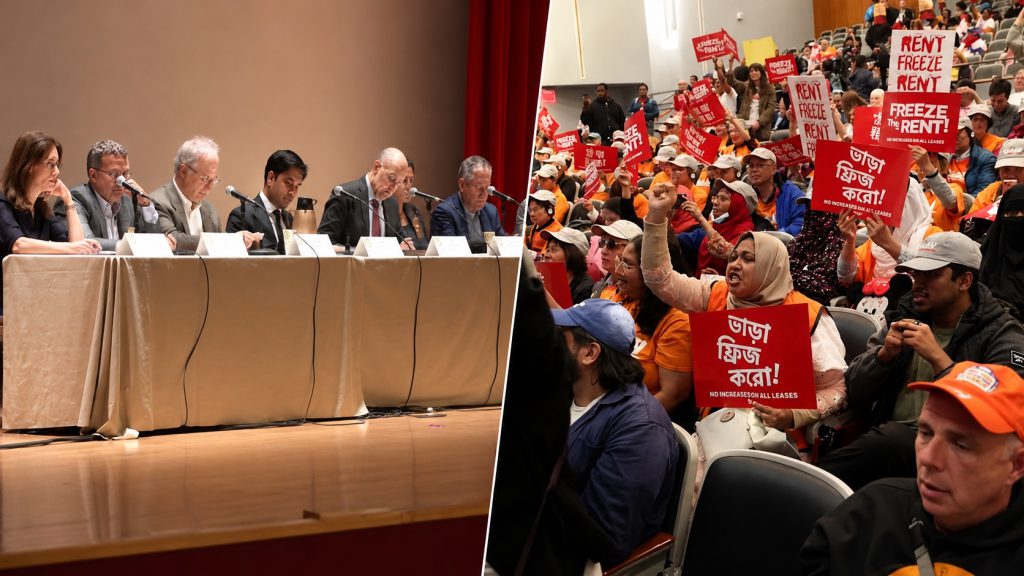
New York City’s historic rent freeze is now facing a legal challenge that questions the Rent Guidelines Board’s independence and how the 0% increase was reached.

Brian Phillips | The Mobile Broker | New York City Real Estate Advisor and Housing Market Commentator