
🏙️🚇🏗️ A new, solutions first movement called the Abundance Agenda is gaining steam in NYC’s tech, policy, and planning circles and could significantly reshape the New York City housing future. The NYC housing future may be entering one of its biggest turning points in decades. At its core: build more homes, transit, and clean infrastructure faster and smarter. NYC already flipped key levers in late 2024 and 2025 through City of Yes zoning reforms, new state tax incentives like 485 x and 467 m, congestion pricing revenues, bus tech enforcement, OMNY milestones, and the Interborough Express (IBX) design process.
The NYC housing future may be entering one of its biggest turning points in decades.
Expect targeted density near transit, office to residential conversions, faster buses, and a new Brooklyn Queens rail link to transform where New Yorkers live and how they move around the city. None of this is a silver bullet, but together, it represents one of the most significant supply side shifts New York City has seen in decades.
“NYC’s affordability crisis is increasingly becoming a supply crisis.”
What Is the “Abundance Agenda”?
The term “Abundance Agenda” first gained traction in national tech policy circles, particularly in California’s housing debates, before gaining momentum in New York. Its core philosophy centers on reducing regulatory, zoning, and permitting barriers that slow the production of housing and infrastructure.
Supporters argue that many of the city’s biggest challenges, including high rents, long commutes, aging infrastructure, and affordability pressures, ultimately stem from a shortage of supply. In other words, New York simply has not been building enough housing or transit infrastructure to keep pace with population growth, economic demand, and changing patterns of urban living.
Unlike traditional political debates that often focus primarily on subsidies or demand side solutions, the Abundance Agenda emphasizes increasing capacity: more homes, more transit access, more energy infrastructure, and faster project delivery.
The movement has drawn both bipartisan support and criticism, making it one of the more unusual urban policy discussions currently unfolding in America.
Why Now? The Urgency in One Number
NYC’s rental vacancy rate is just 1.4%, its lowest level since 1968. In housing market terms, anything under 5% signals scarcity, while healthy markets generally range between 5% and 8%.
At 1.4%, competition for apartments becomes extreme. Bidding wars emerge even for modest rentals, landlords gain significant leverage, and lower and middle income residents are increasingly pushed farther away from job centers and transit hubs.
Meanwhile, housing production has struggled to keep pace.
Permitting activity declined sharply after the expiration of the 421 a tax incentive program. Just 15,626 housing units were authorized in 2024, slightly below 2023 levels and far below the 2022 spike, when developers rushed to secure permits before the previous incentive expired.
Data from NYC Department of City Planning and the NYU Furman Center continue to underscore the same reality: New York’s housing pipeline remains insufficient relative to long term demand.
Housing Policy Is Finally Shifting
1) City of Yes for Housing Opportunity
Adopted in December 2024, City of Yes represents the city’s most sweeping zoning reform package in decades. The initiative is designed to “build a little more housing in every neighborhood.”
Key provisions include:
• Allowing 3 to 5 story apartment buildings near transit corridors and town centers in lower density areas
• Expanding opportunities for apartments above retail stores on commercial corridors
• Legalizing Accessory Dwelling Units (ADUs) in many one and two family zones
• Reducing outdated parking requirements near transit
• Encouraging transit oriented housing growth
Supporters believe the reforms could gradually unlock thousands of new housing opportunities across neighborhoods that historically saw limited development.
Critics, however, argue the changes may strain infrastructure or alter neighborhood character.
Reality check: A lawsuit filed in 2025 challenges the environmental review process tied to City of Yes. While the policy remains active unless courts intervene, the litigation could affect implementation timelines.
2) 485 x (ANNY): The New 421 a Replacement
New York State created RPTL 485 x in the FY25 budget as a replacement for the expired 421 a program.
The incentive offers long term property tax exemptions for qualifying residential developments with six or more units started between June 15, 2022 and June 15, 2034 and completed by June 15, 2038.
Projects must meet affordability and labor standards in exchange for the tax benefits.
For developers, 485 x is viewed as a critical tool to restart multifamily construction projects that became financially difficult after rising interest rates and construction costs reshaped development economics.
HPD has already reported early interest and project activity under the program during 2025.
3) Office to Residential Conversions and 467 m
Another major policy tool is RPTL 467 m (AHCC), designed to encourage the conversion of obsolete office buildings into residential housing.
The program generally requires 25% income restricted housing while offering potentially substantial property tax relief, up to 35 years depending on the project and location.
The recently approved Midtown South Mixed Use rezoning is expected to work alongside 467 m incentives to unlock additional office to residential conversions in one of Manhattan’s most underutilized commercial districts.
The rezoning could create nearly 10,000 new housing units, including approximately 2,900 affordable homes, across a 42 block area of Midtown South.
Midtown South rezoning could become one of the defining examples of how the NYC housing future evolves through adaptive reuse.
For example, a developer converting a vacant Midtown South office building under 467 m could receive decades of tax relief, making a project financially viable that otherwise may never move forward due to high renovation and financing costs.
For years, many aging office buildings struggled with declining demand and outdated layouts. The city is now increasingly treating these buildings not as liabilities, but as future housing stock.
Why NYC Housing Future Depends on Transit
Housing growth and transit infrastructure are deeply connected.
As New York attempts to increase housing supply, much of that growth is expected to cluster near transit corridors where residents can more easily access jobs and services without relying heavily on cars.
Transit investment is increasingly shaping the NYC housing future by influencing where growth becomes economically viable.
Congestion Pricing Is Funding the Backbone
Since January 5, 2025, NYC’s congestion pricing system has operated below 60th Street in Manhattan.
Revenue is projected to generate approximately $500 million annually, helping unlock up to $15 billion in MTA capital investment.
Those funds are expected to support:
• Station modernization
• Accessibility improvements
• Signal upgrades
• Bus infrastructure
• Long delayed transit investments
Supporters argue congestion pricing is not just about reducing traffic. It is increasingly about funding the city’s long term transportation backbone.
Buses Are Getting Tech Enforced Priority
NYC’s Automated Camera Enforcement (ACE) program now targets bus lane violations, bus stop obstructions, and double parking on camera equipped routes.
Simultaneously, Transit Signal Priority systems are helping buses move through intersections faster.
Together, these systems are aimed at improving reliability and reducing commute times, particularly in neighborhoods underserved by subway infrastructure.
For many residents, especially outer borough commuters, faster buses can meaningfully improve quality of life and expand practical housing options.
OMNY Is Replacing MetroCard
OMNY is expected to fully replace MetroCard by the end of 2025.
The transition represents more than a payment system upgrade. It allows the MTA to better integrate subway, bus, commuter rail, and reduced fare programs into a more unified system.
As of March 2025, the MTA reported that the vast majority of full fare riders were already tapping into the system.
Long term, the technology could support more flexible fare structures and improve transit planning through better ridership data.
Big Rail Projects That Could Reshape NYC
Second Avenue Subway, Phase 2
The federal government signed a $3.4 billion funding agreement for Phase 2 of the Second Avenue Subway, extending service north to 125th Street.
The project is expected to significantly improve transit access in East Harlem while supporting long term neighborhood investment and development.
Interborough Express (IBX)
The Interborough Express may ultimately become one of the city’s most transformative transit projects.
The proposed 14 mile Brooklyn Queens light rail line would connect 17 subway lines and multiple Long Island Rail Road hubs without requiring riders to travel through Manhattan.
The MTA projects IBX could serve up to 88,000 daily riders, dramatically reducing commute times between parts of Brooklyn and Queens.
Beyond transportation, the line could reshape development patterns along the corridor by increasing the attractiveness of neighborhoods previously considered transit disconnected.
Penn Station Access (Bronx)
Penn Station Access will add four new Metro North stations in the East Bronx, helping connect underserved communities directly to Penn Station.
While the project has experienced delays and is now expected around 2028, planners believe it could become a major catalyst for walkable residential growth around station areas.
What This Could Mean for NYC Housing Future
Near Term (12 to 24 Months)
• Small scale infill development near transit corridors may increase under City of Yes
• More apartments above retail stores could gradually emerge on commercial strips
• Office to residential conversions may shift from isolated projects into a broader development pipeline
• Midtown South, FiDi, and portions of the outer boroughs could see renewed investor interest tied to conversion opportunities
Bus priority corridors may also become increasingly attractive to renters who value commute reliability and transit accessibility.
Medium Term (2 to 5 Years)
• Projects financed under 485 x may begin delivering new housing units
• Transit oriented zoning changes could gradually create more mixed use neighborhood nodes
• Areas surrounding future IBX stations and Penn Station Access stops may experience increased development pressure and rising land values
The city may also begin seeing more “missing middle” housing, smaller multifamily buildings that fall between single family homes and high rise towers.
Long Term (5 to 10 Plus Years)
IBX and major subway expansions could fundamentally alter how New Yorkers move around the city.
Neighborhoods historically considered too isolated or difficult to access may become increasingly viable residential alternatives.
If enough housing is ultimately built near transit, the city could gradually reduce some of the extreme housing scarcity that has defined the market for years.
That does not necessarily mean housing will suddenly become inexpensive. But supporters of the Abundance Agenda argue that increasing supply is one of the few long term strategies capable of moderating housing costs over time.
Risks and Roadblocks to Watch
Despite growing momentum, major obstacles remain.
• Litigation could delay portions of City of Yes implementation
• High interest rates and construction costs continue challenging project feasibility
• Infrastructure upgrades often face lengthy approval timelines
• Utility coordination and labor shortages can slow development
• Political opposition to density remains strong in certain neighborhoods
• Equity concerns surrounding transit access and OMNY adoption still exist
The success of the Abundance Agenda ultimately depends not just on passing policies, but on whether projects can actually get built.
Who Should Pay Attention?
Developers & Investors
Transit oriented sites, commercial corridors, and conversion opportunities may become increasingly valuable as zoning flexibility expands.
Developers are already modeling 467 m and 485 x scenarios together to determine which projects can realistically move forward in today’s financing environment.
Small Property Owners
ADUs and zoning flexibility may create new income opportunities for homeowners while allowing more multigenerational living arrangements.
Neighborhood Advocates
Transit upgrades, bus priority investments, and station area planning could create opportunities to improve public space, accessibility, and walkability.
Renters and First Time Buyers
Over time, increased housing production near transit could help moderate rent growth and expand housing options in neighborhoods that historically saw limited new development.
While affordability challenges are unlikely to disappear overnight, broader housing availability could eventually reduce some of the intense competition renters and first time buyers face today.
The Bottom Line
For years, New York’s housing debate focused largely on demand: rising rents, migration patterns, and affordability pressures.
The Abundance Agenda shifts the conversation toward supply, whether the city can actually build enough housing and transit infrastructure to support long term growth.
The NYC housing future will likely depend on how aggressively the city expands both housing and transit infrastructure.
Programs like City of Yes, 485 x, Midtown South rezoning, office conversions, congestion pricing, OMNY, and IBX will not solve NYC’s housing crisis overnight.
The NYC housing future will likely depend on whether the city can successfully expand both housing supply and transit capacity.
But collectively, they represent one of the most meaningful shifts in urban planning and housing policy the city has seen in decades.
If these policies succeed, they could reshape not only how New Yorkers move around the city, but where future generations can realistically afford to live.
If you’re considering investing, buying, selling, or developing property in New York City, feel free to reach out 📩. I’m happy to help you navigate how City of Yes, Midtown South rezoning, office to residential conversions, transit expansion, and major infrastructure investment could influence housing demand, neighborhood growth, property values, and long term real estate opportunities across the five boroughs.
📚 SOURCES & FURTHER READING
- A Little More Housing in Midtown South: City Kicks Off Rezoning to Create 10,000 New Homes
-
Vacancy emergency: HPD/NYCHVS 2023 initial findings; RGB 2024 Housing Supply Report
-
485-x (ANNY) & 467-m conversions: HPD program pages; NYS budget release; Comptroller analysis
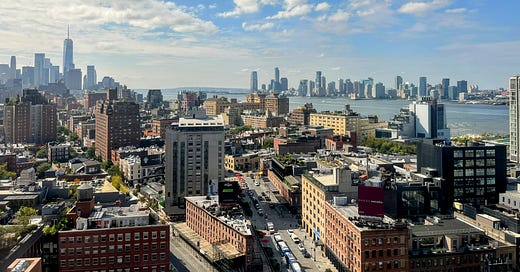
Midtown South is emerging as a major focal point for NYC’s housing growth strategy, with zoning reforms and office conversions expected to reshape the neighborhood in the years ahead.

The Brian Phillips Team at Douglas Elliman Real Estate | The Mobile Broker branding graphic representing New York City real estate expertise, mobility, and neighborhood connectivity.