
🏗️ New York City financed the creation and preservation of 12,491 affordable homes during the six month period from January through June 2026, which was also Mayor Zohran Mamdani’s first six months in office. That equals an average of approximately 2,082 units per month, although affordable housing transactions do not close at a consistent monthly rate.
The total sounds substantial until it is placed beside two revealing comparisons. The city financed 15,380 affordable homes during Mayor Eric Adams’s final six months, and a new draft report estimates that New York may need 700,000 additional residences over the next decade.
These figures raise an important question about NYC affordable housing production: How can financing more than 12,000 homes represent progress, a decline and only a fraction of what New York may require? The answer depends on what the city counts, how the latest results compare with previous years and how long it takes a development to move from financing to construction and eventually occupancy.
WHAT THIS ARTICLE COVERS
- What the 12,491 affordable homes financed actually include
- How the results compare with the Adams administration
- Why financing a home is different from completing and leasing one
- Why NYC may need 700,000 additional homes over the next decade
- Whether the city is producing housing fast enough to meet its goals
- What could prevent faster construction—and why every neighborhood may need to contribute
What is included in NYC affordable housing production?
The city’s announcement does not mean that 12,491 newly constructed apartments became available between January and June. NYC affordable housing production combines financing for new developments, preservation of existing income restricted apartments and rehabilitation of public housing through separate programs.
City Hall reported that the total included 6,632 newly created affordable homes and 4,951 existing apartments receiving preservation financing. Another 908 public housing units were preserved through the New York City Housing Authority’s Permanent Affordability Commitment Together program, commonly known as PACT.
Under PACT, participating NYCHA developments convert to Section 8 funding and receive private management and investment for extensive repairs. The apartments remain permanently affordable, but they are not additions to the city’s housing supply because they already exist.
The financing also covered 1,428 homes for seniors, 1,287 supportive housing units and 1,198 apartments in Mitchell Lama developments. More than half will serve extremely and very low income New Yorkers earning less than 50% of the area median income, or approximately $68,000 annually for a two person household.
More than 2,000 homes were designated for people who were formerly homeless. During the same period, the city connected 9,970 New Yorkers to affordable housing, including 4,370 people who had experienced homelessness.
These results demonstrate that housing policy is not limited to adding apartments. It also involves protecting current residents, improving aging buildings and preventing affordable units from disappearing because of deterioration or expiring restrictions.
📊How does NYC affordable housing production compare with the Adams administration?
The 12,491 homes financed from January through June were 2,889 fewer than the 15,380 recorded during Mayor Adams’s final six months. That represents a decline of approximately 18.8%.
Looking only at those two periods could create the impression that production fell sharply after the change in administrations. A longer term comparison presents a more complete picture.
The city reported that 85,962 affordable homes had been produced from the beginning of the Adams administration through June 2025. Adding the 15,380 financed during his final six months produces an estimated four year total of approximately 101,342.
That equals an average of about 25,336 homes per year or 12,668 every six months. Mamdani’s initial total was therefore only 177 units, or approximately 1.4%, below the average six month rate maintained during the Adams administration.
The latest figure was substantially lower than Adams’s final six months, but it remained close to his overall pace. The immediate comparison shows a slowdown from the preceding period, yet the four year benchmark reveals that the new administration’s opening result was not far outside the recent norm.
The estimated Adams total combines the city’s reported production through June 2025 with the final six month figure reported by City Limits. Because it was calculated from two reporting periods rather than published in a single final administration report, it should be described as approximately 101,342.
A mayor does not inherit an empty housing pipeline
Affordable developments can take years to plan, approve, finance and build. Many homes included in the Mamdani administration’s first report were likely started under Adams or an earlier mayor, and projects advanced through Mamdani’s policies may not enter the figures until later in his term.
Land acquisition, zoning, environmental review, design, financing and permitting can extend across several administrations. Assigning every apartment recorded during a particular period exclusively to the mayor occupying City Hall can therefore be misleading.
The timing of financial closings also causes totals to fluctuate. If several large projects close near the end of June, the result increases, but if those transactions are delayed until July, hundreds or thousands of units move into the next report even though the developments remain active.
An outgoing administration may also try to complete pending transactions before leaving office, contributing to an unusually strong final period. A new administration must appoint officials, adopt a budget, develop its housing strategy and begin putting new programs into effect.
The comparison between mayors establishes a useful benchmark, but it should not be treated as a final verdict on either one. The more revealing test will be whether NYC affordable housing production increases during future reporting periods and remains elevated long enough to meet the city’s goals.
🏦Financing an apartment is not the same as completing one
The language used in housing announcements can be confusing. A home that has been financed is not necessarily under construction, and an apartment under development may still be years away from welcoming a resident.
Financing generally indicates that the city has committed subsidies, tax benefits, bonds or other resources needed for a project to proceed. Preservation funding may pay for repairs, refinance debt or extend affordability protections on existing apartments.
A construction start indicates that physical work has begun, and a completion means that the residence is finished. Lease up represents another stage because a completed apartment may remain vacant until an eligible applicant is selected and approved.
Each milestone answers a different question. Financing measures the pipeline receiving government support, construction starts show whether approved plans are moving forward, completions reveal how many homes have been delivered and lease up figures indicate whether residents are successfully moving in.
A clear assessment of NYC affordable housing production must therefore separate newly created residences from existing apartments receiving preservation assistance.
🏙️New York City may need 700,000 additional homes
The scale of the challenge becomes clearer when the affordable housing results are placed within the city’s overall need for more residences. The Department of Housing Preservation and Development and the Department of City Planning released a draft Fair Housing Growth Strategy estimating that New York City may require approximately 700,000 new homes over the next decade.
The calculation includes about 290,000 homes needed to address the current shortage, another 240,000 to accommodate projected population growth and 170,000 to move the city toward a healthier housing market. The immediate shortfall includes housing for people experiencing homelessness, adults living with parents or roommates because they cannot establish their own households and families residing in overcrowded apartments.
Addressing the projected ten year need would require approximately 70,000 new units annually, although fewer than 18,000 were permitted during each of the past three years, according to statistics compiled by the NYU Furman Center. New York would therefore have to expand annual permitting to nearly four times its recent level and sustain that increase for a decade.
The city’s 1.4% rental vacancy rate provides further evidence of how severely supply has fallen behind demand. With so few available apartments, prospective tenants compete for a limited selection, giving property owners less pressure to reduce prices or offer concessions.
The 700,000 homes would not all be affordable apartments
The 700,000 unit estimate covers the entire housing market, not only income restricted residences. It includes affordable, market rate and luxury properties serving households across a wide range of incomes.
Mayor Mamdani’s Block by Block plan calls for creating 200,000 new affordable homes and preserving another 200,000 over ten years. The 200,000 newly constructed residences would count toward the estimated need for 700,000 additional units, but the preservation target would not because those apartments already exist.
The remaining demand would have to be addressed largely through privately financed construction. This may generate debate because luxury development often receives more attention than homes intended for residents with limited incomes, but New York’s housing supply operates as an interconnected system.
When too few residences are built across every price level, higher income households compete for older apartments and properties in less expensive neighborhoods, increasing pressure on those with fewer options. Market rate construction alone will not solve the affordability crisis, but increasing the overall supply is one part of addressing it.
New York also needs deeply affordable apartments, supportive housing, senior residences, public housing investment and greater opportunities for homeownership. It must provide sufficient overall supply for people who do not qualify for subsidized units but still need somewhere to live.
🎯Can NYC affordable housing production meet the city’s goals?
Creating 200,000 new affordable homes and preserving another 200,000 over ten years would require the Mamdani administration to average approximately 40,000 combined units annually. That equals about 20,000 every six months, divided between roughly 10,000 newly created residences and 10,000 preserved apartments.
The January through June total is well below that pace. Maintaining the average recorded during the Adams administration would also be insufficient, which means NYC affordable housing production would have to rise significantly and remain elevated for years.
The administration has committed $22 billion in capital funding for affordable housing over five years and proposed reforms known as SPEED, intended to reduce the time required for predevelopment, permitting and leasing by as much as two years. City Hall has also created a tracker covering 100 projects on publicly owned land that could eventually produce approximately 50,000 affordable units.
These initiatives could strengthen the development pipeline, but funding announcements and project lists are only part of the process. Their success will ultimately be measured by construction starts, completed apartments and residents moving into those homes.
🚧What prevents New York from building faster?
Producing 70,000 residences annually would require more than increased public spending. New York would need additional development sites, contractors, construction workers and lenders willing to finance projects, and city agencies would have to process applications, issue permits and complete inspections more quickly.
Affordable developments face many of the same financial pressures affecting the rest of the real estate industry. Higher material prices, insurance premiums, labor expenses and borrowing costs can create funding gaps long after a property has been planned.
A project that appeared viable when proposed may require additional subsidies by the time it is ready to close. The city must then decide whether to increase its investment, reduce the scope or postpone the development until another source becomes available.
New York’s 485-x property tax incentive has also influenced how some rental buildings are designed. The program offers tax benefits to qualifying developments containing income restricted apartments, but projects with 100 or more units face higher wage requirements.
Some developers have responded by proposing 99 unit buildings, including separate structures located together on the same property. Those designs may comply with the program, but critics question whether the approach could produce fewer apartments than larger developments would have provided.
Can every neighborhood be expected to add housing?
Housing growth has not been distributed evenly across New York City. Some communities have experienced substantial construction, but others have added relatively few residences despite the citywide shortage.
The draft Fair Housing Growth Strategy classifies areas according to whether they have experienced low, medium or rapid growth. City officials plan to establish nonbinding five year targets and ask neighborhoods with limited development to accommodate more housing.
Williamsburg and Greenpoint in Brooklyn are identified as high growth communities. Mid Island in Staten Island presents a different example because its housing stock has expanded by less than 1%, and the draft calls for more than 5,000 additional homes by 2030.
Adding thousands of residences in low growth areas could require zoning changes, infrastructure investment and difficult political decisions. Communities dominated by one family homes may resist larger buildings because of concerns about density, parking, schools and neighborhood character.
Those concerns deserve consideration, but maintaining the current pattern carries consequences. If some neighborhoods continue to produce very little housing, development will remain concentrated in communities that have already accommodated a substantial share of the city’s growth.
👀What should New Yorkers watch next?
Future reports should make it easier for the public to follow developments from financing through occupancy. New Yorkers need to know how many units are newly created, how many are preserved, when construction begins, how long each stage takes and whether completed apartments are leased without unnecessary delays.
The income levels served also deserve close attention. An apartment may satisfy a technical definition of affordability yet remain beyond the reach of many people living in the surrounding community, making the city’s report that more than half of the latest total will serve households earning less than 50% of the area median income particularly important.
The effect of the SPEED reforms should eventually be visible in approval times, construction starts, completion dates and occupancy rates. New Yorkers should also watch whether low growth neighborhoods begin adding more homes because reaching 700,000 additional units would be extraordinarily difficult if development remains concentrated in the same communities.
The central question facing New York City
New York City financed the creation and preservation of 12,491 affordable homes from January through June 2026. That was 18.8% below the immediately preceding six months, but only about 1.4% below the estimated average rate maintained during the Adams administration.
The latest results represent both progress and evidence of the distance still to travel. The city deserves credit for financing homes intended for seniors, formerly homeless residents and lower income households, but it must demonstrate that its investments and reforms can generate a sustained increase.
New York’s housing shortage was not created in six months, and it will not be resolved through affordable housing financing alone. If the city truly needs 700,000 additional residences over the next decade, it must protect existing apartments, accelerate NYC affordable housing production and make room for substantially more construction across the market.
The question is no longer whether 12,491 homes represent progress because they clearly do. The more important issue is whether New York can increase that progress enough to build approximately 70,000 homes annually, whether every neighborhood will be expected to contribute and which result should define success: the homes financed, the apartments completed or the New Yorkers who are finally able to find somewhere affordable to live.
Frequently asked questions
How long did it take NYC to finance the 12,491 affordable homes?
New York City financed the creation and preservation of 12,491 affordable homes during the six month period from January through June 2026. This was also Mayor Zohran Mamdani’s first six months in office.
How many of those homes represent new construction?
The total included 6,632 newly created affordable homes, 4,951 existing units receiving preservation financing and 908 NYCHA apartments preserved through PACT. This means the full total should not be interpreted as 12,491 newly constructed apartments.
How does the result compare with Mayor Adams’s record?
The latest total was 18.8% below Adams’s final six months but only about 1.4% below the estimated average six month rate maintained during his four year administration. The comparison looks different depending on whether the benchmark is his final period or his entire term.
Would all 700,000 needed homes be affordable apartments?
No. The projection includes affordable, market rate and luxury housing. Mayor Mamdani’s plan to construct 200,000 new affordable homes would account for part of the city’s overall need.
Does financing mean an apartment is ready to rent?
No. Financing is an important development milestone, but construction, completion and occupancy may occur later. Some financed units are existing apartments receiving preservation support rather than newly created homes.
📚 SOURCES AND FURTHER READING
- The New York City Mayor’s Office provides the official January through June 2026 total, the breakdown of investments, income levels served and information about the administration’s housing plans.
- City Limits provides the comparison with previous reporting periods, the division between newly created and preserved units and expert analysis explaining why six month results can fluctuate.
- The New York City Mayor’s Office report on fiscal year 2025 provides the cumulative figure of 85,962 affordable homes produced from the beginning of the Adams administration through June 2025.
- The city’s Fair Housing Growth Strategy announcement explains the estimate that New York City may need 700,000 additional homes over the next decade.
- The Citizens Housing and Planning Council provides context on why sustained trends are more informative than one reporting period.
- The NYU Furman Center provides long term research on housing construction, rents, prices and neighborhood conditions.
📞 THINKING ABOUT BUYING, SELLING OR RENTING IN NEW YORK CITY?
Changes in NYC affordable housing production, limited inventory and the city’s plans to encourage more residential development could influence housing choices, neighborhood growth and market conditions across the five boroughs.
If you are considering buying, selling or renting a home in New York City, feel free to reach out 📩. I am happy to discuss current market conditions, pricing, positioning and how changes in housing supply may affect your real estate strategy.
For information about eligibility for income restricted apartments or applying through the affordable housing lottery, consult NYC Housing Connect or the appropriate housing agency.
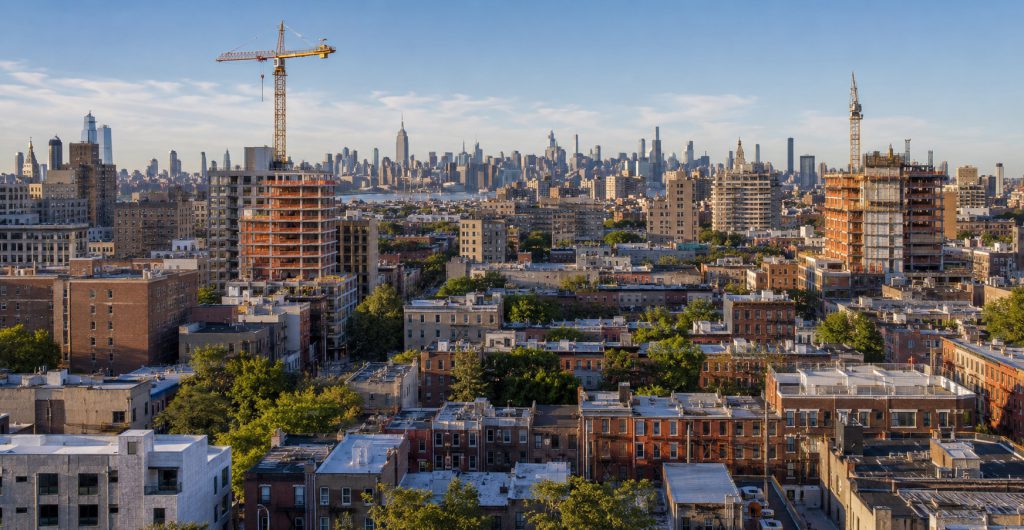
New York City estimates that it may need 700,000 additional homes over the next decade to address its housing shortage.

Brian Phillips | The Mobile Broker | New York City Real Estate Advisor and Housing Market Commentator