
Updated for 2026
NYC landmark properties are among the city’s most architecturally significant homes and buildings, but owning NYC landmark properties involves far more than appreciating beautiful design. Landmark designation can influence renovations, maintenance, restoration projects, permitting, construction timelines, costs, financing, resale value, and even the long term character of an entire neighborhood.
This guide explains what NYC landmark properties are, how New York City’s landmark designation process works, the different types of landmark protections, which renovations require approval from the Landmarks Preservation Commission, and what buyers, homeowners, investors, architects, contractors, and sellers should understand before purchasing, renovating, or selling one.
🏛️ WHY NYC LANDMARK PROPERTIES MATTER TO BUYERS, SELLERS, AND HOMEOWNERS
New York City’s architectural character did not survive by accident.
Much of what makes neighborhoods such as Harlem, Brooklyn Heights, Greenwich Village, the Upper West Side, SoHo, Tribeca, and Fort Greene so recognizable today exists because thousands of buildings have been protected through landmark designation.
For many buyers, these neighborhoods represent some of the city’s most desirable places to live because their historic character has remained remarkably consistent over time. Tree lined streets, distinctive brownstones, ornate cornices, original masonry, decorative ironwork, and carefully preserved facades often create a sense of place that newer developments cannot easily replicate.
At the same time, landmark designation also creates responsibilities that every owner should understand.
Whether replacing windows, repairing a stoop, restoring a cornice, installing a new front door, building a rooftop addition, or undertaking a major renovation, many projects require review by the New York City Landmarks Preservation Commission before work begins.
Understanding those requirements before purchasing a landmark property can help owners avoid unexpected costs, project delays, permit issues, and unnecessary frustration.
📋 WHAT YOU’LL LEARN
Whether you are buying, selling, renovating, investing, or simply curious about New York City’s historic buildings, this guide explains how landmark designation works, the different types of landmark protections, which projects typically require approval, how the review process operates, and why these regulations continue to influence neighborhood character, property values, and long term investment throughout New York City.
WHAT ARE NYC LANDMARK PROPERTIES?
Many people assume only famous buildings become landmarks.
In reality, thousands of ordinary residential buildings throughout New York City are subject to landmark regulations even though they are not individually famous.
A property may become protected because it has exceptional architectural or historical significance on its own, or because it contributes to the overall character of a designated historic district.
As a result, owners of brownstones, townhouses, row houses, apartment buildings, cooperatives, condominiums, churches, schools, commercial buildings, and mixed use properties may all find themselves subject to landmark regulations.
In many cases, buyers discover a property’s landmark status only after beginning renovation planning.
Understanding whether a property is landmarked should be part of every buyer’s due diligence before signing a contract.
NYC LANDMARK PROPERTIES AND THE LANDMARKS PRESERVATION COMMISSION
The New York City Landmarks Preservation Commission, commonly known as the LPC, was established in 1965 following growing concern that historically significant buildings were disappearing throughout the city.
Its mission is to identify, designate, and protect buildings, neighborhoods, interiors, and scenic locations that possess special architectural, cultural, historical, or aesthetic significance.
Today, the Commission oversees more than 38,000 protected properties located throughout all five boroughs.
Although many people associate the Commission with famous landmarks, much of its work involves reviewing renovation applications submitted by everyday homeowners seeking to repair, restore, or improve their properties while preserving the architectural character that defines New York City’s historic neighborhoods.
WHY BUYERS SHOULD CARE ABOUT NYC LANDMARK PROPERTIES
Landmark designation affects far more than renovation approvals.
It can influence financing, insurance, renovation budgets, construction timelines, resale strategy, maintenance planning, contractor selection, and long term ownership costs.
For some buyers, those protections represent one of the property’s greatest strengths because they help preserve neighborhood character and reduce the likelihood of incompatible development nearby.
For others, the additional review process becomes an important factor when evaluating renovation plans, budgets, and purchase decisions.
Neither perspective is necessarily right or wrong.
Understanding both the benefits and the responsibilities allows buyers to make informed decisions before becoming owners.
TYPES OF NYC LANDMARK PROPERTIES AND LANDMARK DESIGNATIONS
Not every landmark designation provides the same level of protection.
New York City recognizes several types of landmark designations, each serving a different purpose while preserving the city’s architectural, cultural, and historical heritage.
Understanding these distinctions helps buyers and owners know what may be regulated before planning renovations or purchasing a property.
HISTORIC DISTRICTS
Historic districts represent the most common form of landmark designation throughout New York City.
Rather than protecting a single building, these districts preserve the collective architectural character of an entire neighborhood. Every contributing building within the district becomes part of that protection, even if an individual property is not historically famous.
Some of New York City’s best known historic districts include the Mount Morris Park Historic District, Strivers’ Row Historic District, Brooklyn Heights Historic District, Greenwich Village Historic District, SoHo Cast Iron Historic District, Fort Greene Historic District, and Tribeca East Historic District.
These neighborhoods are protected because of their architecture, planning, historical significance, and contribution to New York City’s identity.
INDIVIDUAL LANDMARKS
Some buildings receive landmark designation because of their own exceptional architectural, cultural, or historical importance.
Examples include the Empire State Building, the Flatiron Building, Carnegie Hall, Gracie Mansion, and numerous churches, schools, theaters, and civic buildings throughout the city.
For these properties, the designation generally focuses on preserving the individual building itself rather than an entire neighborhood.
INTERIOR LANDMARKS
Landmark protection sometimes extends beyond the building’s exterior.
Interior landmarks include publicly accessible spaces that possess exceptional architectural or historical significance.
Perhaps the best known example is Grand Central Terminal’s Main Concourse, where the soaring ceiling, monumental staircases, historic clock, and decorative finishes are protected.
Other designated interiors include theaters, churches, hotel lobbies, bank interiors, and civic buildings whose architectural character contributes significantly to New York City’s history.
SCENIC LANDMARKS
New York City’s landmark protections also include significant landscapes.
Central Park, Prospect Park, Bryant Park, and several other public spaces are designated Scenic Landmarks because of their historical, environmental, and cultural importance.
These protections help preserve landscape design, natural features, monuments, pathways, and other elements that contribute to the city’s public spaces.
HOW NYC LANDMARK PROPERTIES AFFECT RENOVATIONS
Owning a landmark property does not prevent improvements.
It simply means that many exterior alterations require review before construction begins.
The purpose is not to stop change, but to ensure that modifications respect the architectural character that led to the property’s designation in the first place.
Many projects receive approval each year after demonstrating that the proposed work is compatible with the building and surrounding historic district.
Understanding that distinction helps dispel one of the most common misconceptions about landmark ownership.
PROJECTS THAT TYPICALLY REQUIRE APPROVAL
Many owners are surprised to learn that relatively modest exterior projects may require approval from the Landmarks Preservation Commission.
Replacing windows with a different design, installing a new front door, rebuilding a stoop, restoring masonry, repointing brick, replacing decorative ironwork, repairing cornices, installing exterior lighting, constructing rooftop additions, modifying visible mechanical equipment, adding railings, replacing fences, or building rear additions that can be seen from a public street may all require review.
Corner properties often receive greater scrutiny because additional portions of the building remain visible from public streets.
Even projects that seem routine should be reviewed before work begins.
INTERIOR RENOVATIONS
Most interior renovations inside landmark district buildings do not require approval from the Landmarks Preservation Commission.
Owners can often remodel kitchens, bathrooms, flooring, plumbing, electrical systems, heating and air conditioning, and interior layouts without LPC review, provided the property is not designated as an Interior Landmark.
However, all work must still comply with New York City Building Code requirements and any permits required by the Department of Buildings.
Interior Landmark properties operate differently because designated interior features receive the same level of protection as landmarked exteriors.
THE APPROVAL PROCESS FOR NYC LANDMARK PROPERTIES
The Landmarks Preservation Commission issues several different types of permits depending upon the scope of work being proposed.
Projects involving repairs that have little or no effect on protected architectural features may qualify for a Certificate of No Effect.
Smaller repairs using materials that closely match the original construction may qualify for permits covering minor work.
Larger alterations, additions, restorations, or visible exterior changes generally require a Certificate of Appropriateness, which involves a more comprehensive review.
The complexity of the project usually determines the length of the review process.
Some applications receive staff level approval relatively quickly, while larger projects requiring public hearings may take considerably longer.
WHY PLANNING AHEAD MATTERS
One of the biggest mistakes owners make is assuming construction can begin immediately after purchasing a landmark property.
In reality, thoughtful planning often saves considerable time later.
Experienced architects, preservation consultants, contractors, and expeditors who regularly work with the Landmarks Preservation Commission understand the documentation, drawings, photographs, material specifications, and historical information typically required during the review process.
Preparing a complete application from the beginning often reduces revisions and helps projects move through the approval process more efficiently.
Owners who build realistic review periods into their renovation schedules are generally better positioned to manage construction costs, financing deadlines, and contractor availability.
THE BENEFITS OF OWNING NYC LANDMARK PROPERTIES
Although landmark regulations introduce additional responsibilities, many owners believe the benefits outweigh the added oversight.
One of the greatest advantages is long term neighborhood preservation. Landmark designation helps protect the architectural integrity that originally attracted many residents to these communities. Rather than allowing incompatible development or inappropriate exterior alterations to gradually change the character of an area, landmark protections help preserve the streetscapes that define many of New York City’s most desirable neighborhoods.
Many buyers also appreciate the craftsmanship found in older buildings. Ornate stonework, decorative cornices, carved wood doors, original ironwork, stained glass, high ceilings, detailed moldings, and masonry that would be prohibitively expensive to reproduce today contribute to a property’s uniqueness and long term appeal.
From an investment perspective, landmark designation may also contribute to stronger buyer demand. While designation alone does not guarantee appreciation, many landmark neighborhoods continue to attract buyers who value architectural character, established communities, walkability, and the confidence that surrounding buildings are less likely to undergo dramatic changes.
Depending upon the property and the scope of rehabilitation, certain owners may also qualify for state or federal historic preservation tax incentives when restoring income producing historic buildings. These programs involve specific eligibility requirements and should be reviewed with qualified tax and preservation professionals.
CHALLENGES OF OWNING NYC LANDMARK PROPERTIES
Owning a landmark property also requires patience.
Projects that might move quickly elsewhere often involve additional planning, architectural review, and regulatory approvals before construction begins.
Owners should expect renovation timelines to be longer than those involving comparable non landmark properties. Selecting historically appropriate materials, preparing architectural drawings, obtaining permits, and responding to agency comments may extend the overall project schedule.
Construction costs may also increase depending upon the work being performed. Restoring original architectural features frequently requires specialized craftspeople and higher quality materials that reflect the building’s historic character.
While these additional requirements may initially seem restrictive, they are designed to ensure that renovations contribute positively to both the individual property and the surrounding historic neighborhood.
COMMON MISCONCEPTIONS ABOUT NYC LANDMARK PROPERTIES
Many buyers believe landmark designation means they cannot renovate their homes.
That is one of the most common misconceptions.
Owners regularly renovate landmark properties throughout New York City. The difference is that many exterior changes require approval before work begins.
Another misconception is that every portion of a landmark property is protected.
In most historic districts, the Commission’s review focuses primarily on exterior features that are visible from public streets. Interior renovations often proceed without LPC review unless the building has been designated as an Interior Landmark.
Some people also assume landmark designation automatically increases maintenance costs.
While certain restoration projects may require specialized materials or techniques, many routine repairs are similar to those performed on comparable older buildings outside landmark districts.
Perhaps the biggest misconception is that landmark designation reduces property values.
In reality, research has shown that many landmark neighborhoods have demonstrated strong long term market performance. While numerous factors influence value, preservation, neighborhood character, architectural quality, location, and buyer demand often work together to support continued interest in these communities.
BUYING NYC LANDMARK PROPERTIES: QUESTIONS TO ASK
Before purchasing a landmark property, buyers should take time to understand both the opportunities and the responsibilities that accompany ownership.
Questions worth exploring include whether previous renovations received the necessary approvals, whether outstanding violations exist, whether future renovation plans are likely to require LPC review, and whether original architectural features have been preserved or altered over time.
Buyers should also consider the age of major building systems, anticipated maintenance needs, available tax incentives, and the realistic timeline for any planned improvements.
Conducting this due diligence before closing can help prevent unexpected expenses and reduce future delays.
SELLING NYC LANDMARK PROPERTIES: WHAT TO KNOW
For sellers, landmark designation often becomes part of the property’s story.
Many buyers actively seek historic homes because of their architectural character, established neighborhoods, and long term appeal.
Well documented restoration work, properly approved renovations, and carefully maintained historic details can strengthen a property’s presentation while giving buyers greater confidence in the quality of ownership.
Providing copies of LPC approvals, permits, architectural plans, and renovation records can also help facilitate a smoother transaction by answering questions before they become concerns.
THE BOTTOM LINE
Owning a landmark property in New York City means far more than preserving an attractive building.
It means becoming the steward of a piece of the city’s architectural, cultural, and historical legacy.
While landmark designation introduces additional review for many exterior alterations, it also helps preserve the distinctive neighborhoods, craftsmanship, and character that continue attracting buyers from around the world.
Whether you are considering purchasing a historic brownstone, renovating a townhouse, restoring a cooperative apartment, or investing in a landmark building, understanding the review process before beginning a project can save considerable time, expense, and frustration.
Like many aspects of New York City real estate, landmark ownership rewards preparation. Knowing the rules, assembling the right team of professionals, and planning thoughtfully can help owners successfully balance preservation with modern living.
📚 SOURCES & FURTHER READING
• HISTORIC DISTRICTS AND PROPERTY VALUES: BENEFITS, CHALLENGES, AND LONG TERM IMPACT
• NYC Landmarks Preservation Commission (LPC)
• National Trust for Historic Preservation
• NYS Historic Preservation Office
• Preservationists Hope New Landmarks Rules Will Better Protect Historic Buildings, Prevent Demos
• HOW NYC HISTORIC LANDMARKS ARE FINDING NEW LIFE
📩 THINKING ABOUT BUYING, SELLING, OR RENOVATING A LANDMARK PROPERTY IN NEW YORK CITY?
Historic properties offer a unique combination of architectural character, craftsmanship, neighborhood identity, and long term appeal. They also involve additional considerations that can influence renovation plans, budgeting, timelines, financing, and resale strategy.
Whether you’re purchasing your first brownstone, restoring a townhouse, preparing a landmark property for sale, or evaluating an investment opportunity, understanding how landmark regulations may affect your goals can help you make more informed decisions.
If you’re considering buying, selling, renovating, or investing in a landmark property anywhere in New York City, feel free to reach out. I’d be happy to discuss your objectives, answer your questions, and help you navigate one of the city’s most distinctive and rewarding segments of the real estate market.
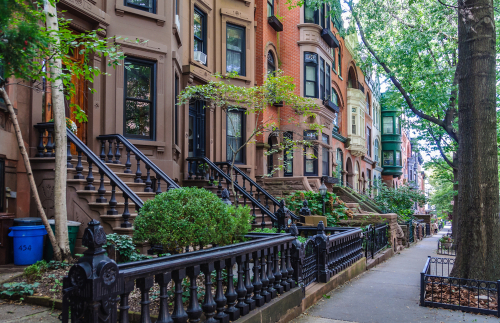
NYC landmark properties in the Park Slope Historic District illustrate how landmark designation helps preserve architectural character, neighborhood identity, and long term property values.
Brian Phillips | The Mobile Broker | New York City Real Estate Advisor and Housing Market Commentator