Where legacy meets momentum along Manhattan’s west side
Discover West Harlem: A Neighborhood in Motion
Framed by the Hudson River and stretching roughly from 125th Street to 135th Street between Broadway and the waterfront, West Harlem, often referred to as Manhattanville, is one of Manhattan’s most dynamic and evolving neighborhoods.
What sets it apart is not just its history, but what is happening here now.
West Harlem sits at the intersection of cultural legacy, institutional investment, and emerging innovation, creating a neighborhood that feels both rooted and forward-looking at the same time.
A Legacy That Still Shapes the Streets
West Harlem is deeply connected to the broader story of the Harlem Renaissance, a defining era in American cultural history that elevated Black art, music, and literature onto the global stage.
That influence hasn’t faded.
It continues to show up in:
- Local art and murals
- Community programming
- A strong sense of identity and pride
This is not a neighborhood that reinvents itself by erasing the past. It evolves by building on it.
A Community That Feels Connected
What continues to define West Harlem is its sense of community.
Longtime residents and newcomers coexist in a neighborhood where:
- Local businesses still matter
- Familiar faces are part of daily life
- Events and gatherings bring people together
That balance is increasingly rare in Manhattan—and part of what keeps people here long-term.
Columbia University and the New Manhattanville
The expansion of Columbia University into Manhattanville has reshaped the trajectory of West Harlem.
What was once a long-term development plan is now a fully active campus anchored by:
- The Jerome L. Greene Science Center
- The Lenfest Center for the Arts
- New academic, research, and public spaces
This expansion has brought:
- Increased foot traffic and retail activity
- Public programming and cultural events
- A growing connection between the university and the surrounding community
More importantly, it has positioned West Harlem as part of a broader research and innovation ecosystem within New York City.
From Factory District to Innovation Corridor
The former Manhattanville Factory District has undergone a significant transformation.
Historic buildings like:
- The Malt House
- The Taystee Building
have been reimagined into modern office, research, and life sciences spaces.
Today, this area functions as an emerging innovation corridor, attracting:
- Life sciences companies
- Research institutions
- Creative and tech-driven businesses
This shift is not just aesthetic. It’s economic.
It brings:
- New jobs
- Daytime population growth
- Long-term stability tied to institutional demand
For buyers and investors, that kind of foundation matters.
Why Buyers Are Paying Attention to West Harlem
West Harlem is increasingly on the radar for buyers who are looking beyond traditional prime neighborhoods.
Here’s why:
Relative Value
Compared to Morningside Heights and parts of Central Harlem, West Harlem often offers more space at a more accessible price point.
Layout and Scale
Many properties—especially in converted or prewar buildings—offer larger layouts that better support today’s lifestyle, including work-from-home needs.
Access to the Waterfront
Proximity to the Hudson River Greenway adds a lifestyle component that continues to drive demand.
Transit Connectivity
- 1 train along Broadway
- A, B, C, D lines nearby
This makes commuting straightforward while still feeling slightly removed from Midtown intensity.
Limited Supply
Inventory remains relatively constrained, particularly for well-located and well-renovated properties.
Parks and Outdoor Living
Outdoor space has become a major priority for buyers and West Harlem delivers.
Riverbank State Park offers:
- A running track
- Pool and recreation facilities
- Open space overlooking the Hudson
St. Nicholas Park provides:
- Elevated green space
- Historic staircases and views
- A quieter, neighborhood feel
And the Hudson River Greenway connects residents to miles of waterfront paths for walking, running, and biking.
Dining, Cafés, and Local Spots
West Harlem’s dining scene reflects its diversity and evolving identity.
Neighborhood favorites include:
- Dear Mama for coffee and community
- I Like It Black for a distinct local vibe
- Plowshares Coffee Roasters for specialty brews
The area continues to see a mix of:
- Longstanding neighborhood staples
- Newer concepts and casual dining
- Spots that blur the line between café, workspace, and social hub
This is a dining scene that feels local first, not manufactured.
West Harlem in 2026: What It Means for Buyers and Renters
West Harlem is no longer just a neighborhood to “watch.”
It’s a neighborhood where multiple trends are converging:
- Institutional investment
- Adaptive reuse and redevelopment
- Demand for space and livability
- Continued cultural relevance
For buyers, it presents an opportunity to enter a part of Manhattan that is still evolving—but doing so with strong underlying fundamentals.
For renters, it offers a balance of accessibility, character, and neighborhood feel that can be harder to find downtown.
The Bottom Line
West Harlem is not defined by a single moment in time.
It’s defined by its ability to layer history with progress.
From the legacy of the Harlem Renaissance to the rise of a modern innovation corridor, this neighborhood continues to adapt without losing what makes it distinct.
For those willing to look closely, West Harlem offers something increasingly rare in Manhattan:
A neighborhood with both identity and trajectory.
If you are considering buying, selling, or renting in Harlem feel free to reach out 📩.
📚 References
HAMILTON HEIGHTS: A NEIGHBORHOOD GUIDE (2026)
SOUTH HARLEM (SOHA): A NEIGHBORHOOD GUIDE (2026)
HARLEM BROWNSTONE DUPLEX AND TRIPLEX CONDOS: WHY THEY’RE AMONG MANHATTAN’S SMARTEST BUYS RIGHT NOW
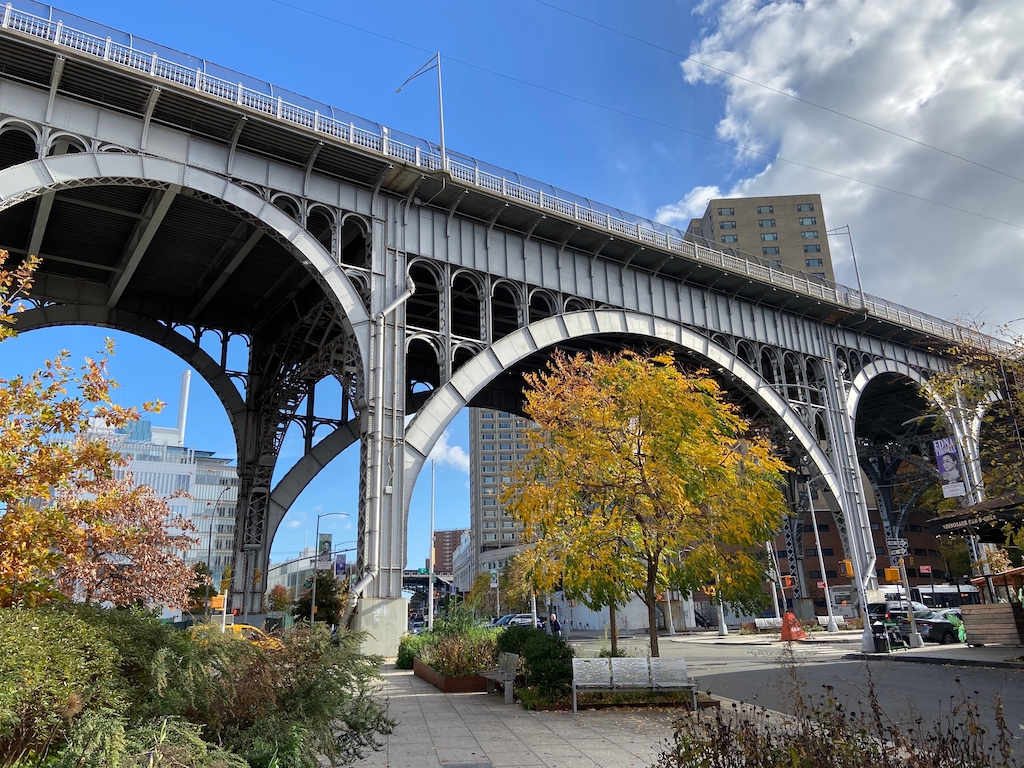
The iconic Riverside Drive Viaduct stretches across West Harlem, blending historic engineering with the neighborhood’s evolving cityscape.